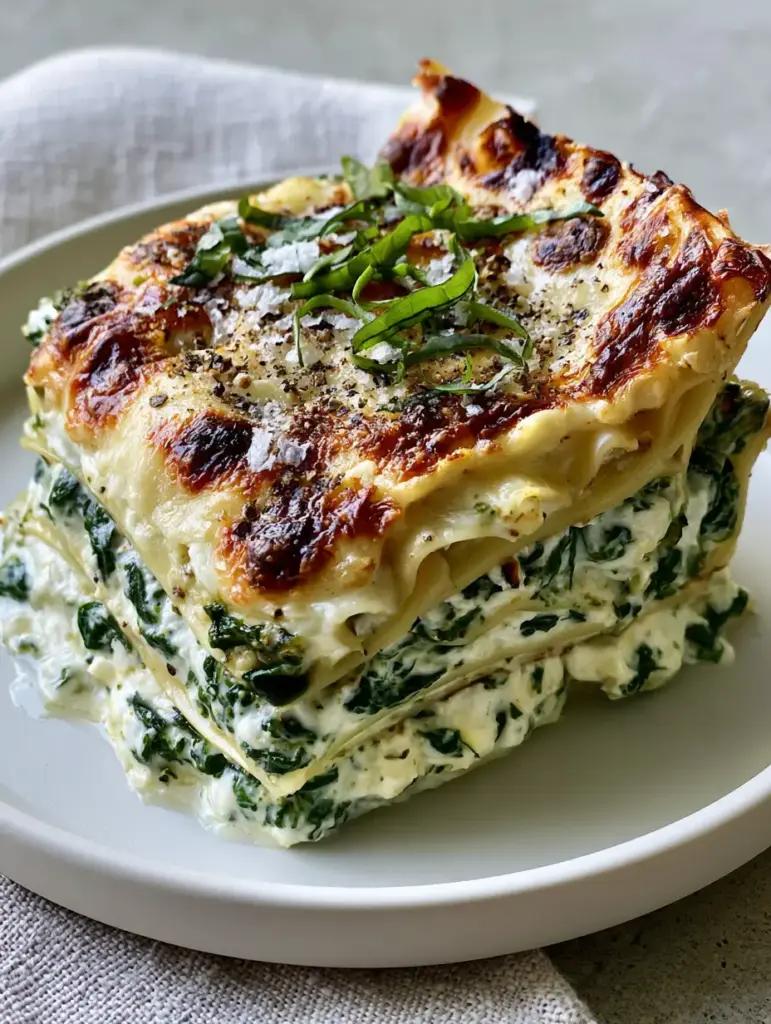
There is nothing quite like a towering slice of spinach ricotta lasagna that manages to be both incredibly decadent and structurally perfect. This isn’t your average watery vegetable pasta bake; it is a masterclass in texture and flavor layering. We are talking about firm, al dente pasta sheets holding back a flood of dense, whole milk ricotta and emerald-green spinach, all smothered in an opaque ivory garlic cream sauce.
The visual appeal of this dish is undeniable, characterized by its distinct, structural layers that stand tall on the plate. When you pull this out of the oven, you are greeted by a thick blanket of bubbling mozzarella featuring deep golden-brown charred spots. It’s a sensory experience that begins with the aroma of roasted garlic and ends with the crunch of a toasted parmesan crust.
Whether you are looking for a show-stopping center-piece for a Sunday dinner or a high-protein vegetarian meal that feels like a cheat day, this recipe delivers. Every bite is balanced with a precise sprinkle of sea salt flakes, cracked black pepper, and the brightness of fresh basil chiffonade. Let’s dive into the culinary science of building the perfect white lasagna.
Why This White Lasagna Recipe Stands Above the Rest
- Structural Integrity: Unlike traditional recipes that slump, our specific ricotta-to-egg ratio ensures a dense, thick layer that stands upright when sliced.
- Opaque Garlic Cream: We skip the thin béchamel for a heavy, ivory garlic cream sauce that clings to every noodle without running across the plate.
- The “Leopard” Crust: By combining high-moisture mozzarella with aged parmesan, we achieve those iconic deep golden-brown charred spots and bubbling edges.
- Vibrant Visuals: The contrast between the emerald chopped spinach and the creamy white ricotta creates a beautiful “ribbon” effect in every cross-section.
The Foundation: Essential Ingredients for Structural Success
To achieve the architectural heights seen in our visual blueprint, every ingredient must serve a specific culinary purpose. We aren’t just looking for flavor; we are looking for the science of “staying power.”
Firm Lasagna Noodles: You need thick, high-protein semolina pasta to provide the “skeleton” of the dish. Unlike delicate fresh pasta, dried firm noodles hold their shape under the weight of the heavy cream sauce.
Whole Milk Ricotta: Avoid part-skim varieties at all costs, as they release too much whey during baking. Whole milk ricotta provides the dense, creamy mouthfeel required for those thick, distinct layers.
Chopped Steamed Spinach: We use steamed spinach that has been squeezed bone-dry to prevent the lasagna from becoming a watery mess. The bright emerald green color provides a stunning visual contrast to the white cheese.
Heavy Cream and Fresh Garlic: This forms the base of our opaque ivory sauce. The fats in the heavy cream emulsify with the garlic to create a velvet-like coating that doesn’t soak into the noodles.
Low-Moisture Mozzarella & Aged Parmesan: The mozzarella provides the “stretch” and bubbling edges, while the parmesan creates the toasted, savory crust on top. Together, they create the charred, golden-brown finish.
Invisible Foundations: You will also need 1 tbsp (15g) of unsalted butter for the roux, 1/4 tsp (1g) of ground nutmeg to brighten the ricotta, and 1 large egg to bind the cheese layers together. These are the secrets to a professional-grade finish.
Professional Culinary Tools for a Perfect Bake
Achieving a perfectly square slice requires more than just a good recipe; you need the right kit. A deep-dish 9×13 inch (23x33cm) ceramic or glass baking pan is essential to allow for the repeating layers without overflow.
A fine-mesh sieve or a clean kitchen towel is non-negotiable for squeezing the moisture out of the spinach. For the sauce, a heavy-bottomed saucepan ensures the garlic cream reduces evenly without scorching, which would ruin the opaque ivory color.
Finally, a sharp chef’s knife is required for the fresh basil chiffonade, and a sturdy offset spatula will help you lift that first thick slice while keeping the layers perfectly intact. If you enjoy this level of precision, you might also like exploring our spinach and mushroom lasagna for a forest-flavored twist.
Step-by-Step Architecture: Building the Spinach Ricotta Lasagna
1. Preparing the Spinach and Ricotta Matrix
Start by steaming 20 oz (560g) of fresh spinach until wilted but still bright green. Immediately transfer to an ice bath to lock in that emerald hue, then squeeze the spinach in a kitchen towel until no liquid remains. In a large bowl, fold the chopped spinach into 30 oz (850g) of whole milk ricotta, one large egg, and a pinch of nutmeg.
2. Simmering the Opaque Garlic Cream Sauce
In your saucepan, melt 2 tbsp (30g) of butter and sauté 4 cloves of minced garlic until fragrant but not browned. Whisk in 2 cups (480ml) of heavy cream and 1/2 cup (50g) of grated parmesan. Simmer gently until the sauce thickens enough to coat the back of a spoon; it should look like a heavy, opaque ivory velvet.
3. The Art of the Layer
Spread a thin layer of sauce at the bottom of the pan to prevent sticking. Lay down your first layer of al dente pasta. Spread a 1-inch (2.5cm) thick layer of the spinach-ricotta mixture, followed by a drizzle of garlic cream and a handful of mozzarella. Repeat this process three times, ensuring the layers are dense and compressed.
4. Creating the Toasted Parmesan Crust
For the final layer, place the last set of noodles and cover them generously with the remaining garlic cream sauce. Top with a thick blanket of shredded mozzarella and a heavy dusting of parmesan cheese. This combination is what creates those deep golden-brown charred spots during the final stage of baking.
5. The Bake and the “Set”
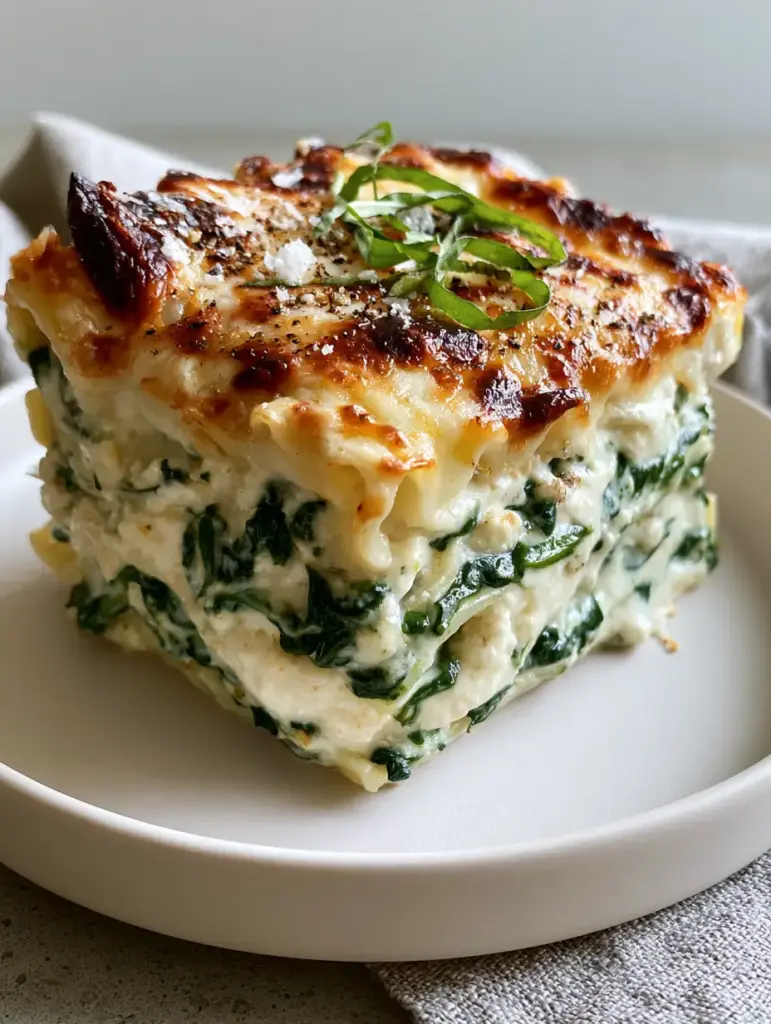
Bake at 375°F (190°C) for 35-40 minutes. You are looking for sensory cues: the edges should be bubbling vigorously, and the cheese top should have distinct charred spots. Crucially, let the lasagna rest for at least 15 minutes before slicing. This allows the internal proteins to set, ensuring your slice stands upright like the one in our visual prompt.
Expert Tips for a Visual Masterpiece
- The Dry Squeeze: The number one reason lasagnas fail is excess moisture. Squeeze your spinach until you think it’s dry, then squeeze it again.
- Pasta Al Dente: Boil your noodles for 2 minutes less than the package directions. They will finish cooking in the garlic cream, absorbing the flavor while maintaining a firm structure.
- The Resting Phase: If you cut the lasagna immediately, the heavy cream sauce will run. Patience results in the clean, side-profile layers you see in professional photography.
- Basil Timing: Only add your basil chiffonade ribbons at the very last second. The residual heat of the cheese will wilt them slightly, releasing their aroma without turning them brown.
What to Serve with Creamy White Lasagna
Since this dish is incredibly rich and dense, you want to pair it with something that offers acidity or a contrasting crunch. A crisp arugula salad with a lemon vinaigrette is the perfect palate cleanser between bites of cheesy pasta.
If you are hosting a larger gathering, consider starting with a light appetizer like our clams casino or some air fryer mozzarella bites for the kids. For those who want to keep the vegetable theme going, our vegetable side dishes guide offers plenty of seasonal inspiration.
And if you have room for dessert, something citrusy or a light French 75 cocktail can cut through the richness of the whole milk ricotta and cream sauce.
Frequently Asked Questions
While you can, the flavor profile and visual ‘opaque ivory’ appeal of this specific recipe rely on the garlic cream sauce. Red sauce will also result in a softer texture.
Yes, but ensure you add an extra 1/2 cup of garlic cream sauce, as no-boil noodles require more moisture to soften during the baking process.
The key is to steam the spinach, shock it in cold water, and then squeeze it in a clean kitchen towel until absolutely no liquid remains before mixing it with the ricotta.
You likely skipped the egg binder or didn’t let the lasagna rest. Adding one egg to the ricotta and letting the dish sit for 15 minutes post-bake is crucial for structural integrity.
The Ultimate Spinach Ricotta Lasagna Recipe
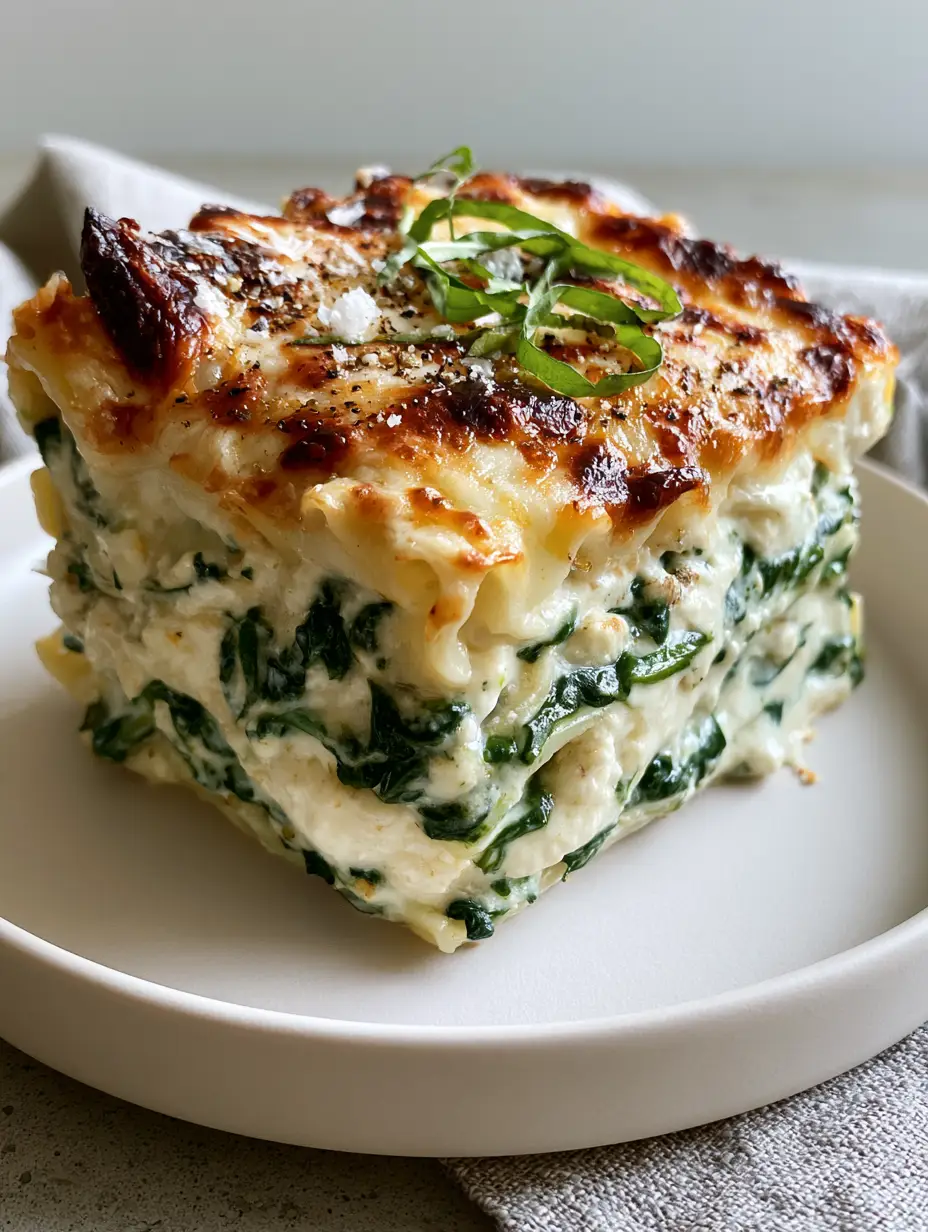
Spinach Ricotta Lasagna with Heavy Garlic Cream Sauce and Toasted Parmesan
Ingredients
Equipment
Method
- Steam the spinach until wilted. Shock in ice water, then squeeze manually using a kitchen towel until completely dry. Chop finely.
- In a bowl, combine the dry spinach, whole milk ricotta, egg, nutmeg, and a pinch of salt. Mix until a dense, green-speckled paste forms.
- Melt butter in a saucepan, sauté garlic for 1 minute. Add heavy cream and 1/2 cup parmesan. Simmer until the sauce is opaque ivory and coats a spoon.
- In a 9x13 pan, layer: sauce, noodles, ricotta mix, mozzarella, and a drizzle of sauce. Repeat three times.
- Finish with a layer of noodles, remaining sauce, mozzarella, and parmesan. Bake at 375°F (190°C) for 35-45 minutes until bubbling and charred in spots.
Notes
Let the dish rest for 15 minutes after baking to ensure clean, structural slices.
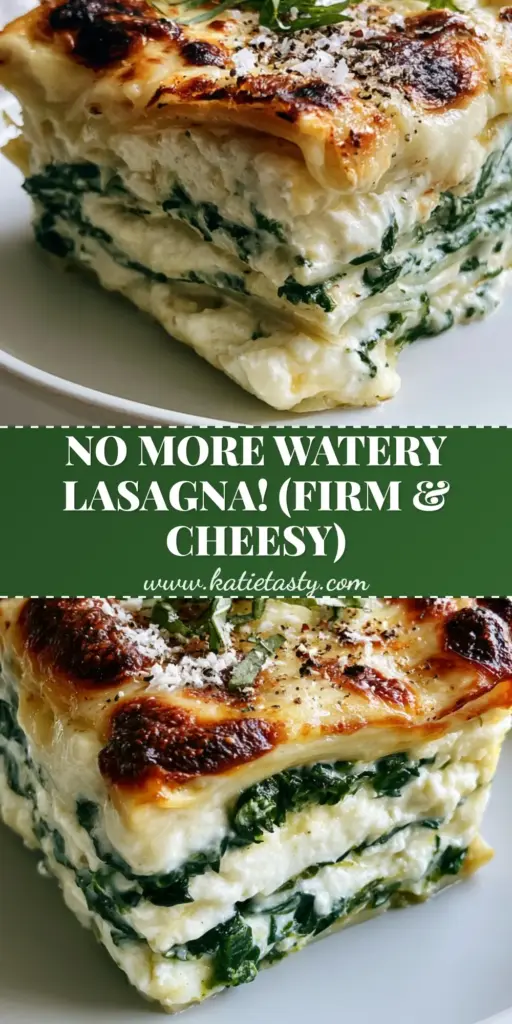
Closing Thoughts on This Culinary Classic
This spinach ricotta lasagna is more than just a meal; it is a testament to how simple ingredients, when treated with professional technique, can become something extraordinary. The combination of the toasted parmesan crust, the emerald spinach ribbons, and that heavy garlic cream sauce creates a flavor profile that is both nostalgic and sophisticated.
If you enjoyed building this architectural pasta dish, please leave a comment below and let us know how your layers turned out! Don’t forget to share your creations and tag us, or save this recipe to your boards on Pinterest for your next dinner party. Happy cooking!