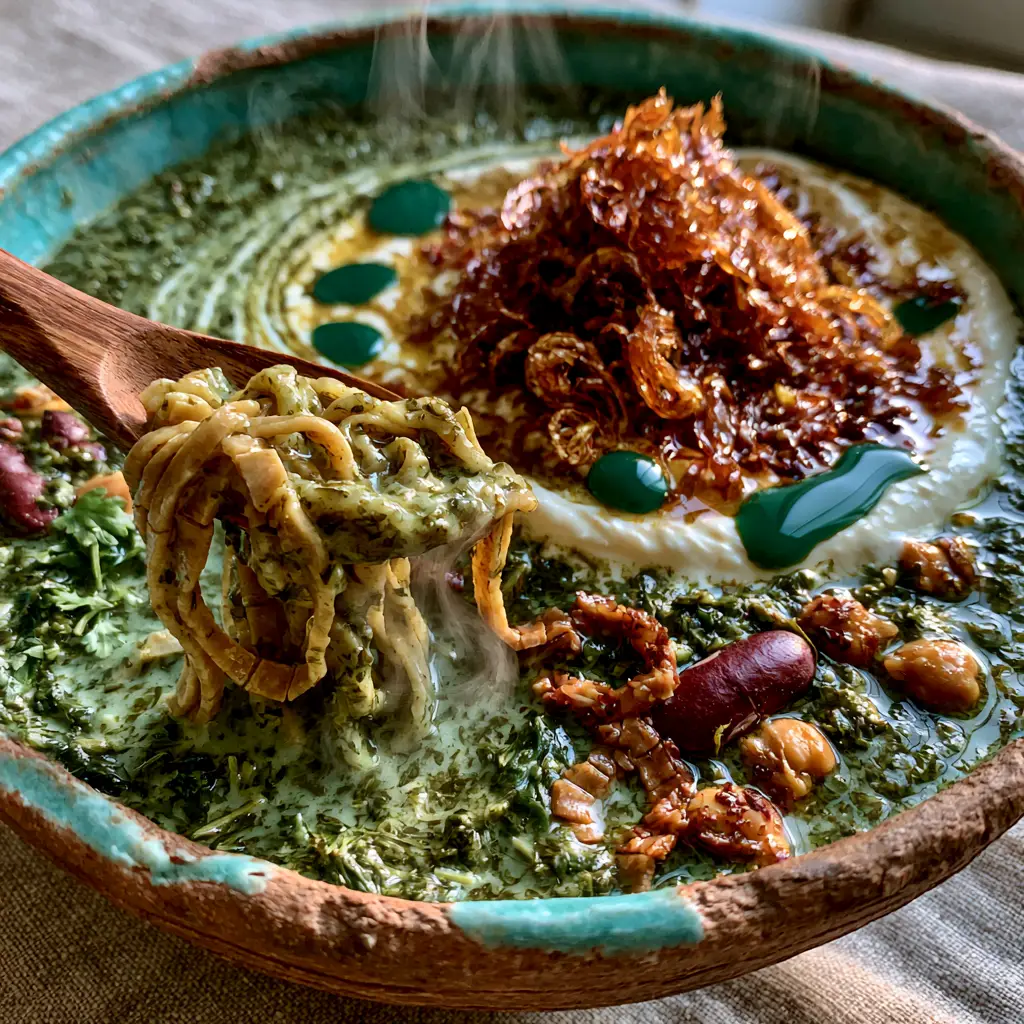
There is nothing quite like a steaming bowl of Persian Noodle Soup, traditionally known as Ash Reshteh, to warm your soul. This iconic dish is a centerpiece of Persian culture, celebrated for its rich, dark green herb-infused broth and thick, flat wheat noodles. Whether you are celebrating Nowruz or simply looking for a hearty, nutrient-dense meal, this recipe delivers a complex symphony of flavors that hits every sensory note, from the creamy white kashk swirls to the emerald green sautéed dried mint oil.
Why This Authentic Ash Reshteh Is The Ultimate Comfort Food
- Textural Perfection: Experience the satisfying chew of thick wheat noodles nestled among plump red kidney beans and tender chickpeas.
- Aromatic Depth: The dark green herb broth is infused with massive amounts of fresh spinach, parsley, cilantro, and dill for an earthy, vibrant flavor profile.
- The “Golden” Garnish: Topped with a mountain of glistening golden-brown crispy fried onions (Piaz Dagh) and garlic that adds a crucial crunch.
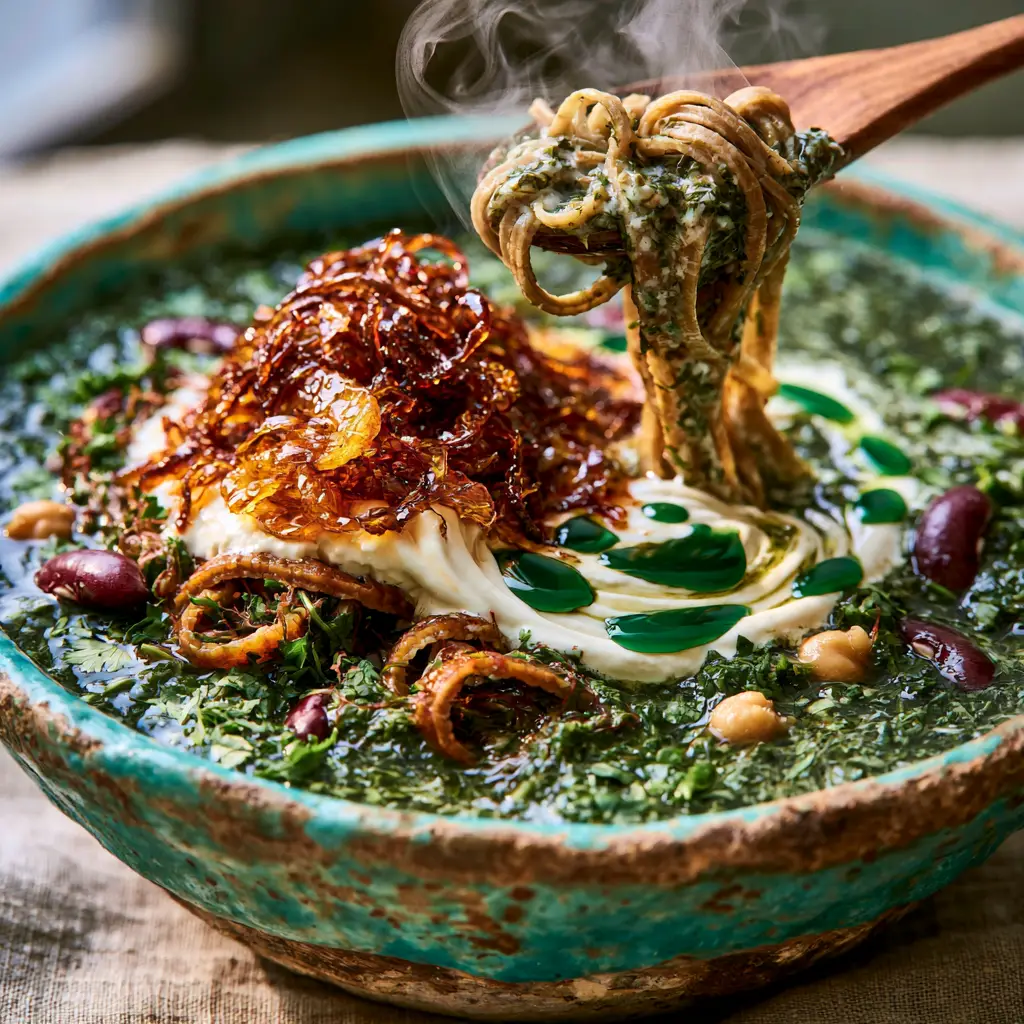
- Visually Stunning: The contrast of the rustic turquoise ceramic bowl against the rising steam and artistic kashk patterns makes this a Pinterest-viral masterpiece.
If you love hearty, bean-based dishes, you might also enjoy our Pasta e Fagioli or a classic homemade chicken soup for those chilly evenings.
Essential Ingredients for Persian Noodle Soup
Creating an authentic Persian Noodle Soup requires a specific balance of legumes, herbs, and the star of the show: Reshteh noodles. Here is what you will need:
The Hearty Base
Reshteh Noodles: These are flat, salty wheat noodles. They provide the “body” of the soup and thicken the broth naturally with their starch. Use 8 oz (225g) of dried Reshteh.
Chickpeas & Red Kidney Beans: You will need 1 cup (200g) of each, soaked overnight. These provide plant-based protein and a creamy texture. If you’re in a rush, you can use canned, but dried is traditional for the best bite.
Lentils: 1/2 cup (100g) of brown or green lentils adds another layer of earthiness and helps thicken the dark green herb broth.
The “Sabzi” (Herb) Mix
Fresh Spinach: 4 cups (120g) of chopped fresh spinach. This wilts into the broth to create that signature vibrant base.
Parsley, Cilantro, & Dill: A massive amount of minced fresh herbs (about 2 cups/60g each) is required. This is not a garnish; it is the main vegetable component of the soup.
The Flavor Enhancers
Kashk (Liquid Whey): This fermented dairy product provides a unique, sour, and creamy tang. If you cannot find kashk, a mixture of sour cream and Greek yogurt can work as a substitute. You’ll need 1/2 cup (120ml) for the soup and more for the swirls.
Dried Mint: 2 tablespoons (6g) of dried mint, sautéed in oil, creates the “Nana Dagh”—an emerald green oil that is essential for the authentic taste.
Onions & Turmeric: 2 large onions, thinly sliced and fried until golden brown, seasoned with 1 teaspoon (2g) of turmeric for a warm glow.
How to Master the Dark Green Herb Broth
Step 1: The Legume Foundation
In a large pot, combine your soaked chickpeas and kidney beans with 8 cups (2L) of water or vegetable broth. Bring to a boil, then simmer for about 45-60 minutes until the beans are tender. If you love legumes, you should definitely check out our split pea soup for another high-protein option.
Step 2: Sautéing the Aromatics (Piaz Dagh)
While the beans simmer, heat 1/4 cup (60ml) of oil in a skillet. Add your sliced onions and cook until they are deep golden brown and crispy. Remove half for garnishing later. To the remaining onions in the pan, add minced garlic and turmeric, stirring for 1 minute until fragrant. This easy recipe technique is the secret to deep flavor.
Step 3: The Herb Infusion
Add the lentils and the onion-turmeric mixture to the large pot. Once the lentils are soft (about 20 minutes), stir in the massive piles of chopped spinach, parsley, cilantro, and dill. The soup will suddenly turn a magnificent, dark green. Boldly season with salt and pepper, but be careful—the noodles are naturally salty!
Step 4: Cooking the Reshteh Noodles
Break the 8 oz (225g) of thick flat wheat noodles in half and add them to the bubbling broth. They will absorb a significant amount of liquid, so add more hot water if the soup becomes too thick. Cook for 10-15 minutes until the noodles are tender but still have a slight chew.
Step 5: The Finishing Touches
Stir in 1/2 cup (120ml) of kashk. The broth will turn slightly creamy but maintain its vibrant green hue. In a small pan, heat 2 tablespoons (30ml) of oil and quickly stir in the dried mint for 30 seconds to create the emerald green mint oil. Do not burn the mint, or it will turn bitter.
Expert Tips for the Best Persian Noodle Soup
- Noodle Timing: Only add the Reshteh noodles when you are nearly ready to serve. If they sit too long, they will continue to absorb water and can become mushy.
- The Kashk Swirl: For that professional Pinterest look, thin your kashk with a teaspoon of warm water before drizzling it in a sophisticated swirl over the surface.
- Herb Freshness: Avoid using dried herbs for the main broth. The “Ash” relies on the volume and moisture of fresh herbs to achieve the correct consistency.
- Crispy Onions: Don’t rush the onions! Slow-frying them ensures they become glistening and golden-brown rather than burnt.
Storage and Reheating Instructions
Storage: Store leftovers in an airtight container in the refrigerator for up to 3 days. Note that the noodles will continue to swell, so the soup will be much thicker the next day.
Reheating: When reheating on the stovetop, add a splash of water or broth to loosen the consistency. Heat over medium-low until steaming.
Freezing: We do not recommend freezing this soup with the noodles included, as they lose their texture. However, you can freeze the herb and bean base and add fresh noodles when you are ready to eat.
What to Serve With Persian Noodle Soup
This soup is incredibly filling on its own, but it pairs beautifully with fresh Persian flatbread (like Barbari or Sangak). For a full spread, consider serving it alongside a fresh Shirazi salad. If you’re looking for more comforting bowls, our broccoli potato soup or Zuppa Toscana are excellent companions for a soup-tasting night.
Frequently Asked Questions
Yes! Simply omit the kashk or replace it with a vegan unsweetened yogurt alternative mixed with a little lemon juice to replicate the tanginess.
Reshteh noodles are traditional Persian noodles made from wheat flour, water, and salt. They are slightly saltier and thicker than Italian linguine, providing a unique texture to the soup.
If you don’t have access to a Middle Eastern grocery store, a mixture of sour cream and Greek yogurt is the best substitute for the creamy, tangy finish.
The noodles are very starchy and continue to absorb liquid even after the heat is off. Simply stir in a bit of boiling water to reach your desired consistency before serving.
The Ultimate Persian Noodle Soup (Ash Reshteh) Recipe

Persian Noodle Soup (Ash Reshteh): An Authentic Herb-Packed Guide
Ingredients
Equipment
Method
- Simmer soaked chickpeas and kidney beans in 8 cups of water for 45-60 minutes until tender.
- Fry onions until golden brown. Remove half for garnish. Add garlic and turmeric to the rest.
- Stir in lentils, then add the chopped spinach, parsley, cilantro, and dill. Simmer until lentils are soft.
- Break Reshteh noodles into the pot. Cook for 10-15 minutes until tender. Stir in 1/2 cup kashk.
- Heat oil with dried mint for 30 seconds. Drizzle over the soup with fried onions and kashk swirls.
Notes
If kashk is unavailable, use a 50/50 mix of sour cream and Greek yogurt.
Save This Recipe to Pinterest!
Did you make this authentic Persian Noodle Soup? We want to see your beautiful kashk swirls! Save this recipe to your “Comfort Foods” or “Persian Recipes” board on Pinterest so you never lose it. Follow @katie_tasty for more global inspiration. Please leave a 5-star rating in the recipe card above and share a photo of your steaming bowl in the comments below!