When it comes to a weeknight dinner that feels like a five-star restaurant experience, nothing beats a perfectly executed Baked Salmon. This recipe isn’t just about putting fish in an oven; it is a masterclass in texture and flavor balance, featuring thick fillets drenched in a shimmering honey garlic butter glaze.
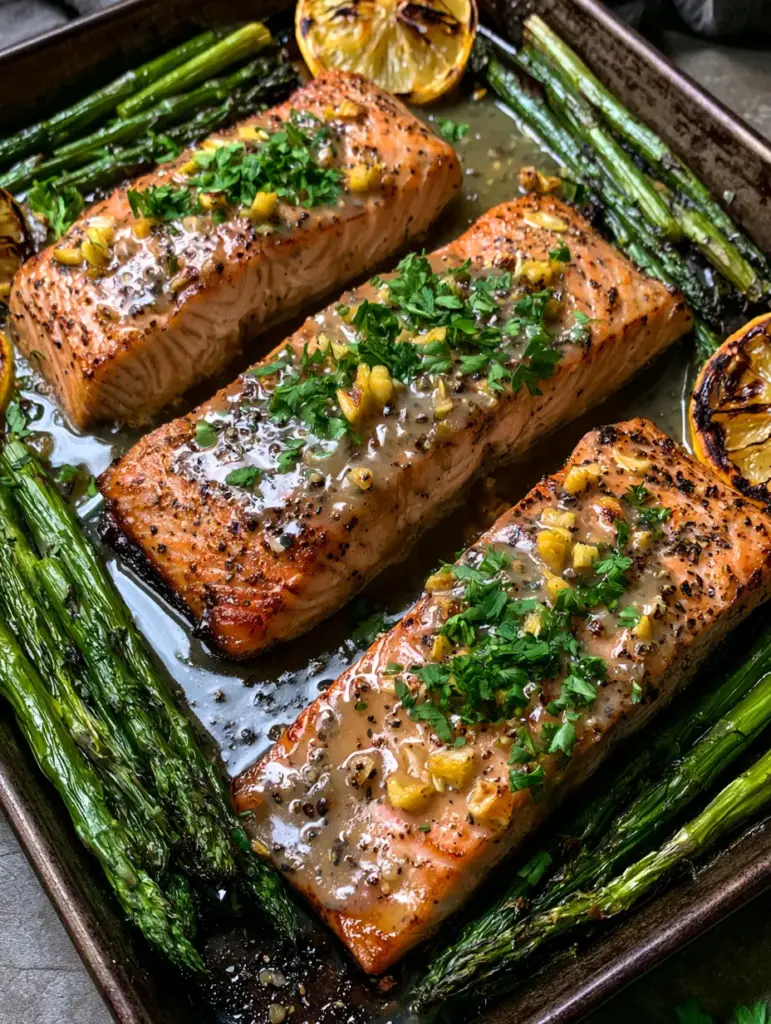
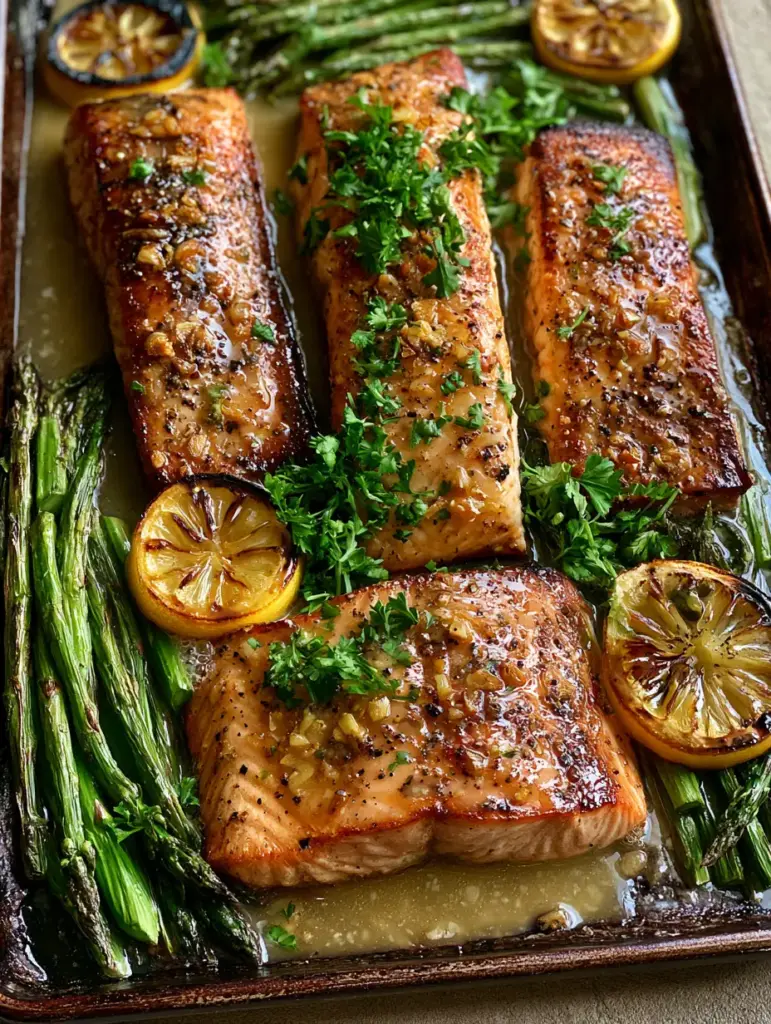
Imagine pulling a rustic metal sheet pan from the oven to find Atlantic salmon with crispy, slightly charred edges and a sauce that has thickened into a glossy nectar. The natural window light in your kitchen will catch the glisten of the sauce as it pools around vibrant green asparagus and caramelized lemon rounds.
Every bite offers a symphony of sensations: the flaky tenderness of the fish, the bite of toasted minced garlic, and the bright pop of fresh parsley. This Baked Salmon is designed for those who crave a sophisticated meal without the complicated cleanup, delivering a complete sheet-pan miracle in under thirty minutes.
Why This Is the Ultimate Sheet-Pan Baked Salmon Experience
- Visual Perfection: We focus on achieving those specific crispy, slightly charred edges that contrast beautifully with the moist, flaky interior.
- The “Liquid Gold” Glaze: A thick honey garlic butter reduction that doesn’t just run off the fish but clings to every flake.
- Sophisticated Aromatics: The inclusion of toasted garlic and cracked black pepper creates a deep, savory profile that cuts through the richness of the salmon.
- One-Pan Harmony: By roasting the asparagus and lemons alongside the salmon, the vegetables soak up the runaway juices, ensuring no flavor is wasted.
- Texture Contrast: From the snap of the roasted asparagus spears to the soft, jammy texture of charred lemon rinds, every element serves a purpose.
The Blueprint: Essential Ingredients for the Perfect Bake
To achieve the results seen in our visual guide, you must select high-quality ingredients. Each component below plays a vital role in the structural and flavor integrity of the dish.
Atlantic Salmon Fillets: You will need 3 thick fillets, approximately 6oz (170g) each. Atlantic salmon is preferred for its high fat content, which ensures the fish remains succulent even when subjected to the high heat needed for charring.
Unsalted Butter: 4 tbsp (56g) of high-quality butter provides the fat base for our glaze. Using unsalted butter allows you to control the seasoning precisely, which is crucial when reducing a sauce.
Honey: 3 tbsp (45ml) of liquid honey provides the necessary sugars for the Maillard reaction. This is what creates the shimmering, sticky coating and the “toasted” visual on the garlic bits.
Fresh Garlic: 4 large cloves, minced. We will be toasting these in the butter to ensure they develop a nutty, golden hue rather than a bitter, burnt taste.
Fresh Asparagus: 1 bunch (approx. 1lb or 454g) of vibrant green spears. Choose medium-thickness spears so they roast in the same timeframe as the salmon fillets.
Lemons: 2 whole lemons, sliced into rounds. These provide acidity to balance the honey and, when charred, offer a deep, caramelized citrus note.
Fresh Parsley: 1/4 cup (15g) of flat-leaf parsley, finely chopped. This is our primary garnish, providing a bright green visual contrast and a fresh herbal finish.
Cracked Black Pepper: 1 tsp (2g) of coarsely cracked pepper. The larger grains are essential for the “embedded” look in the glaze and provide occasional bursts of heat.
Extra Virgin Olive Oil: 1 tbsp (15ml) for tossing the asparagus. This ensures the vegetables roast rather than steam on the metal pan.
Kosher Salt: 1 tsp (6g) or to taste. Salt is the invisible engine of flavor, pulling moisture to the surface of the fish to help create that initial sear.
The Pro-Level Tool Kit
Achieving the “rustic” look described in our blueprint requires specific equipment. The most important tool is a rustic metal sheet pan (rimmed baking sheet). The metal conducts heat rapidly, which is essential for charring the lemon rinds and the edges of the salmon.
You will also need a small saucepan to emulsify the honey garlic butter before it hits the fish. A sharp chef’s knife is required for the finely minced garlic and the precise lemon rounds. Finally, use a handheld smartphone for that “authentic food blog” photo capture once the parsley is scattered.
Step-by-Step Evolution of the Baked Salmon
1. Preparing the Sheet Pan Foundation
Preheat your oven to 400°F (200°C). While the oven reaches temperature, place your rustic metal sheet pan inside for 5 minutes. This “pre-heating” of the pan is a professional secret that ensures the asparagus and lemon rounds begin searing the moment they touch the surface.
Wash the asparagus and trim the woody ends (usually the bottom 2 inches). Toss the spears in a bowl with 1 tbsp (15ml) of olive oil and a pinch of salt. Slice the lemons into 1/4 inch (6mm) rounds, removing any visible seeds.
2. Crafting the Shimmering Honey Garlic Butter
In a small saucepan over medium heat, melt the 4 tbsp (56g) of butter. Once the butter begins to foam, add the 4 cloves of minced garlic. Sauté for 2-3 minutes until the garlic is fragrant and turns a light golden brown—this is the “toasted garlic” mentioned in our visual blueprint.
Whisk in the 3 tbsp (45ml) of honey and a pinch of cracked black pepper. Reduce the heat to low and simmer for 2 minutes. The glaze should thicken enough to coat the back of a spoon. This ensures the sauce “pools slightly” around the base of the salmon rather than running thin across the pan.
3. Positioning and Seasoning the Salmon
Pat the 3 Atlantic salmon fillets bone-dry with paper towels. This is a critical step; any surface moisture will steam the fish rather than allow the glaze to caramelize. Season the fillets generously with the remaining cracked black pepper and kosher salt.
Remove the hot sheet pan from the oven. Arrange the salmon fillets in the center, leaving space between them. Surround the fillets with the oiled asparagus spears and tuck the lemon rounds into the gaps. The lemons should be in direct contact with the metal pan to facilitate charring.
4. The First Glaze and Bake
Using a pastry brush or spoon, generously coat the top and sides of each salmon fillet with two-thirds of the honey garlic butter mixture. Ensure you get plenty of those toasted garlic bits on the surface of the fish.
Slide the pan into the oven and bake for 10-12 minutes. You are looking for the salmon to become opaque and the asparagus to turn a bright, vibrant green. The honey in the glaze will begin to bubble and darken during this stage.
5. The Broiler Finish for Visual Accuracy
To achieve the “perfectly baked with crispy, slightly charred edges” look, turn your oven to the Broil setting (high) for the final 2-3 minutes. Keep a close eye on the pan! The sugars in the honey will caramelize rapidly.
Watch for the lemon rinds to turn dark brown or black at the edges and the top of the salmon to develop a deep golden-brown crust. The glaze should be shimmering and highly reflective under the oven light. Remove the pan once the garlic bits look deeply toasted but not burnt.
6. The Final Flourish
Once the pan is out of the oven, pour the remaining third of the honey garlic butter glaze over the hot fillets. This adds a fresh “glisten” that is essential for the final presentation. Scatter the 1/4 cup (15g) of chopped fresh parsley over the entire sheet pan.
Expert Tips for Success
- Temperature Control: Always bring your salmon fillets to room temperature for 15-20 minutes before baking. Cold fish will cause the butter glaze to seize and cook unevenly.
- Asparagus Sizing: If using very thin “pencil” asparagus, add them to the pan halfway through the cooking time so they don’t over-roast and become mushy.
- Don’t Over-Bake: Salmon continues to cook for a few minutes after being removed from the heat. Pull it when the internal temperature hits 135°F (57°C) for a perfect medium-rare to medium finish.
- The Honey Factor: If your honey is crystallized, microwave it for 10 seconds before adding to the butter to ensure a smooth, shimmering emulsion.
Storage, Reheating, and Freezing
Baked Salmon is best enjoyed immediately to appreciate the contrast between the crispy edges and the soft interior. However, leftovers can be stored in an airtight container in the refrigerator for up to 3 days.
To reheat, avoid the microwave as it will make the salmon rubbery. Instead, place the fish and asparagus back on a sheet pan, cover loosely with foil, and warm in a 300°F (150°C) oven for 8-10 minutes. We do not recommend freezing this specific recipe, as the honey garlic butter glaze and the roasted asparagus will lose their textural integrity upon thawing.
Perfect Pairings and Serving Suggestions
This sheet-pan meal is a complete dinner on its own, but you can elevate the experience by serving it alongside a few complementary sides. For a heartier meal, consider a bed of fluffy quinoa or a side of roasted cauliflower steaks to keep the meal low-carb.
If you love the flavor profile of this dish, you might also enjoy our classic baked salmon and asparagus or the slightly more piquant sheet pan lemon garlic butter salmon. For those who prefer a different flavor profile, our sweet chili salmon offers a great spicy alternative.
To finish the plate, a crisp glass of Sauvignon Blanc or a light Pinot Noir provides the perfect acidity to cut through the rich honey garlic butter.
Frequently Asked Questions
Yes, but you must thaw it completely and pat it extremely dry with paper towels to ensure the glaze sticks and the edges get that desired char.
The salmon is done when it flakes easily with a fork and reaches an internal temperature of 135°F-145°F (57°C-63°C). It should be opaque in the center.
Watch the broiler closely. The honey caramelizes quickly; if it starts to smoke, remove the pan immediately. The ‘toasted’ look should be deep gold, not black.
Atlantic salmon is generally better for this high-heat method because its higher fat content prevents it from drying out compared to leaner wild varieties like Sockeye.
Roasting lemons mellows their acidity and concentrates their sugars, creating a jammy, caramelized garnish that provides a sweet-tart pop to the rich fish.
The Complete Honey Garlic Butter Baked Salmon Recipe
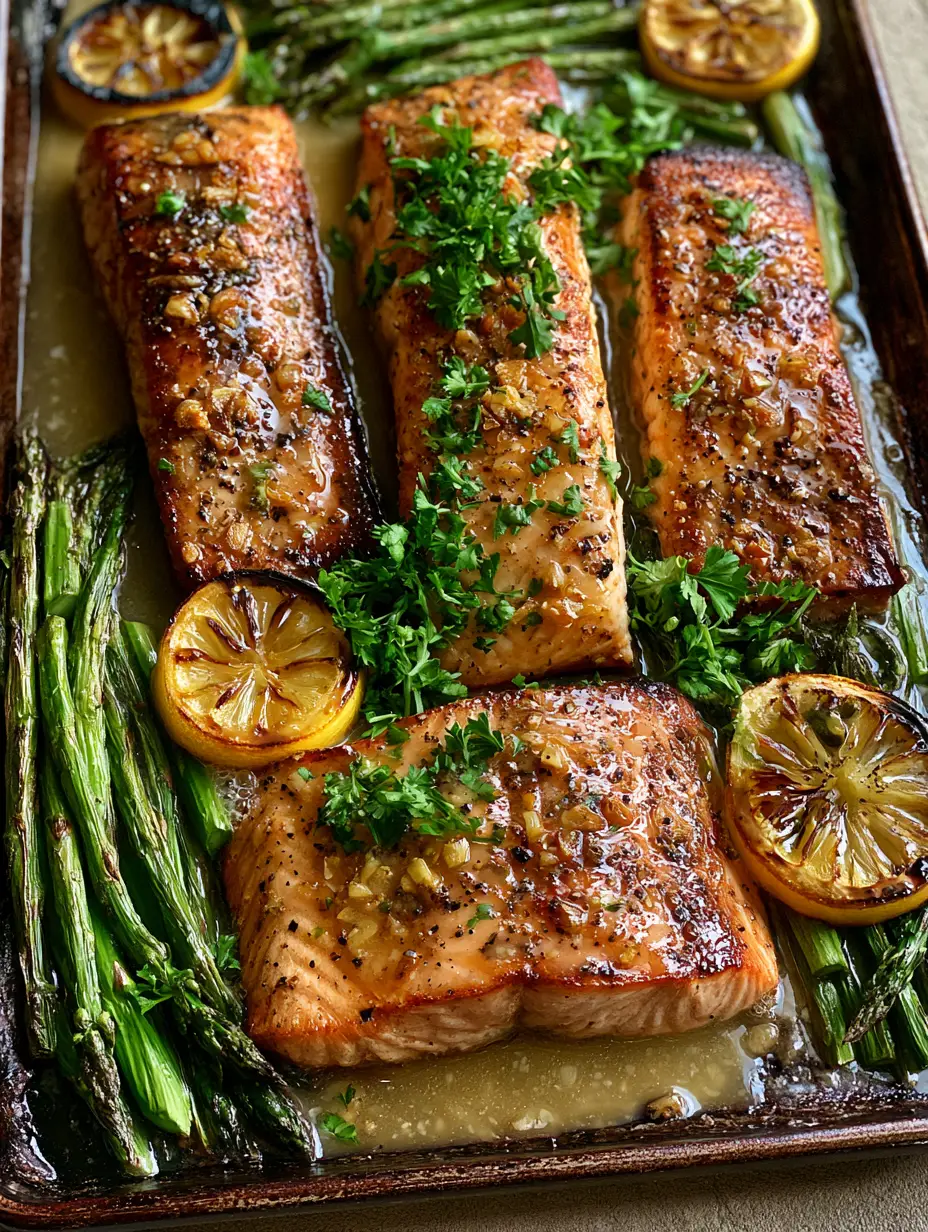
Baked Salmon with Honey Garlic Butter and Roasted Asparagus
Ingredients
Equipment
Method
- Preheat oven to 400°F (200°C) and warm your sheet pan inside.
- Melt butter in a saucepan, sauté garlic until golden, then whisk in honey and pepper until thickened.
- Place dry salmon, oiled asparagus, and lemon rounds on the hot pan.
- Brush salmon with 2/3 of the glaze. Bake for 10-12 minutes.
- Broil on high for 2-3 minutes until edges are charred and lemons are caramelized.
- Drizzle with remaining glaze and scatter fresh parsley over the top.
Notes
Use a hot sheet pan to start the searing process immediately.
Join the Culinary Conversation
There is nothing more rewarding than seeing a home cook master the art of the Baked Salmon. This dish is a testament to the fact that simple ingredients, when treated with the right techniques, can produce extraordinary results. We hope the shimmering glaze and charred lemons bring a touch of gourmet flair to your table tonight.
Did you achieve those perfect crispy edges? We want to hear about it! Please leave a comment below and share your results. Don’t forget to follow us and share your creations on Pinterest to help other home cooks find their next favorite dinner!