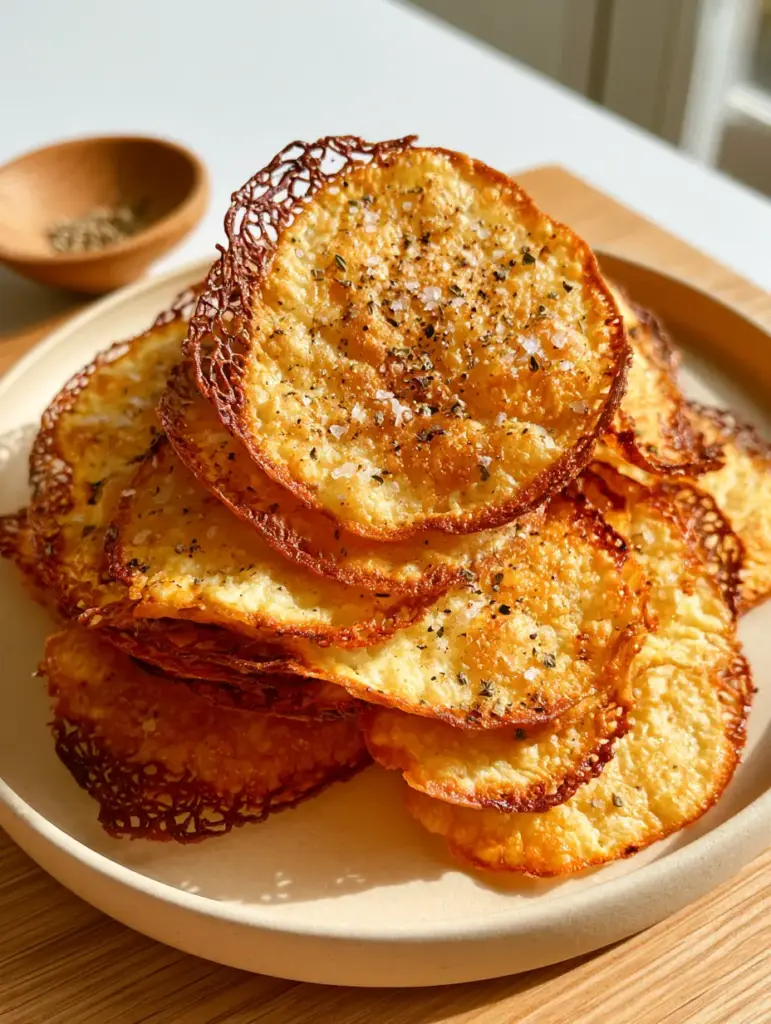
If you have been searching for a snack that defies the laws of healthy eating, these Baked Cottage Cheese Chips are your new culinary obsession. Imagine a snack that packs a significant protein punch while delivering the shattering, brittle crunch of a gourmet potato chip. This isn’t just another low-carb alternative; it is a sensory experience defined by lacy, dark-umber edges and a deeply toasted, bubbly surface.
When you pull these from the oven, the first thing you will notice is the way the morning light catches the crystalline structure of the flaky sea salt and the vibrant green flecks of dried oregano. The aroma is reminiscent of a toasted Italian pizzeria crust, but the nutritional profile is entirely guilt-free. These chips represent a bridge between professional culinary technique and simple, everyday ingredients.

Why You Will Crave These Protein-Packed Crispy Bites
- Unmatched Texture: These chips feature intricate, lacy edges that provide a delicate “shatter” in every bite, contrasted by a sturdy, bubbly center.
- Maillard Perfection: The full-fat cottage cheese undergoes a beautiful transformation, resulting in a dark-umber caramelization that is rich in umami.
- Visually Stunning: Perfectly suited for matte ceramic plating, the golden-brown toasted surface is a masterpiece of rustic, home-cooked elegance.
- High-Protein Fuel: Unlike traditional starch-based snacks, these rely on the structural integrity of cheese proteins to create a satisfying, brittle snap.
The Essential Components for a Flawlessly Brittle Chip
To achieve the specific visual recipe blueprint—namely those lacy, golden-brown edges—you must start with the right foundation. The choice of cottage cheese is not negotiable if you want the results seen in our handheld smartphone photography style.
Full-Fat Small Curd Cottage Cheese: 2 cups (450g). The fat content is critical for the “lacy” effect; low-fat versions contain too much water and will steam rather than crisp, failing to produce the dark-umber edges we desire.
Dried Oregano Flakes: 1 tsp (1g). These tiny flecks provide a Mediterranean aromatic profile and a beautiful visual contrast against the golden-yellow cheese base.
Coarse Cracked Black Pepper: 1/2 tsp (1g). Using a coarse grind ensures that the pepper remains visible and provides a sharp, pungent bite to cut through the richness of the toasted fats.
Flaky Sea Salt: 1/2 tsp (2g). Unlike table salt, flaky sea salt creates localized “pops” of flavor and catches the light, adding to the authentic, unedited social media aesthetic.
Invisible Foundation – Non-Stick Element: While not a primary flavor, a light mist of avocado oil or olive oil spray on your parchment paper is the “invisible” step that ensures these brittle chips don’t shatter when you try to lift them.
Professional Tools for the Perfect Golden Crunch
Achieving the delicate textures described in our visual prompt requires more than just an oven. The equipment you use dictates how the moisture evaporates from the curds.
You will need a large, heavy-duty rimmed baking sheet. A thin sheet can warp under high heat, causing the cheese to pool and preventing the even, bubbly toasted surface we are aiming for. Furthermore, high-quality parchment paper or a professional-grade silicone baking mat is mandatory. Because we are creating ultra-thin, brittle chips, any sticking will result in crumbs rather than the generous pile of chips shown on our matte cream ceramic plate.
Mastering the Maillard Reaction: Step-by-Step Instructions
Follow these steps closely to ensure your Baked Cottage Cheese Chips transition from soft curds to dark-umber masterpieces. We are looking for specific sensory cues at every stage.
Preparing the Canvas
Preheat your oven to 375°F (190°C). This specific temperature is high enough to trigger the Maillard reaction (browning) while allowing enough time for the internal moisture of the cottage cheese to evaporate without burning the delicate dried oregano flakes.
Line your baking sheet with parchment paper. If you want to expand your repertoire of cheese-based appetizers, you might find this technique similar to the base of a cottage cheese bake, though we are pushing the dehydration much further here.
Portioning for Maximum Laciness
Place small dollops of cottage cheese—about 1 tbsp (15g) each—onto the prepared sheet. Space them at least 3 inches (7.5cm) apart. As the cheese heats, the whey will spread out, creating that intricate, lacy structure seen in the prompt.
Use the back of a spoon to gently flatten each mound. The thinner you spread them, the more “brittle and crunchy” the final result will be. If you prefer a more substantial bite, similar to cottage cheese flagels, you can leave the center slightly thicker.
Seasoning for Visual Impact
Before the chips go into the oven, sprinkle the top of each mound with the coarse cracked black pepper and dried oregano. This ensures the seasonings become embedded in the toasted surface as the cheese bubbles. Finish with a light dusting of the flaky sea salt.
The Baking and Observation Phase
Slide the tray into the center rack of the oven. Bake for 25–35 minutes. Around the 20-minute mark, you will hear a distinct bubbling sound. This is the moisture leaving the cheese.
Watch for the visual cues: the edges will first turn a light gold, then deepen into a dark-umber crispy edge. The center should be a bubbly, toasted golden brown. If the center still looks pale or “wet,” give it another 3-5 minutes. The chips are done when they appear matte and the bubbling has significantly slowed down.
Expert Secrets for Preventing Soggy Chips
- The Cooling Rule: Never attempt to remove the chips while they are hot. They undergo a final “setting” process as they cool. Wait at least 10 minutes; they will naturally peel away from the parchment as they become brittle.
- Curd Consistency: If your cottage cheese is particularly watery, strain it through a fine-mesh sieve for 5 minutes before portioning. This accelerates the crisping process.
- Even Heat Distribution: If your oven has “hot spots,” rotate the pan halfway through the baking time to ensure every chip achieves that uniform dark-umber edge.
- Moisture Control: Do not crowd the pan. If the chips touch, they will trap steam, resulting in a soft texture rather than a crunch.
Preserving the Crunch: Storage and Freshness Guide
These Baked Cottage Cheese Chips are at their peak within an hour of baking. Because they are high in protein and fat, they can absorb ambient moisture from the air. To maintain the “ultra-thin and brittle” texture, store any leftovers in an airtight glass container with a small piece of parchment paper between layers.
Do not refrigerate these chips, as the humidity of the fridge will immediately turn them soft. They are best kept at room temperature for up to 2 days. If they do lose their snap, a quick 3-minute flash in a 350°F (175°C) oven will revive the bubbly toasted surface.
Creative Pairings for Your Savory Cheese Crisps
While these chips are a powerhouse on their own, they excel when paired with complementary textures and flavors. For a complete high-protein lunch, serve a pile of these chips alongside a simple spinach salad. The crunch of the chips provides a much-needed textural contrast to the soft leaves.
If you are hosting a brunch, these chips make an excellent savory side for blueberry and lemon zest cottage cheese bites, offering a salty counterpoint to the sweet fruit. For a more savory dinner application, try crushing the chips and using them as a gluten-free topping for mushroom recipes, adding a burst of toasted cheese flavor to earthy fungi.
Your Pressing Questions About Low-Carb Snacking
Absolutely! Garlic powder, smoked paprika, or nutritional yeast all work well. Just be sure to use dry spices rather than wet sauces to maintain the chip’s crispness.
It is not recommended. Low-fat cottage cheese has a higher water content and less structural fat, which leads to steaming rather than crisping, preventing the lacy, dark-umber edges from forming.
While high-quality parchment is non-stick, a very light mist of avocado oil spray can help the delicate, brittle edges release without shattering when you lift them.
The lacy texture is created by the fat and whey spreading out as it melts. High heat (375°F) and small 1-tablespoon portions are the keys to achieving this intricate structure.
This usually happens if the chips weren’t baked long enough or if they were too thick. Ensure you flatten the dollops and bake until the bubbling significantly slows and the edges are dark brown.
The Ultimate Baked Cottage Cheese Chips Recipe
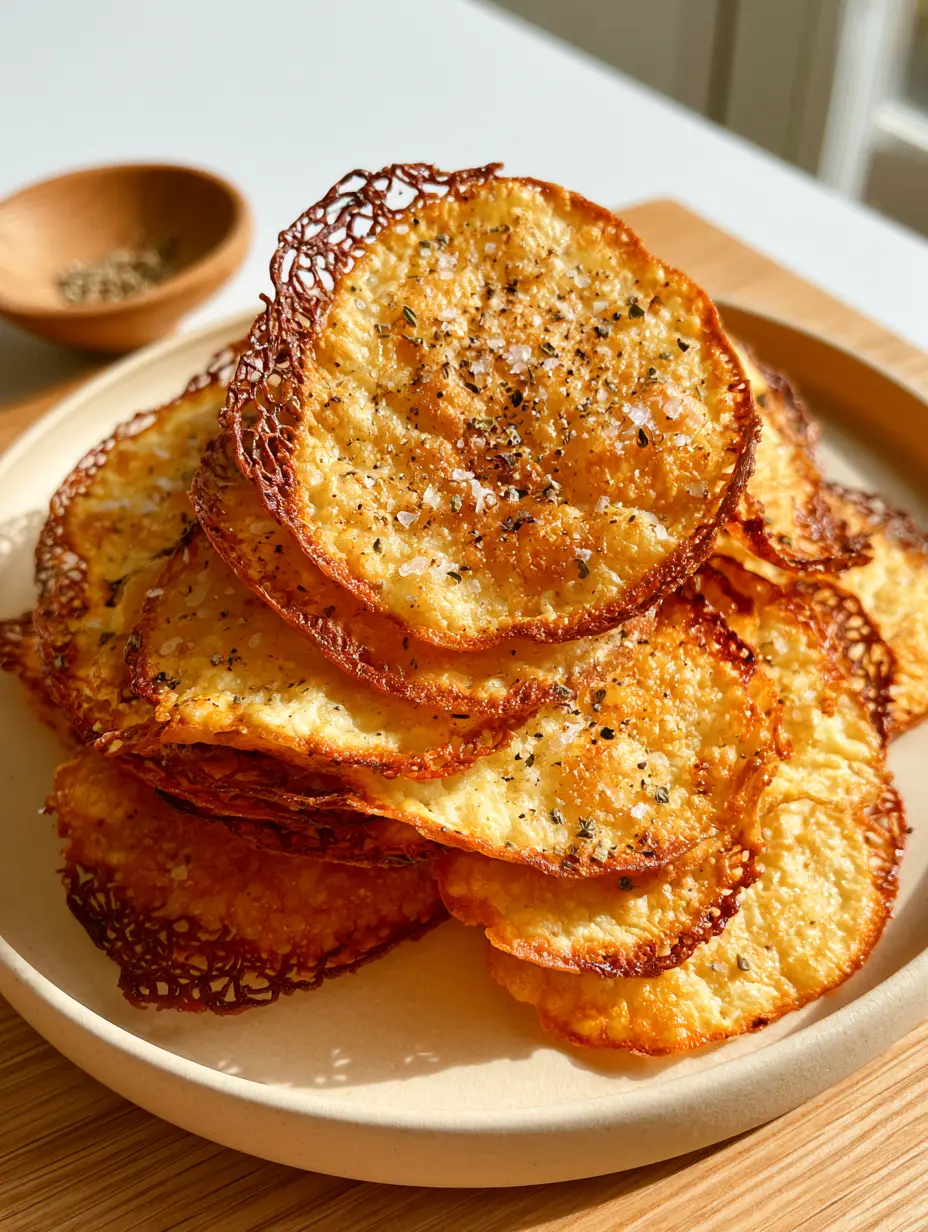
Baked Cottage Cheese Chips: The Ultimate Crispy High-Protein Snack
Ingredients
Equipment
Method
- Preheat your oven to 375°F (190°C) and line a large baking sheet with high-quality parchment paper.
- Scoop 1 tbsp (15g) dollops of full-fat cottage cheese onto the parchment, spacing them 3 inches apart. Use a spoon to flatten them into thin circles.
- Evenly sprinkle the dried oregano, cracked black pepper, and flaky sea salt over the top of each cheese circle.
- Bake for 25-35 minutes until the edges are a dark-umber brown and the centers are bubbly and golden. Look for the lacy texture to set.
- Remove from the oven and let the chips cool completely on the pan for 10 minutes to reach maximum brittleness.
Notes
Ensure the oven is fully preheated to achieve the Maillard reaction quickly.
Crunchy, Salty, and Totally Satisfying
Making Baked Cottage Cheese Chips is a masterclass in how heat can transform a simple dairy product into a gourmet snack. The combination of the dark-umber edges, the aromatic oregano, and the sharp bite of cracked pepper makes this a recipe you will return to again and again. Whether you are following a specific diet or just love a good crunch, these chips deliver on every level.
Did you achieve the perfect lacy edge? We want to hear about it! Leave a comment below, and don’t forget to share your crispy creations to Pinterest so others can join the cottage cheese revolution!