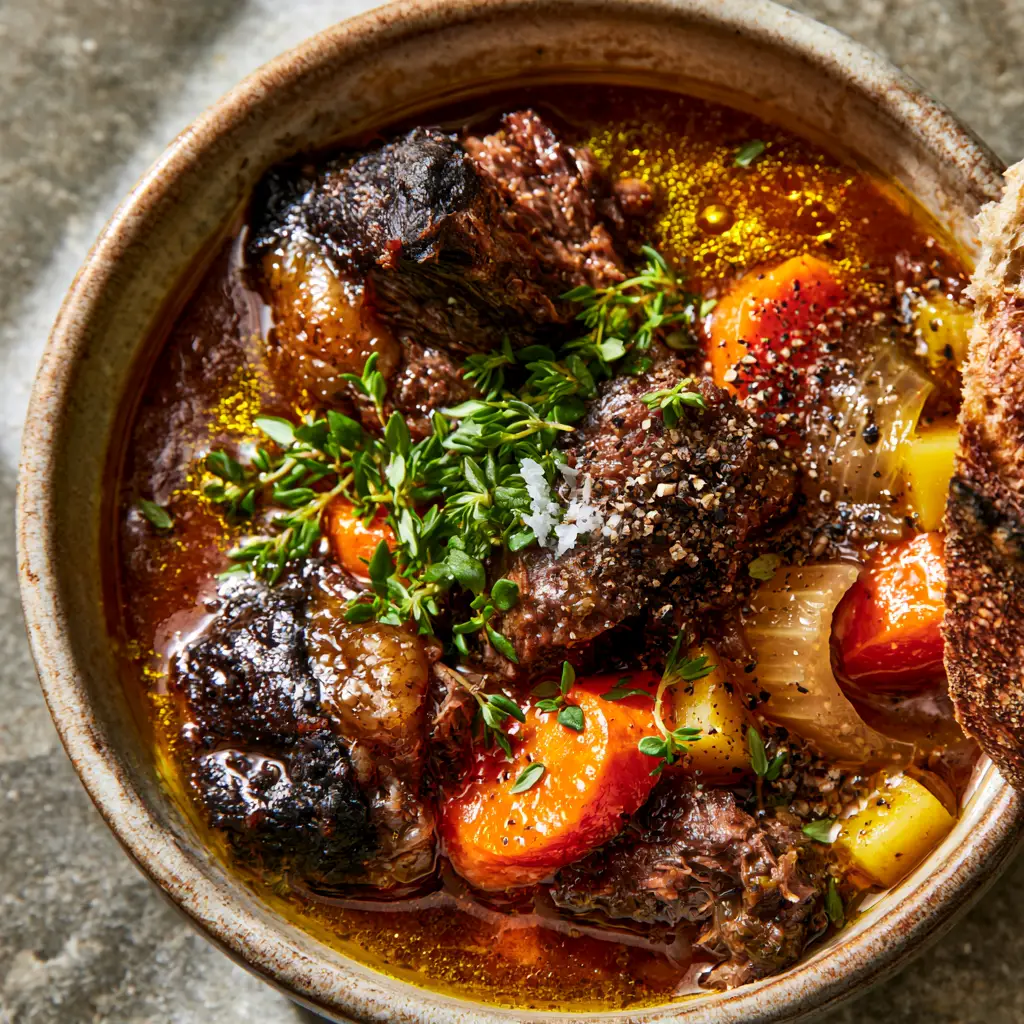
Imagine the deepest, most comforting Sunday dinner transformed into a single, steaming bowl of pot roast soup. This isn’t just a watery broth with leftover meat; this is a culinary masterpiece designed to mimic the exact textures of a slow-braised roast. Every spoonful delivers a symphony of flavors, from the dark seared edges of the beef to the velvety mahogany broth that glimmers with golden oil droplets.
When you look into your bowl, you will see a rustic landscape of vibrant orange carrots and soft yellow potatoes nestled against fork-tender beef chunks. The aroma of fresh thyme and cracked black pepper fills the air, promising a meal that is as visually stunning as it is soul-warming. Whether you are craving a hearty lunch or a sophisticated dinner, this recipe bridges the gap between home-style cooking and professional culinary art.
We have meticulously engineered this recipe to ensure every element—from the translucency of the celery to the flaky sea salt finish—aligns with a professional aesthetic. Pair it with a thick slice of crusty sourdough bread to soak up every drop of that rich, mahogany-hued liquid gold.
Why You Will Crave This Hearty Beef Soup
- Visual Umami: The deep mahogany broth is achieved through a precise Maillard reaction during the searing process, creating a rich visual and flavor profile.
- Textural Contrast: You will experience the interplay between the crusty, seared exterior of the beef and its melt-in-your-mouth interior.
- Chef-Quality Finish: The addition of golden oil droplets and fresh thyme leaves ensures a restaurant-level presentation in your own kitchen.
- Sourdough Synergy: This soup is specifically designed to be served with sourdough, where the tang of the bread cuts through the richness of the beef fat.
The Anatomy of a Perfect Mahogany Broth: Essential Ingredients
Chuck Roast (2 lbs / 900g): This cut is essential for its high collagen content, which breaks down into gelatin to create a velvety mouthfeel. We cut these into large, chunky pieces to ensure they remain the star of the dish.
Vegetable Oil (2 tbsp / 30ml): A high-smoke point oil is necessary to achieve those dark, glistening seared edges on the beef without burning. This creates the foundational flavor for the entire pot roast soup.
Yellow Potatoes (3 medium / 450g): Cubed yellow potatoes hold their shape better than Russets, providing a buttery texture that complements the tender meat. Their golden hue adds a beautiful contrast to the dark broth.
Orange Carrots (3 large / 200g): Sliced into vibrant rounds, carrots provide a natural sweetness that balances the savory, salty notes of the beef stock. They should be cooked until tender but still holding their circular form.
Celery Stalks (2 large / 100g): We cook these until they reach a translucent state, allowing them to meld into the broth while providing a subtle earthy backbone. Their pale green color adds to the rustic visual appeal.
Beef Stock (6 cups / 1.4L): Use a high-quality, low-sodium stock to allow for full control over the final seasoning with flaky sea salt. This serves as the canvas for our mahogany color.
Tomato Paste (1 tbsp / 15g): This “invisible” ingredient is a secret weapon for depth of color. When caramelized, it pushes the broth from a standard brown to a rich, professional mahogany.
Fresh Thyme (4-5 sprigs): The bright green leaves are stripped and scattered at the end to provide a herbaceous punch that cuts through the richness. It’s the visual and aromatic finishing touch.
Seasoning Trio: Flaky sea salt, coarse cracked black pepper, and a touch of Worcestershire sauce (1 tbsp / 15ml) work together to elevate the natural beefiness. The salt and pepper should be visible on the surface when served.
Professional Tools for Superior Results
To achieve the specific textures of this pot roast soup, you will need a heavy-bottomed Dutch oven or a large cast-iron pot. The thick walls provide even heat distribution, which is critical for searing the beef chunks to a dark mahogany brown without scorching the bottom.
A sharp chef’s knife is non-negotiable for achieving the clean edges on the carrots and potatoes seen in the visual blueprint. You will also want a sturdy wooden spoon for deglazing the pot, ensuring every bit of “fond” (the browned bits) is incorporated back into the liquid for maximum flavor.
Step-by-Step Guide to Mastering Pot Roast Soup
Phase 1: The Maillard Sear
Begin by patting your beef chunks completely dry with paper towels. Season them generously with kosher salt and cracked black pepper; moisture is the enemy of a good sear.
Heat your oil in the Dutch oven over medium-high heat until it shimmers. Add the beef in a single layer, ensuring you do not crowd the pan, and sear until a dark, mahogany-brown crust forms on all sides. You are looking for those visible seared edges that look glistening and dark in the final bowl.
Phase 2: Building the Aromatic Base
Remove the beef and set it aside. In the remaining fat, add your translucent celery and sliced carrots. Sauté for 5-7 minutes until the celery begins to soften and turn clear.
Stir in the tomato paste, cooking it for 2 minutes until it turns a shade darker. This is a classic culinary technique to build deep color and umami. If you love deep flavors, you might also enjoy the base of our garlic chickpea soup.
Phase 3: Deglazing and Simmering
Pour in a splash of beef stock and use your wooden spoon to scrape up the browned bits from the bottom of the pot. This is where the “mahogany” magic happens. Add the remaining stock, Worcestershire sauce, and the seared beef.
Bring the liquid to a gentle boil, then reduce to a low simmer. Cover and cook for 90 minutes. At this stage, the beef will begin to break down, becoming fork-tender. This slow process is similar to how we develop flavor in a savory meat pie.
Phase 4: The Final Vegetable Infusion
Add the cubed yellow potatoes to the pot. Simmer for another 20-25 minutes. You want the potatoes to be soft enough to give way to a spoon but firm enough to maintain their cubed shape in the bowl.
Check the broth consistency; it should be velvety and slightly thickened by the potato starches. If you prefer a thinner broth, like in a cleansing cabbage soup, you can add a half cup of water.
Expert Tips for a Visual Masterpiece
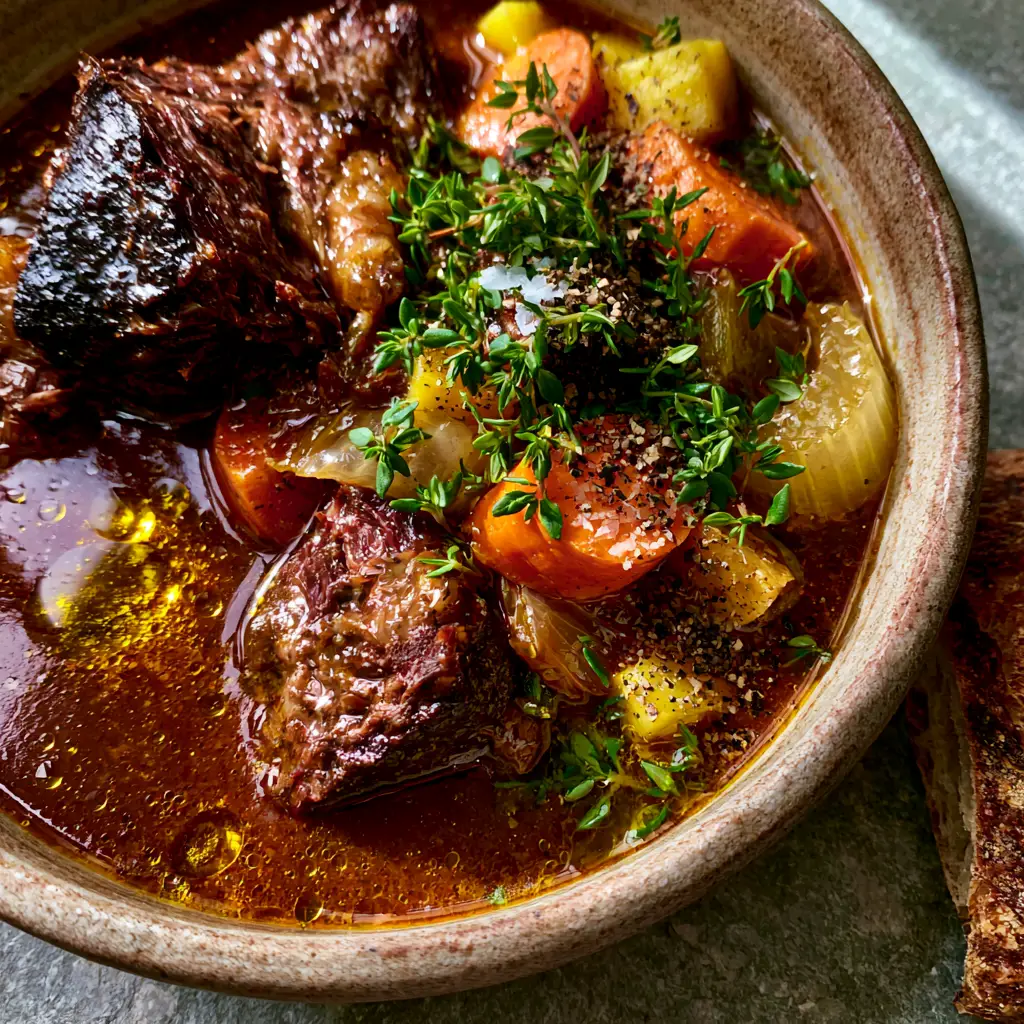
- The Oil Glisten: If your soup lacks those beautiful golden oil droplets, whisk in a teaspoon of high-quality olive oil just before serving to catch the light.
- Color Preservation: Add the fresh thyme only at the very end. The residual heat will release the oils without turning the leaves a muddy brown.
- Beef Sizing: Keep your beef chunks at least 1.5 inches (4cm) large. Small pieces will disintegrate, losing the “chunky” rustic look we are aiming for.
- Sourdough Toasting: Lightly toast your sourdough bread with a brush of butter to create a textural contrast with the soft, velvety soup.
Storage, Reheating, and Freezing Advice
This pot roast soup is even better the next day as the flavors continue to meld. Store it in an airtight container in the refrigerator for up to 4 days. When reheating, do so over low heat on the stove to prevent the potatoes from becoming mushy.
To freeze, allow the soup to cool completely before transferring to freezer-safe bags. It will stay fresh for up to 3 months. Thaw overnight in the fridge before reheating. Note that the potatoes may slightly change texture after freezing, but the flavor will remain intense.
What to Serve with Your Beef Soup
The classic pairing is, of course, a thick slice of sourdough bread, but you can elevate the meal with a few side options. A crisp green salad with a light vinaigrette provides a fresh counterpoint to the rich mahogany broth.
For a multi-course experience, you could start with stuffed mini peppers as an appetizer. If you are looking for more hearty beef recipes, consider our slow cooker garlic roast for your next family gathering. For dessert, something light like peanut butter mousse cups finishes the meal perfectly.
Frequently Asked Questions
Yes, though you should still sear the meat and sauté the aromatics in a pan first to ensure you get the rich color and flavor droplets described in the recipe.
The starch from the potatoes will naturally thicken the broth. For a more velvety texture, you can mash a few of the cooked potato cubes directly into the soup.
Achieving a dark color requires two things: a deep sear on the beef to create a fond, and the caramelization of a small amount of tomato paste before adding liquid.
Beef chuck roast is the ideal choice because it contains plenty of connective tissue that breaks down into tender, succulent pieces during a long simmer.
Potatoes become mushy if they are overcooked or if you use a starchy variety like Russets. Use yellow (Yukon Gold) potatoes and add them during the last 20 minutes of cooking.
The Ultimate Pot Roast Soup Recipe
Pot Roast Soup with Tender Beef and Root Vegetables
Ingredients
Equipment
Method
- Heat oil in a Dutch oven. Season beef with salt and pepper and sear in batches until a deep mahogany crust forms on all sides.
- Remove beef. Add carrots and celery, sautéing until celery is translucent.
- Stir in tomato paste for 2 minutes. Deglaze the pot with stock, scraping up the browned bits.
- Return beef to the pot. Add Worcestershire sauce and simmer covered for 90 minutes until beef is tender.
- Add cubed potatoes and simmer for an additional 20-25 minutes until soft.
- Scatter fresh thyme leaves, flaky sea salt, and cracked pepper over the bowls. Serve with sourdough bread.
Notes
Use yellow potatoes for a buttery texture that doesn't fall apart.

Closing & Call to Action
Mastering this pot roast soup is a journey into the heart of comfort cooking. By focusing on the sear of the beef and the depth of the mahogany broth, you create a meal that transcends the ordinary. The visual cues—the golden droplets, the translucent celery, and the vibrant carrots—are your guide to culinary success.
Did you try this recipe? We would love to see your results! Leave a comment below or share your photos with us. Don’t forget to follow katie_tasty on Pinterest for more visually stunning recipe inspiration and pin this recipe to your “Comfort Food” board for later!