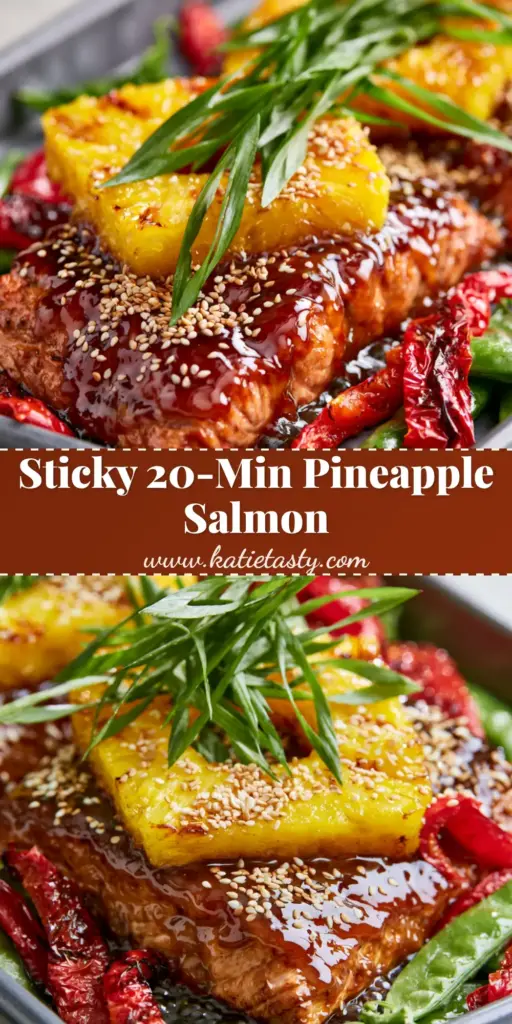
This Baked Pineapple Salmon is the ultimate weeknight dinner showstopper, combining succulent Atlantic fillets with a thick, bubbling teriyaki glaze and caramelized fruit. If you are looking for a meal that looks like it stepped out of a professional food shoot but requires minimal cleanup, this dark metal sheet pan wonder is your answer. The vibrant colors of blistered red bell peppers and tender-crisp snap peas make this a feast for both the eyes and the palate.
The secret to this Baked Pineapple Salmon lies in the contrast of textures. You get that perfectly flaky salmon, the scorched edges of the dark amber glaze, and the crunch of toasted white sesame seeds. It is a masterclass in balance, hitting every note of sweet, salty, and umami in every single bite. Whether you are a fan of Asian dinner recipes or just need a new way to level up your seafood game, this recipe delivers restaurant-quality results at home.
Why You Will Crave This Sheet Pan Baked Pineapple Salmon
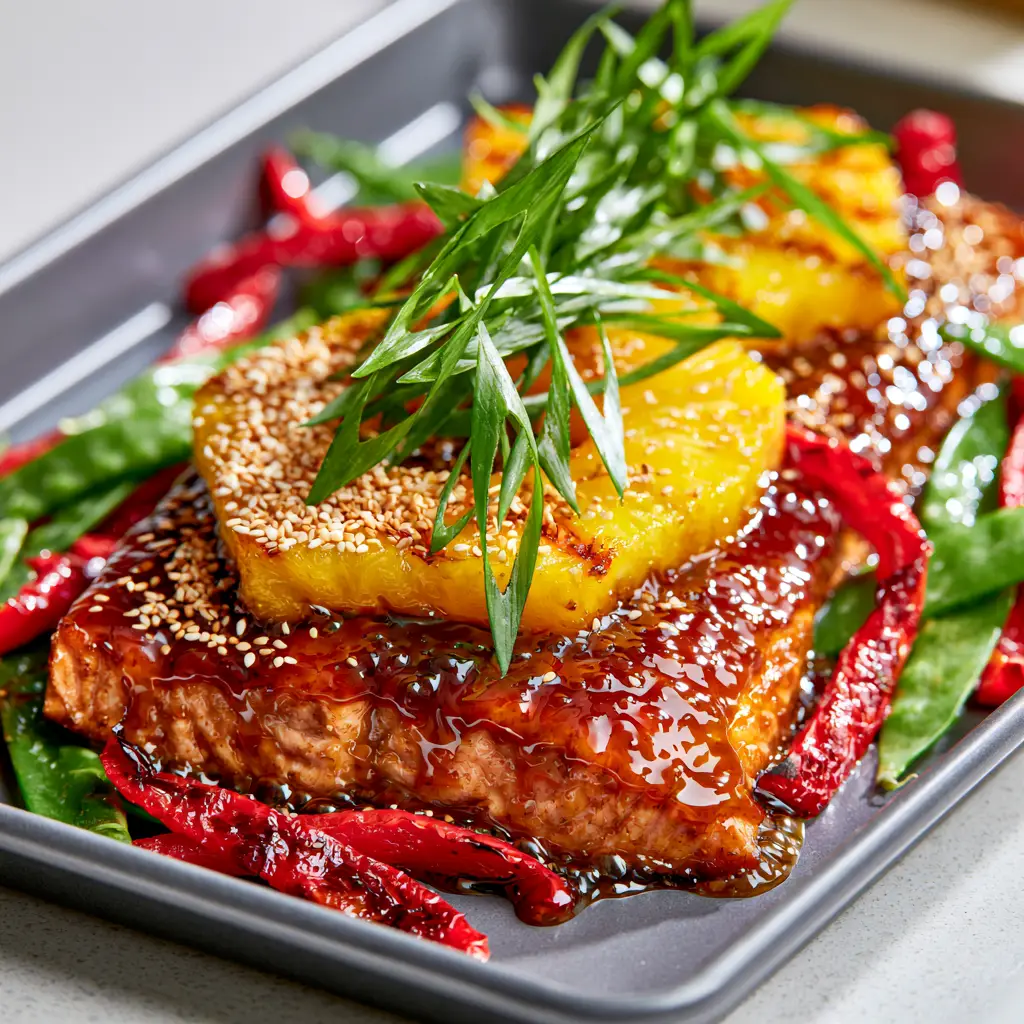
- Succulent Texture: The thick Atlantic salmon fillets stay incredibly moist under a blanket of translucent, bubbling teriyaki glaze.
- Caramelized Sweetness: Golden-yellow grilled pineapple rings provide a juicy, charred sweetness that cuts through the rich fat of the fish.
- Vibrant Visuals: A spray of bright green, bias-cut scallions and blistered red pepper strips creates a professional presentation that is Pinterest-perfect.
- One-Pan Ease: Everything cooks together on a dark gray metal sheet pan, making cleanup a breeze while maximizing the flavor of the scorched glaze edges.
The Anatomy of Perfect Baked Pineapple Salmon
To achieve the results seen in the photos, you need the right components. This isn’t just about throwing fish in the oven; it is about layering flavors and textures. Using a dark metal sheet pan is critical here, as it absorbs more heat, helping to create those coveted scorched glaze edges that add a deep, smoky undertone to the dish.
The glaze itself must be thick and translucent. We aren’t looking for a watery sauce. We want a coating that clings to the salmon, reflecting natural light with a dark amber glow. Pair this with tender snap peas and blistered red bell pepper strips for a complete meal that feels light yet satisfyingly hearty. If you enjoy this flavor profile, you might also love our garlic chicken lo mein for another weeknight favorite.
Essential Ingredients for Success
Atlantic Salmon Fillets: Choose thick, center-cut fillets (about 6 oz / 170g each) for the most succulent results. The thickness allows the outside to glaze perfectly while the inside remains tender and flaky.
Pineapple Rings: You can use fresh or high-quality canned pineapple. The goal is to get those light char marks and a golden-yellow hue that signifies caramelization.
Teriyaki Glaze: A combination of soy sauce, honey (or brown sugar), ginger, and garlic. It needs to be reduced until it is a thick, translucent, dark amber consistency.
Red Bell Peppers: Sliced into thin strips, these provide a pop of color and a sweet, charred flavor once blistered in the high heat of the oven.
Snap Peas: These add a necessary crunch. We want them tender-crisp, meaning they are cooked through but still have a snap when you bite into them.
Aromatics & Garnishes: Toasted white sesame seeds provide a nutty finish, while paper-thin, bias-cut scallions add a fresh, sharp bite that cuts through the sweet glaze.
How to Make The Best Baked Pineapple Salmon
Preparing the Sheet Pan and Salmon
Start by preheating your oven to 400°F (200°C). Grab a dark gray metal sheet pan—this is the “secret weapon” for getting those scorched glaze edges. Line it with parchment paper if you want easier cleanup, but for the best caramelization, a lightly oiled pan works best.
Pat your 1.5 lbs (680g) of salmon fillets dry with a paper towel. This step is non-negotiable! Moisture is the enemy of a good glaze. Season the fillets lightly with sea salt and cracked black pepper. Arrange them on the pan, leaving space for the vegetables.
Vegetable Prep and Initial Roast
Toss your 1 cup (150g) of snap peas and 1 large red bell pepper (sliced into strips) with 1 tablespoon (15ml) of neutral oil. Scatter them around the salmon fillets. Place the golden-yellow pineapple rings directly onto the pan or right on top of the salmon for maximum flavor infusion.
Slide the pan into the oven for an initial 8-10 minutes. This allows the blistered red bell pepper strips to begin softening and the pineapple to start releasing its natural sugars.
The Glazing Phase
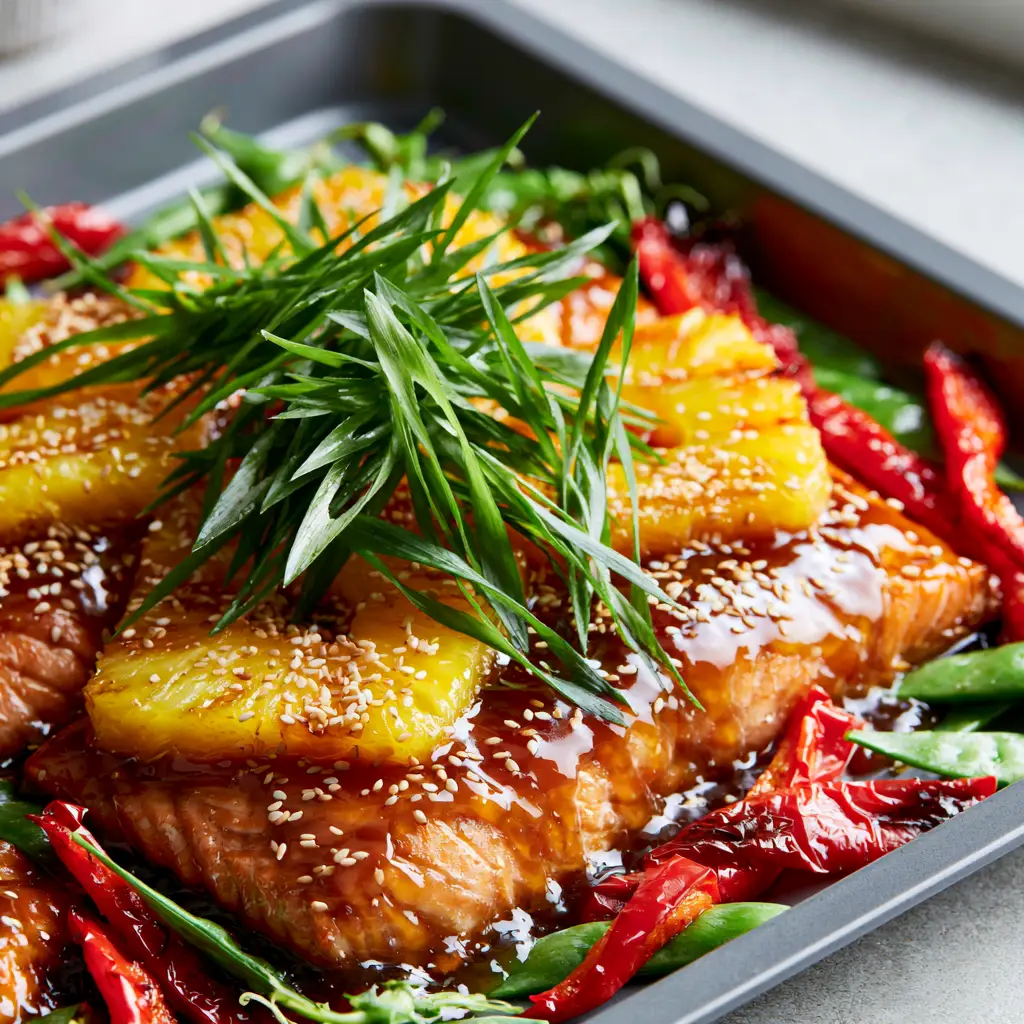
Remove the pan and generously brush the salmon and pineapple with your thick teriyaki glaze. You want a heavy coating that looks glossy and bubbling. Return to the oven for another 5-7 minutes. For the ultimate finish, turn the broiler on for the last 2 minutes. Watch closely! You want the edges of the glaze to scorch slightly, creating a deep amber color.
The Final Flourish
Once the salmon is perfectly flaky, remove the pan from the oven. Immediately garnish with a precise dusting of toasted white sesame seeds. The residual heat will help release their aroma. Finally, scatter a spray of bright green bias-cut scallions across the top for that professional, high-contrast look.
Expert Tips for the Ultimate Pinterest-Worthy Result
- The Skin Factor: If using skin-on salmon, ensure the pan is hot before adding the fish to help prevent sticking, though for this specific glazed style, skinless fillets often allow for better glaze coverage.
- Don’t Overcrowd: Give the snap peas and peppers room to breathe. If the pan is too crowded, the vegetables will steam instead of blistering.
- Glaze Consistency: If your teriyaki sauce is too thin, simmer it in a small saucepan over medium heat for 5 minutes before brushing it onto the Baked Pineapple Salmon.
- The Bias Cut: When cutting your scallions, tilt your knife at a 45-degree angle. This creates long, elegant ovals rather than boring circles, which is a hallmark of high-end food photography.
Storage, Reheating & Freezing
To Store: Keep leftovers in an airtight container in the refrigerator for up to 3 days. The glaze actually helps keep the salmon moist even after it has been chilled.
To Reheat: For the best results, reheat in a 275°F (135°C) oven until just warmed through. This prevents the salmon from becoming rubbery. Avoid the microwave if possible, as it can ruin the tender-crisp texture of the snap peas.
To Freeze: We do not recommend freezing this dish once cooked, as the pineapple and snap peas will lose their structural integrity and become mushy upon thawing.
What to Serve With This Dish
This Baked Pineapple Salmon is a complete meal on its own, but it pairs beautifully with a few sides. A bed of fluffy jasmine rice is the classic choice to soak up any extra succulent Atlantic salmon juices and glaze. For a lower-carb option, try a refreshing asian ramen coleslaw or even a light mexican street corn salad for a fusion twist.
If you have leftover pineapple, consider using it for a sweet finish with these pineapple mascarpone upside down mini cakes.
Frequently Asked Questions
Yes, but ensure the fillets are completely thawed and patted very dry with paper towels. Excess moisture will prevent the teriyaki glaze from becoming thick and glossy.
The salmon is done when it reaches an internal temperature of 145°F (63°C) and flakes easily with a fork. It should look succulent and moist, not dry or opaque throughout.
Both work! Fresh pineapple provides a firmer texture, while canned pineapple rings are often sweeter and caramelize quickly due to their syrup. Just drain canned rings well before baking.
Hold your scallions in a bundle and slice them at a sharp 45-degree angle. This creates the long, elegant green sprays seen in professional food photography.
Dark metal pans absorb and conduct heat more efficiently than light-colored or glass pans. This helps achieve those beautiful scorched glaze edges and blistered red peppers.
The Complete Baked Pineapple Salmon Recipe
Baked Pineapple Salmon with Glossy Teriyaki Glaze
Ingredients
Equipment
Method
- Preheat oven to 400°F (200°C). Pat salmon fillets dry and place on a dark metal sheet pan.
- Toss snap peas and red bell pepper strips with oil, then scatter around salmon. Place pineapple rings on the pan.
- Bake for 8-10 minutes until vegetables begin to soften.
- Brush salmon and pineapple with thick teriyaki glaze. Bake 5-7 minutes more until salmon is perfectly flaky.
- Optional: Broil for 1-2 minutes until you see scorched glaze edges and bubbling translucent amber sauce.
- Garnish with toasted white sesame seeds and bias-cut green onions before serving.
Notes
Dry the salmon thoroughly for a thicker glaze coating.
Join the Community!
Did you make this Baked Pineapple Salmon? I would love to see how your sheet pan turned out! Take a photo of those blistered red bell pepper strips and caramelized pineapple and tag @katie_tasty on Pinterest. Seeing your creations makes my day!
Please leave a 5-star rating in the recipe card above and save this pin to your “Healthy Dinner Ideas” or “Sheet Pan Meals” board so you never lose it. Happy cooking!