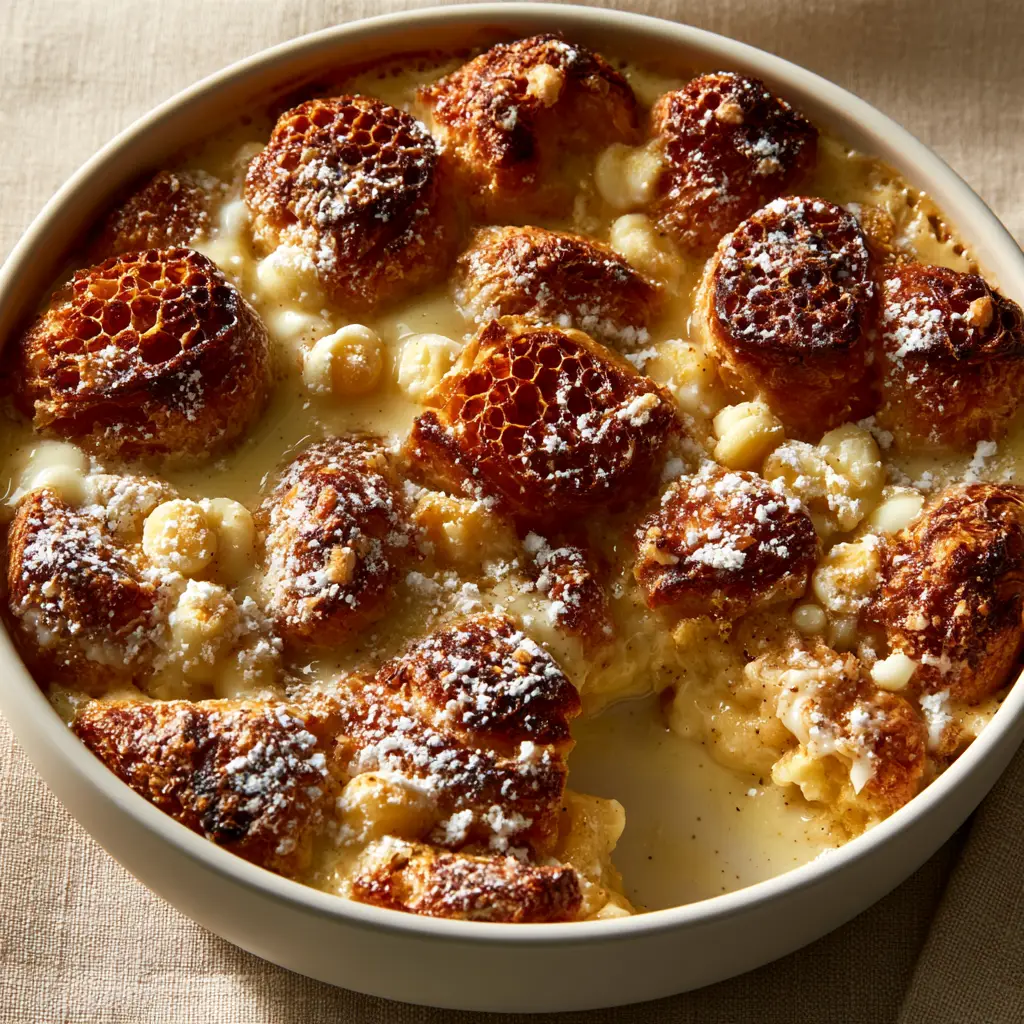
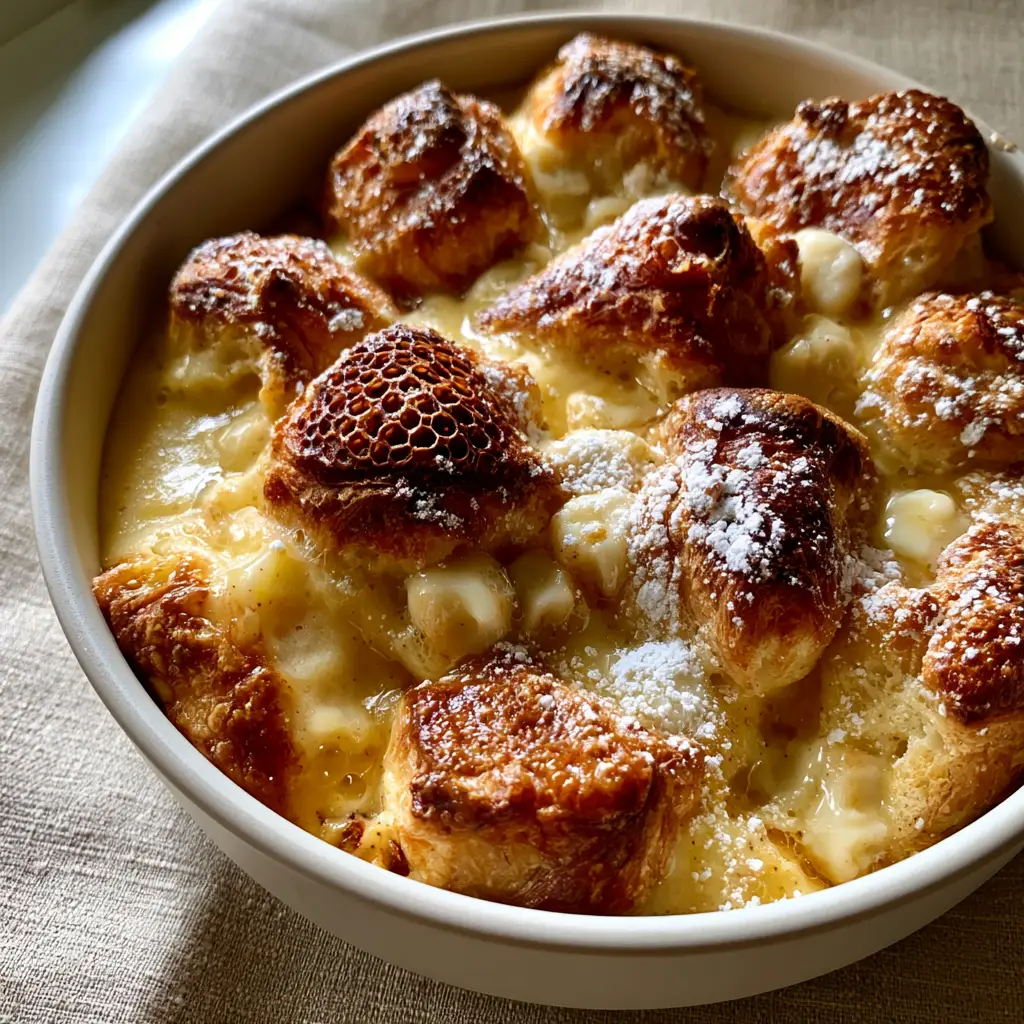
Imagine the soft, warm morning light streaming across your kitchen table, illuminating a masterpiece of golden-brown pastry and silken custard. This croissant bread pudding is not merely a dish; it is a sensory experience defined by its deeply caramelized, toasted peaks and a rich, glossy vanilla bean custard that pools in every buttery crevice. By utilizing torn, flaky croissants instead of standard bread, we achieve a honeycomb texture that remains light while soaking up a decadent cream base.
The magic of this specific croissant bread pudding lies in the contrast between the crisp, toasted exterior and the steaming, moist interior revealed with every spoonful. We have designed this recipe to yield a restaurant-quality result in a matte white ceramic dish, ensuring even heat distribution for that signature silky mouthfeel. Whether you are hosting a festive brunch or seeking the ultimate comfort dessert, this white chocolate-infused bake stands as the pinnacle of indulgent home cooking.
Why This Is the Only Croissant Bread Pudding Recipe You Need
- Visual Texture Mastery: The recipe focuses on creating deeply toasted, golden-brown peaks that contrast beautifully with a moist, custardy center.
- Saturated Vanilla Profile: We use real vanilla bean caviar to ensure a rich, aromatic experience that permeates every bite of the torn pastry.
- White Chocolate Integration: Strategically placed semi-melted white chocolate morsels add pockets of sweetness and a velvety texture that elevates the buttery croissant base.
- Professional Lamination Retention: Unlike dense bread puddings, our technique preserves the honeycomb flaky texture of the croissants, preventing the dish from becoming a heavy mass.
The Essential Components for a Silken Croissant Bread Pudding
Buttery Large Croissants: The foundation of the dish. You need 6 to 8 large, day-old croissants to ensure they are dry enough to absorb the custard without losing their structural integrity.
Whole Milk (480ml) and Heavy Cream (480ml): This 1:1 ratio creates a high-fat custard base that is essential for a rich, glossy finish that mimics the luxury of a professional patisserie.
Large Egg Yolks (6) and Whole Eggs (2): Using extra yolks provides the structural “set” for the pudding while maintaining a silky, custard-like interior rather than a rubbery texture.
Granulated Sugar (150g): This provides sweetness and aids in the caramelization of the toasted croissant tips during the final stages of baking.
Vanilla Bean (1 Pod): Splitting and scraping a fresh vanilla bean provides the visible “specks” and deep aroma that pre-packaged extract simply cannot replicate.
White Chocolate Chips (170g): High-quality white chocolate with at least 20% cocoa butter will melt smoothly into the crevices of the torn croissants.
Unsalted Butter (30g): Used to grease the matte white ceramic dish, ensuring the edges of the pudding develop a slight crust without sticking.
Powdered Sugar (1 tbsp): A final, delicate dusting provides the visual “snow” effect that completes the aesthetic described in our visual blueprint.
Kosher Salt (1/2 tsp): An “invisible” but critical ingredient that balances the sweetness and enhances the natural buttery notes of the pastry.
Professional Tools for the Perfect Matte Ceramic Bake
To achieve the specific visual results of a top-down angled close-up, you must use a 9×13 inch (23x33cm) matte white ceramic baking dish. The matte finish isn’t just for aesthetics; ceramic provides gentle, even heat that prevents the custard from curdling at the edges. You will also need a sharp paring knife for the vanilla bean, a large balloon whisk to aerate the custard, and a fine-mesh sieve for the final dusting of powdered sugar. A high-quality offset spatula is helpful if you plan to lift a corner of the pudding to reveal the steaming interior for a perfect photo opportunity.
Mastering the Art of the Golden-Brown Custard Bake
Preparing the Croissant Foundation
Begin by tearing the 8 large croissants into irregular, 2-inch (5cm) pieces. Avoid using a knife; tearing creates more surface area and jagged edges that will eventually become those coveted golden-brown toasted peaks. Spread the pieces on a baking sheet and toast them in a 350°F (175°C) oven for 5-7 minutes. This step is non-negotiable as it reinforces the honeycomb flaky texture, ensuring the bread doesn’t turn to mush when saturated.
Crafting the Vanilla Bean Custard
In a large mixing bowl, whisk together the 6 egg yolks and 2 whole eggs with 150g of granulated sugar and 1/2 tsp of salt. In a small saucepan, gently warm the 480ml of milk and 480ml of cream with the scraped vanilla bean seeds and the pod itself. Once steaming, slowly temper the hot liquid into the egg mixture. This gradual process prevents the eggs from scrambling, ensuring the croissant bread pudding has a silky interior.
Saturation and Assembly
Butter your matte white ceramic dish generously. Layer half of the toasted croissant pieces into the dish, then scatter half of the 170g of white chocolate chips. Repeat with the remaining croissants and chocolate. Pour the custard mixture through a strainer over the croissants, ensuring every torn peak is moistened. Press down gently with your clean hands to encourage absorption. Let the dish sit for at least 20 minutes; this patience allows the custard to pool in the crevices as described in the visual prompt.
The Final Bake and Caramelization
Place the dish in the oven at 350°F (175°C). Bake for 35-45 minutes. Watch for the visual cues: the custard should be set but still have a slight jiggle in the center, and the croissant tips should be deeply caramelized and golden-brown. If the tips brown too quickly, tent the dish with foil. The final result should show a rich, glossy vanilla bean custard visible between the peaks.
Expert Tips for a Steaming, Silky Interior
- The Soak Time: Never skip the 20-minute resting period before baking. This is the difference between a dry pudding and one where the custard is fully integrated into the pastry layers.
- Temperature Control: Use a digital thermometer to check the internal temperature; it should reach 160°F (71°C) for a perfect set that remains moist.
- White Chocolate Placement: Push some of the white chocolate morsels slightly beneath the croissant surfaces so they melt into “puddles” rather than just scorching on top.
- The “Morning Light” Glow: To get that professional look, serve the pudding warm. The steam rising from the lifted corner is a natural byproduct of the moisture trapped within the lamination of the croissants.
Strategic Pairings for an Indulgent Brunch
While this croissant bread pudding is a star on its own, it benefits from contrasting flavors. If you are hosting a large gathering, consider serving this alongside some high-protein recipes like a crustless quiche to balance the decadence. For a holiday spread, this pudding pairs beautifully with the bright citrus notes of a French 75 cocktail, which cuts through the richness of the vanilla bean custard.
If you enjoy the process of working with dough, you might also find joy in mastering homemade cinnamon rolls or preparing a variety of vegetable side dishes to round out a dinner party where the bread pudding serves as the grand finale.
How to Store and Reheat Your Custard Creation
This dish is best served fresh and steaming, but leftovers are a treat. Store any remaining pudding in an airtight container in the refrigerator for up to 3 days. To reheat and maintain the toasted peaks, avoid the microwave. Instead, place a portion in a 300°F (150°C) oven for 10-12 minutes. This restores the crispness of the croissant tips while gently warming the silky interior without drying it out.
Common Questions About Baking with Croissants
Yes! You can assemble the pudding and let it soak in the refrigerator overnight. However, wait to do the final dusting of powdered sugar until just before serving to maintain the visual appeal.
Day-old croissants are preferred because they are drier and absorb the custard better. If you only have fresh croissants, tear them and toast them in a low oven for 10-15 minutes to remove excess moisture.
While vanilla extract works, a real vanilla bean provides the deep aromatic flavor and beautiful visual specks that define a high-end croissant bread pudding. If substituting, use 1 tablespoon of vanilla bean paste.
The key is the torn surface of the croissants. The irregular edges catch the heat and caramelize quickly. If they brown too fast, simply cover the dish with aluminum foil for the final 15 minutes of baking.
Sogginess usually occurs if the croissants weren’t toasted beforehand or if the ratio of liquid to bread is too high. Ensure you follow the 1:1 cream to milk ratio and toast your torn pieces until they feel crisp.
The Ultimate Croissant Bread Pudding Recipe

Croissant Bread Pudding: The Ultimate Vanilla Bean & White Chocolate Bake
Ingredients
Equipment
Method
- Tear the croissants into 2-inch pieces and toast in a 350°F (175°C) oven for 7 minutes until the tips show a honeycomb flaky texture.
- Whisk eggs, sugar, and salt. Warm the milk, cream, and vanilla bean caviar, then slowly temper into the egg mixture.
- Layer toasted croissants and white chocolate in the ceramic dish. Pour custard over and let sit for 20 minutes to saturate.
- Bake at 350°F (175°C) for 35-45 minutes until the peaks are golden-brown and the custard is set but jiggly.
Notes
Use a matte ceramic dish for the most even bake and beautiful presentation.
Conclusion: The Perfect Weekend Indulgence
Mastering this croissant bread pudding allows you to bring a touch of forensic culinary accuracy to your home kitchen. From the specific honeycomb texture of the torn pastry to the rich, glossy pooling of the vanilla custard, every element is designed for maximum visual and flavorful impact. We invite you to share your results and tag us in your photos! Don’t forget to follow katie_tasty on Pinterest for more visual recipe blueprints and breakfast inspiration.