There is a specific kind of culinary magic that happens when high-quality Atlantic salmon hits a searing hot pan and meets the snap of fresh garden greens. This baked salmon and asparagus recipe isn’t just a meal; it is a visual and sensory masterpiece designed to bring restaurant-level technique into your home kitchen.
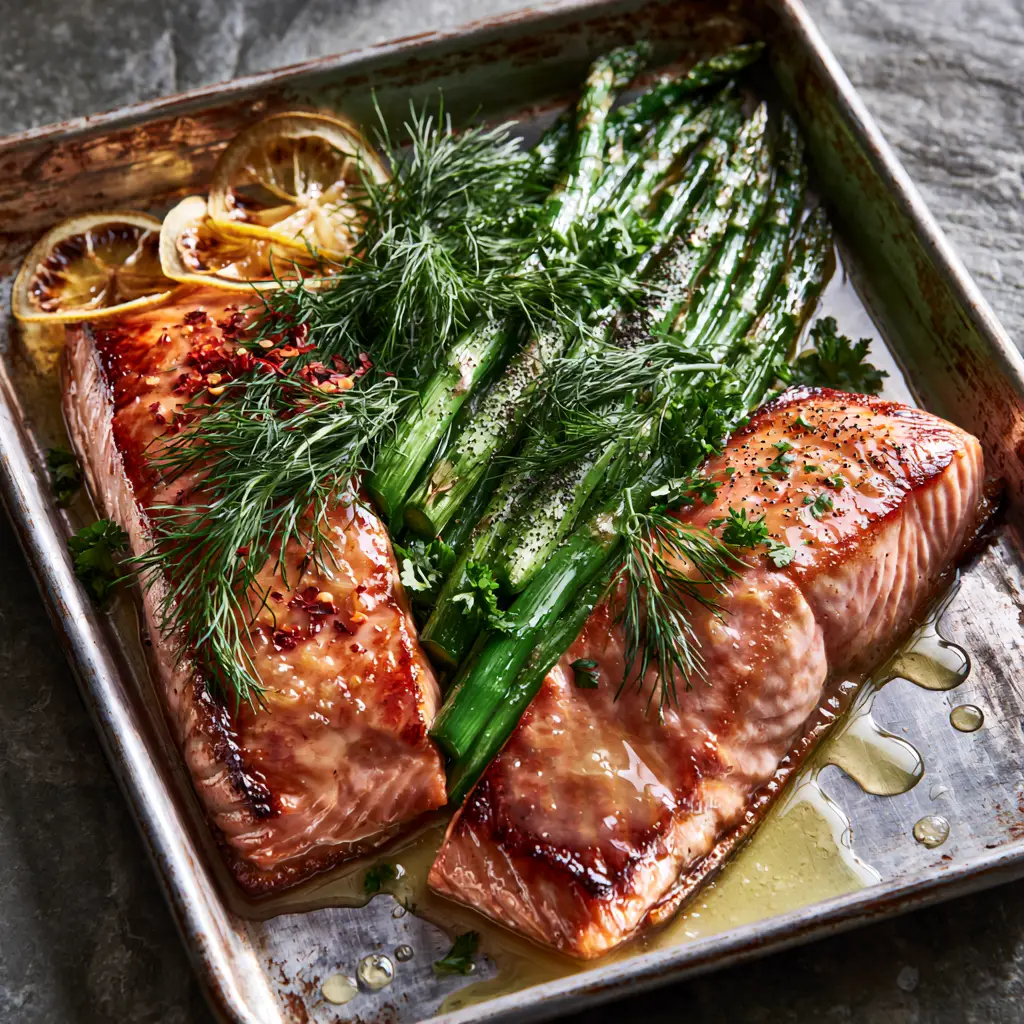
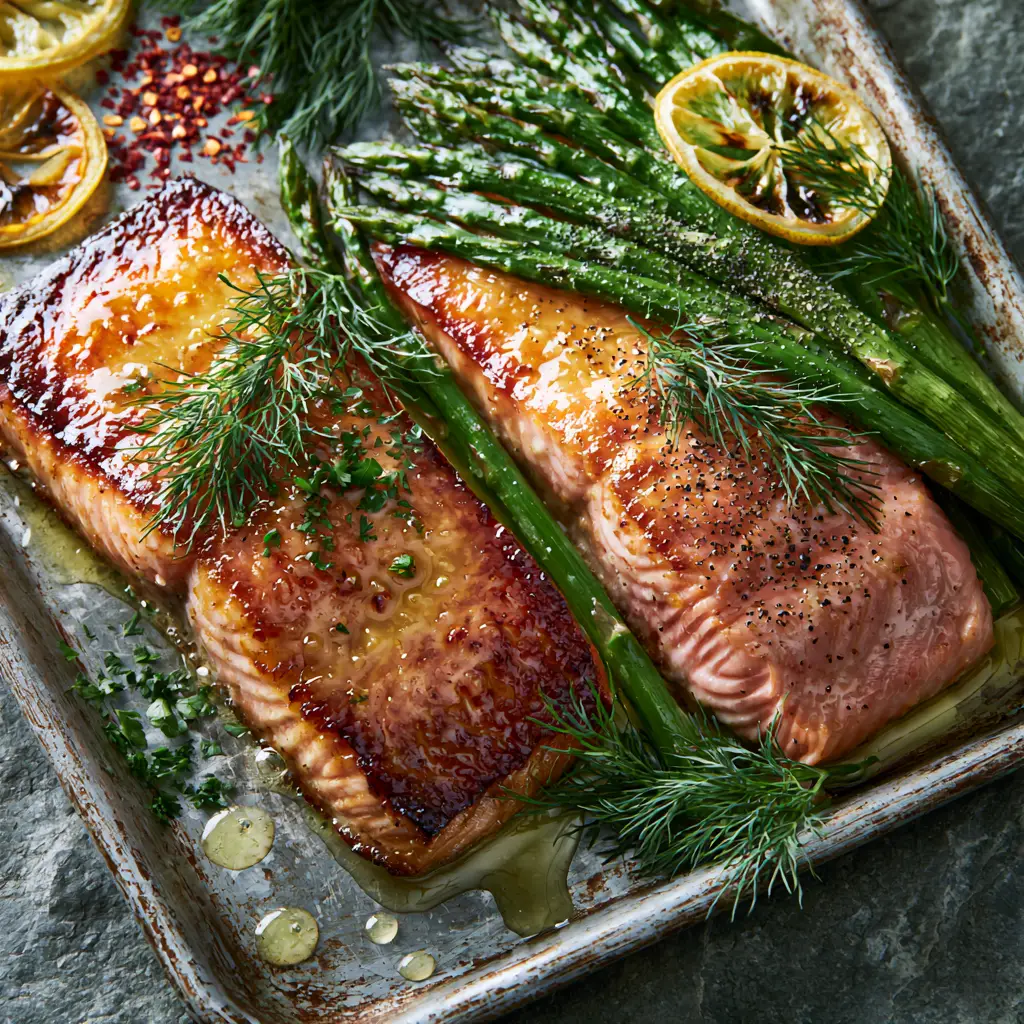
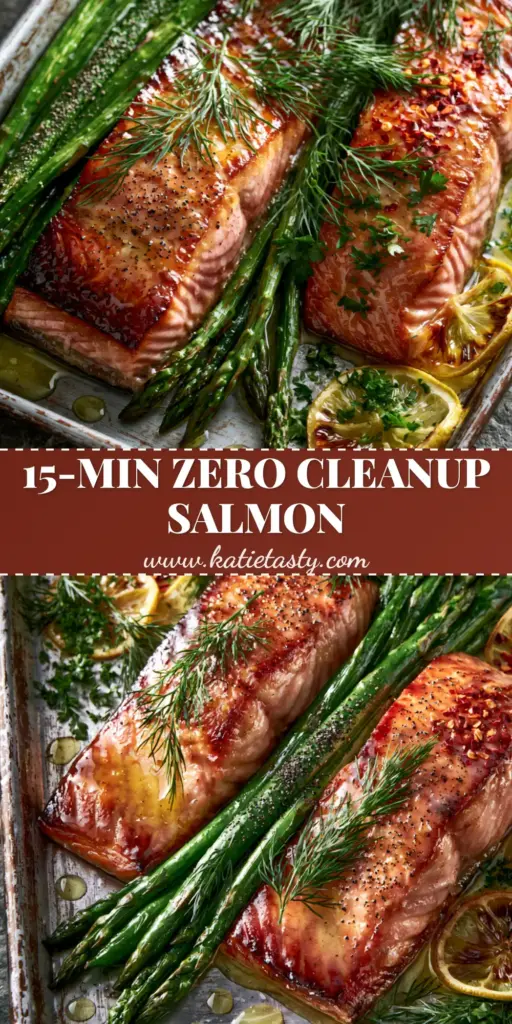
Imagine pulling a weathered silver sheet pan from the oven, the edges of the fish perfectly caramelized into a golden-brown crust while the centers remain moist, flaky, and vibrantly pink. The slender emerald asparagus spears lay nestled against the fillets, showing those coveted char marks that signify deep, roasted flavor.
Every inch of this dish is bathed in a translucent, rich lemon garlic butter glaze that catches the light, accented by the pop of bright red chili flakes and a heavy forest of fresh, feathery dill. This is the ultimate weeknight luxury that tastes like it took hours of preparation, but comes together with scientific precision in under 30 minutes.
Why This Sheet Pan Salmon Recipe Works
- The Perfect Texture Contrast: By utilizing a dual-stage cooking method, we achieve a crisp, seared exterior and a buttery, tender interior that flakes at the touch of a fork.
- Visual Forensic Perfection: Every element, from the charred lemon wheels to the dusting of coarse sea salt, is strategically placed to maximize both aesthetic appeal and flavor layering.
- Nutrient-Dense Profile: This dish is a powerhouse of Omega-3 fatty acids and essential vitamins, making it a guilt-free indulgence for any night of the week.
- One-Pan Cleanup: We utilize a single weathered silver sheet pan to ensure all the juices from the salmon and the garlic butter glaze meld together, seasoning the asparagus as they roast.
Essential Components for the Ultimate Baked Salmon and Asparagus
To achieve the result seen in high-end food photography, we must be intentional with our selection. Quality ingredients are the foundation of professional-grade cooking.
Atlantic Salmon Fillets: You will need 2 thick, center-cut fillets (approx. 6oz (170g) each). The center cut ensures even cooking and that succulent, moist texture we are looking for.
Slender Asparagus Spears: Choose a bunch (approx. 1lb (450g)) of thin spears. Thinner spears char more effectively in the short window it takes the salmon to reach its ideal internal temperature.
Unsalted Butter: 4 tbsp (56g) of high-quality butter serves as the base of our glaze. Using unsalted allows us to control the seasoning precisely with the coarse sea salt later.
Fresh Garlic: 3 cloves (15g), finely minced. This provides the aromatic backbone of the glaze without overpowering the delicate sweetness of the fish.
Lemon Duo: We use both 1 tbsp (15ml) of fresh juice for the glaze and 1 whole lemon sliced into paper-thin wheels to be charred under the broiler.
The Garnish Trio: Fresh feathery dill, minced parsley, and crushed red pepper flakes. These provide the bright green contrast and the subtle heat that cuts through the richness of the butter.
High-Heat Searing Oil: 1 tbsp (15ml) of grapeseed or avocado oil. Because we are starting with a sear to get those caramelized edges, we need an oil with a high smoke point.
Seasoning: Coarse sea salt and cracked black pepper. The larger grains of sea salt provide a visual “crunch” and a more nuanced saltiness than fine table salt.
The Tools for Professional Results
Achieving a macro-shot worthy finish requires the right gear. Don’t worry—most of these are staples in any enthusiastic home cook’s arsenal.
First, a weathered silver sheet pan is essential. Older pans often distribute heat more evenly for roasting vegetables than brand-new, reflective ones. You will also need a heavy-bottomed stainless steel or cast-iron skillet to achieve that initial sear on the salmon edges.
A sharp chef’s knife is required for mincing the herbs and slicing the lemon wheels thin enough to char without becoming bitter. Finally, a silicone pastry brush will help you evenly distribute the translucent garlic butter glaze over every crevice of the fish and asparagus.
Step-by-Step Instructions to Culinary Excellence
Phase 1: Prepping for the Perfect Sear
Preheat your oven to 400°F (200°C). The key to the baked salmon and asparagus having that “succulent” look is removing excess moisture before cooking.
Pat the salmon fillets bone-dry with paper towels. Season generously with coarse sea salt and cracked black pepper. While the oven heats, trim the woody ends off your asparagus and toss them in a small bowl with a drizzle of oil and a pinch of pepper.
Phase 2: Achieving the Golden-Brown Edges
Heat 1 tbsp (15ml) of oil in your skillet over medium-high heat until it shimmers. Place the salmon fillets flesh-side down (if skin-on, start skin-side up for the visual sear). Sear for exactly 2-3 minutes without moving them.
Look for the visual cue: the edges should turn a deep, caramelized golden-brown. Once achieved, carefully remove the fillets—they will still be raw in the middle, which is exactly what we want before the baking phase.
Phase 3: The Sheet Pan Assembly
Place the seared salmon fillets in the center of your sheet pan. Tightly tuck the slender asparagus spears around the fish. This “tight” arrangement, as seen in our visual blueprint, allows the vegetable juices to mingle with the fish.
In a small microwave-safe bowl, whisk together the melted butter, minced garlic, and lemon juice. Use your pastry brush to paint a thick layer of this glaze over the salmon and the asparagus. Top the tray with your paper-thin lemon wheels.
Phase 4: The Final Bake and Char
Slide the tray into the oven and bake for 8-10 minutes. For that final “macro shot” look, turn the broiler on for the last 2 minutes of cooking. Watch closely!
You are looking for the lemon wheels to slightly blacken at the edges and the asparagus to show light char marks. The salmon should be glistening and opaque on the outside but remain a moist pink in the center.
Phase 5: The Forensic Finishing Touches
Remove the pan from the oven. Immediately sprinkle the crushed red pepper flakes over the fish. Scatter a heavy handful of fresh chopped dill and minced parsley across the entire tray.
The heat from the pan will slightly wilt the herbs, releasing their essential oils and creating that “freshly prepared” aroma. Finish with one last light dusting of coarse sea salt.
Expert Tips for Sheet Pan Success
- The Temperature Rule: Use an instant-read thermometer. Salmon is perfectly succulent at an internal temperature of 135°F (57°C). It will rise to 140°F (60°C) as it rests.
- Asparagus Sizing: If you can only find thick asparagus, peel the bottom two inches of the stalks with a vegetable peeler so they cook at the same rate as the salmon.
- Butter Emulsion: If your butter glaze separates, whisk in a teaspoon of warm water to bring it back to a smooth, translucent consistency before brushing.
- Don’t Crowd the Pan: While the asparagus should be “tucked tightly,” ensure they are in a single layer to allow for proper roasting rather than steaming.
Flavor Pairings and Internal Links
While this baked salmon and asparagus is a complete meal on its own, you might want to expand your menu. If you love the profile of this dish, you must try my Baked Salmon with Lemon and Dill for a more herbaceous take.
For those who prefer a bit of sweetness, my Honey Dijon Baked Salmon offers a fantastic flavor contrast. If you are looking for a vegetarian side that mimics the roasting technique used here, consider these Baked Cauliflower Steaks.
If you enjoy the convenience of this cooking style, bookmark my Sheet Pan Lemon Garlic Butter Salmon for your next busy Tuesday night. For a completely different protein using similar garlic notes, check out this Pork Bites with Creamy Bell Pepper Sauce.
Storing and Reheating Your Salmon
Salmon is best enjoyed fresh, but leftovers make for an incredible chilled salad the next day. Store any remaining baked salmon and asparagus in an airtight container in the refrigerator for up to 2 days.
To reheat without drying out the fish, place it in a 275°F (135°C) oven with a splash of water and cover tightly with foil for 10 minutes. Avoid the microwave, as it will compromise the delicate texture of the Atlantic salmon.
Common Questions About Sheet Pan Salmon
Yes, but it must be fully thawed and patted extremely dry. Any excess moisture will prevent the golden-brown caramelization we are looking for.
The secret is the initial quick sear and using an instant-read thermometer. Pull the salmon at 135°F (57°C) to allow for carryover cooking, ensuring a succulent, pink center.
Atlantic salmon is excellent for baking because its higher fat content makes it more forgiving, resulting in a moister, flakier texture compared to leaner wild varieties.
If using thick asparagus, start roasting them on the sheet pan for 5 minutes before adding the seared salmon fillets to ensure they finish cooking at the same time.
Unsalted butter allows you to control the exact level of seasoning. We use coarse sea salt at the end to add both flavor and a professional-looking texture.
The Perfect Baked Salmon and Asparagus Recipe
Baked Salmon and Asparagus with Lemon Garlic Butter
Ingredients
Equipment
Method
- Preheat oven to 400°F (200°C). Pat Atlantic salmon fillets completely dry and season with sea salt and cracked pepper.
- Heat oil in a skillet over medium-high heat. Sear salmon flesh-side down for 2-3 minutes until golden-brown edges form. Remove from heat.
- Place salmon on sheet pan and tuck asparagus spears tightly around them. Arrange lemon wheels over the tray.
- Whisk butter, garlic, and lemon juice. Brush over the salmon and asparagus. Bake for 8-10 minutes.
- Broil for 2 minutes until lemon wheels and asparagus show light char marks. Garnish with red pepper flakes, dill, and parsley.
Notes
Use slender asparagus for even cooking times with the fish.
Closing & Call to Action
This baked salmon and asparagus represents the pinnacle of easy, elegant home cooking. By focusing on the visual cues—the golden sear, the vibrant greens, and the glistening glaze—you ensure a meal that satisfies the eyes as much as the palate. This recipe proves that you don’t need a professional kitchen to achieve professional results.
Did your salmon come out perfectly flaky? I’d love to hear about your results! Leave a comment below and let me know if you added any of your own forensic flourishes. Don’t forget to follow me on Pinterest and save this recipe to your “Healthy Dinners” board!