There is nothing quite as satisfying as a perfectly executed baked salmon with lemon and dill resting on a rustic, dark grey metallic sheet pan. This recipe isn’t just about sustenance; it’s a sensory experience designed to mimic the high-end plating of a coastal bistro right in your own kitchen. We are focusing on achieving that elusive flaky texture, where the deep pink layers of Atlantic salmon pull apart with the slightest touch of a fork.
Imagine the aroma of Meyer lemons caramelizing under intense heat, their sweetness intensifying as they char alongside fresh, vibrant dill fronds. This baked salmon with lemon and dill combines the brightness of citrus with the earthy, anise-like notes of dill, all balanced by the sharp bite of cracked black pepper and the crunch of coarse sea salt.
By using a single-pan method, we allow the juices from burst heirloom cherry tomatoes to mingle with blistered asparagus spears. This creates a natural sauce that coats the vegetables, ensuring every bite is seasoned to perfection. Whether you are a seasoned home cook or a beginner, this guide will walk you through the culinary science of the perfect roast.
The Visual Appeal of Perfectly Roasted Atlantic Salmon
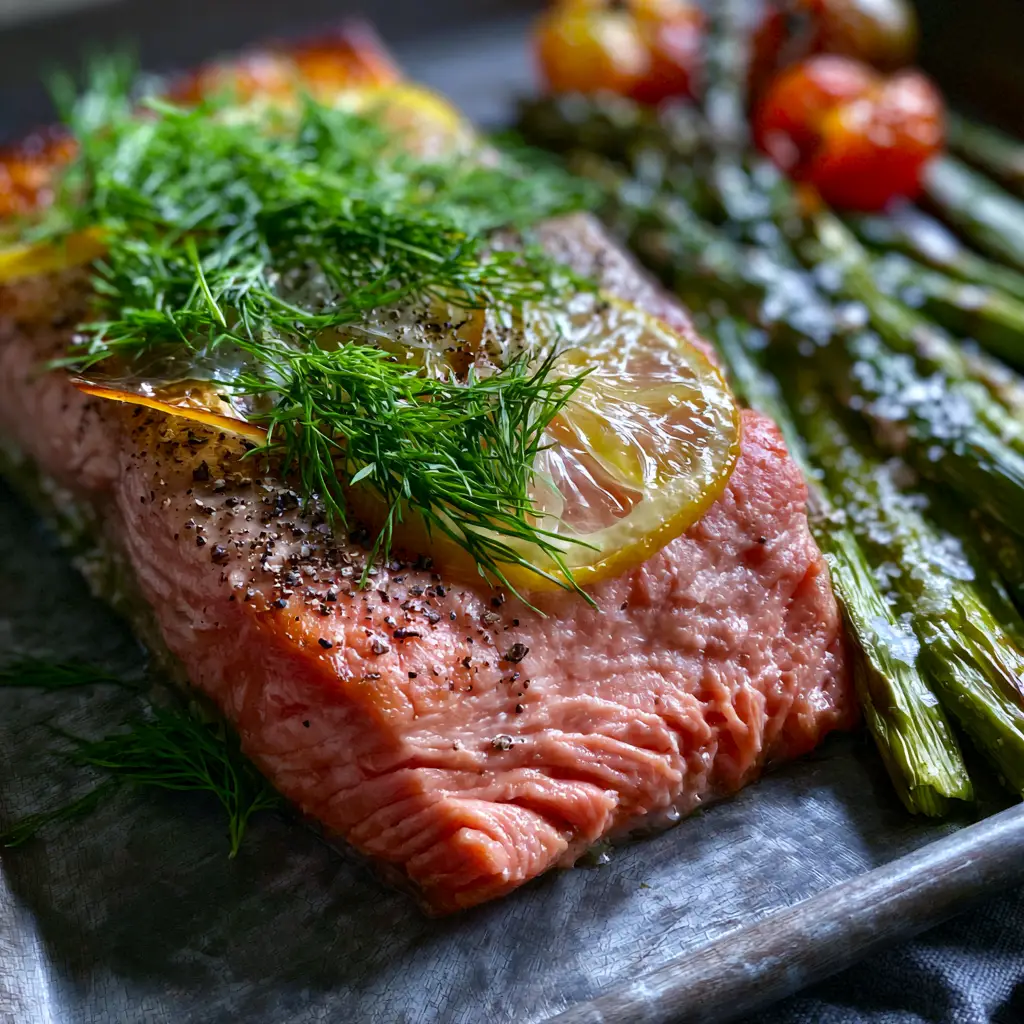
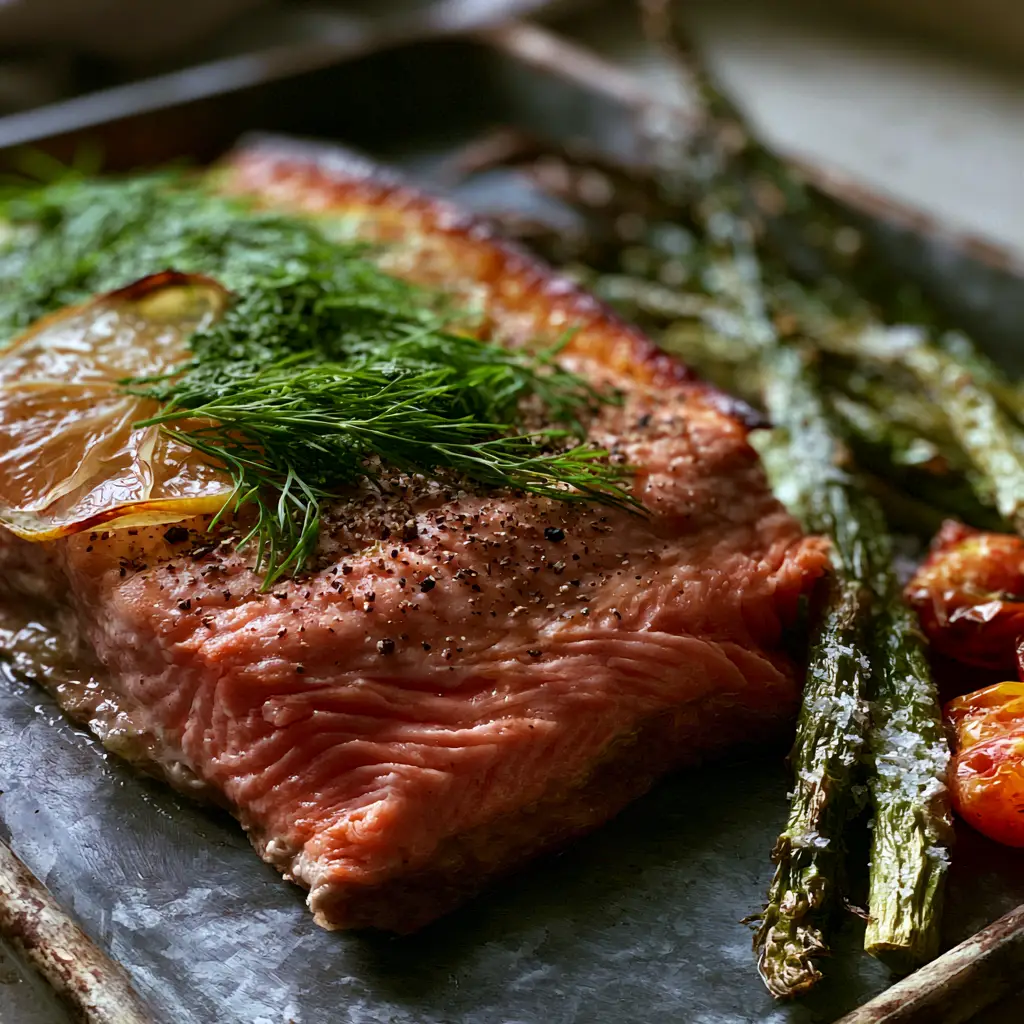
When we talk about a professional-grade baked salmon with lemon and dill, the visual cues are just as important as the flavor profile. The goal is a golden-brown seared top edge that contrasts beautifully against the moist, translucent center of the fish.
- Textural Contrast: We aim for a “shatter-crisp” exterior while maintaining a succulent, buttery interior that flakes effortlessly.
- Vibrant Aromatics: The heavy dusting of bright green dill isn’t just for show; it provides a fresh finish that cuts through the rich fats of the Atlantic salmon.
- Charred Citrus: Using Meyer lemons provides a thinner skin and higher sugar content, allowing for those beautiful charred edges that look stunning on a dark metallic pan.
- Blistered Vegetables: The asparagus should maintain a snap, while the heirloom tomatoes should be just at the point of bursting, releasing their concentrated umami juices.
Essential Components for This Sheet Pan Masterpiece
To achieve the results seen in our visual blueprint, every ingredient must serve a specific culinary purpose. We don’t just choose Atlantic salmon for its flavor, but for its fat content, which facilitates that beautiful flakiness during the roasting process.
Atlantic Salmon Fillets (approx. 6oz (170g) each): Look for fillets with consistent thickness to ensure even cooking across the entire piece of fish. The deep pink hue indicates a high concentration of healthy fats and oils.
Meyer Lemons: These are a cross between a traditional lemon and a mandarin orange. They are sweeter and less acidic, making them ideal for the charred, translucent slices that top our baked salmon with lemon and dill.
Fresh Dill Fronds: Avoid dried dill at all costs for this preparation. Fresh dill provides a volatile oil punch that dries out quickly, so we apply it generously both before and after roasting.
Heirloom Cherry Tomatoes: The variety in color—from deep purple to bright yellow—adds a visual pop to the dark grey sheet pan. Their skins are thin, allowing them to burst and create a natural jus.
Asparagus Spears: Choose medium-thickness spears. If they are too thin, they will turn mushy before the salmon is finished; if too thick, they may remain woody in the center.
Foundational Fats and Seasonings: We use high-quality extra virgin olive oil to facilitate heat transfer. Coarse sea salt provides a localized “pop” of salinity, while freshly cracked black pepper adds floral heat.
Precision Tools for a Flawless Roast
Achieving a restaurant-quality baked salmon with lemon and dill requires the right heat-conducting equipment. The dark grey metallic sheet pan is non-negotiable here, as its dark surface absorbs more heat, helping to blister the vegetables effectively.
A heavy-duty rimmed baking sheet prevents juices from spilling into your oven, which is crucial when the heirloom tomatoes begin to burst. You will also need a sharp chef’s knife to create those paper-thin Meyer lemon slices that turn translucent under the broiler.
Lastly, an instant-read meat thermometer is your best friend. While visual cues are vital, checking that the salmon has reached an internal temperature of 145°F (63°C) ensures food safety without sacrificing the moist, flaky texture we crave.
Step 1: Calibrating Your Environment and Prepping the Pan
Preheat your oven to 400°F (205°C). This high temperature is necessary to achieve the “seared” top edge described in our visual prompt without overcooking the delicate interior of the Atlantic salmon.
Lightly coat your dark grey metallic sheet pan with 1 tbsp (15ml) of olive oil. Using your hands or a pastry brush, ensure the entire surface is covered, which prevents the skin of the salmon and the delicate asparagus tips from sticking.
Prepare the vegetables by trimming the woody ends off 1 lb (450g) of asparagus. Toss the asparagus and 1 cup (150g) of heirloom cherry tomatoes in a small bowl with olive oil and a pinch of coarse sea salt before arranging them on the pan.
Step 2: Seasoning the Salmon for Maximum Visual Impact
Pat the salmon fillets completely dry with a paper towel. This is a critical forensic step; any moisture on the surface will create steam, preventing that golden-brown crust from forming on the top edge.
Drizzle the fillets with a small amount of olive oil. Generously season with cracked black pepper and coarse sea salt, ensuring the salt crystals are visible, just like in the macro photo. Lay 2-3 translucent Meyer lemon slices atop each fillet.
Finely chop half of your fresh dill and sprinkle it over the salmon. We will save the remaining sprigs for a fresh garnish at the very end to maintain that “bright green” aesthetic against the roasted fish.
Mastering the Roasting Process
Place the sheet pan on the center rack of the oven. Roast for 12-15 minutes. You are looking for the salmon to transition from a translucent raw pink to an opaque, deep pink. The tomatoes should begin to wrinkle and show signs of structural collapse.
The Broiler Finish for Visual Perfection
To achieve the “charred” look on the Meyer lemons and the “blistered” texture on the asparagus, turn your oven to the broil setting for the final 2 minutes of cooking. Watch closely—the sugars in the lemon will caramelize quickly, and the top edge of the salmon will turn a beautiful golden-brown.
Final Sensory Cues and Garnish
Remove the pan from the oven when you hear the tomatoes “pop” and see the oil sizzling around the asparagus. The smell of toasted dill and warm citrus should fill the room. Immediately top with the remaining fresh dill sprigs and an extra crack of black pepper.
Expert Tips for the Ultimate Flaky Salmon
- Room Temperature Start: Let your salmon sit at room temperature for 15 minutes before roasting. This prevents the “white albumin” (the white protein that leaks out) from appearing, keeping your fillets looking clean and professional.
- Lemon Selection: If you cannot find Meyer lemons, use regular lemons but slice them even thinner. Traditional lemons have thicker rinds that can become bitter if not charred quickly.
- Internal Link Opportunity: If you love the combination of citrus and seafood, you might also enjoy our sheet pan lemon garlic butter salmon for a richer flavor profile.
- Visual Consistency: For the most beautiful presentation, arrange the asparagus spears in a parallel line next to the salmon, rather than scattering them haphazardly.
Optimal Storage and Reheating Guidelines
This baked salmon with lemon and dill is best enjoyed immediately to preserve the “blistered” texture of the vegetables. However, leftovers can be stored in an airtight container in the refrigerator for up to 3 days.
When reheating, avoid the microwave, which will turn the salmon rubbery. Instead, place the salmon and vegetables back on a sheet pan and heat in a 300°F (150°C) oven for 8-10 minutes until just warmed through.
We do not recommend freezing the cooked vegetables, as the cell structure of the burst tomatoes and asparagus will become mushy upon thawing. The salmon itself can be frozen for up to a month, though the texture will lose some of its flakiness.
Perfect Pairings for a Complete Meal
While this sheet pan meal is a complete dinner on its own, you can round out the plate with a few complementary sides. The acidity of the charred lemons pairs beautifully with a starchy side that can soak up the tomato juices.
Consider serving this alongside a light grain like our mushrooms with sticky rice for an earthy contrast. If you prefer a more traditional pairing, a side of roasted potatoes or a simple green salad works wonders.
For those looking for a lower-carb option, this salmon is excellent when served next to baked cauliflower steaks, which share the same roasting temperature and time profile.
Frequently Asked Questions about Roasted Salmon
Yes, but ensure it is completely thawed and patted extremely dry with paper towels to prevent steaming, which stops the golden-brown crust from forming.
The salmon is done when it reaches an internal temperature of 145°F (63°C) and the meat flakes easily with a fork while remaining moist in the center.
Yes, leaving the skin on protects the delicate flesh from the high heat of the pan and helps maintain the fish’s moisture and structural integrity.
Meyer lemons are sweeter and have thinner skins, allowing them to char and become translucent more quickly without the bitter pith of standard lemons.
Darker pans absorb more heat, which helps blister the asparagus and burst the cherry tomatoes more effectively than light-colored or glass dishes.
The Complete Recipe for Baked Salmon with Lemon and Dill
Baked Salmon with Lemon and Dill: The Ultimate Sheet Pan Seafood Dinner
Ingredients
Equipment
Method
- Preheat your oven to 400°F (205°C). Lightly grease your dark grey metallic sheet pan with 1 tbsp (15ml) olive oil.
- Toss trimmed asparagus and heirloom cherry tomatoes with remaining olive oil and a pinch of salt. Arrange on the pan sides.
- Pat salmon dry. Season with salt, pepper, and chopped dill. Top with Meyer lemon slices.
- Roast for 12 minutes until salmon is opaque and vegetables are tender.
- Turn on the broiler for 2-3 minutes until lemon slices are charred and salmon top is golden-brown.
Notes
Use an instant-read thermometer to check for an internal temperature of 145°F.
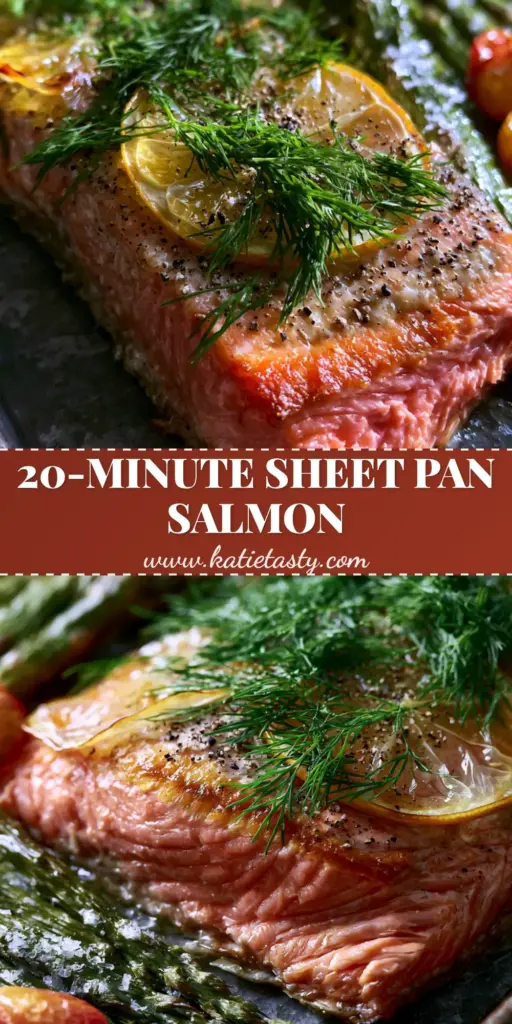
Join the Katie Tasty Community!
This baked salmon with lemon and dill is a testament to how simple ingredients and proper technique can create a world-class meal. The combination of charred citrus, fresh herbs, and perfectly roasted Atlantic salmon is a staple in my kitchen, and I hope it becomes one in yours too.
If you made this recipe, I would love to see your results! Tag me on social media or leave a comment below with your favorite way to season salmon. Don’t forget to save this recipe to your “Healthy Dinners” board by following me on Pinterest.
Looking for more inspiration? Try our classic baked salmon and asparagus for a slightly different take on this sheet pan favorite, or explore the bold flavors of our baked sweet chili salmon. Happy cooking!