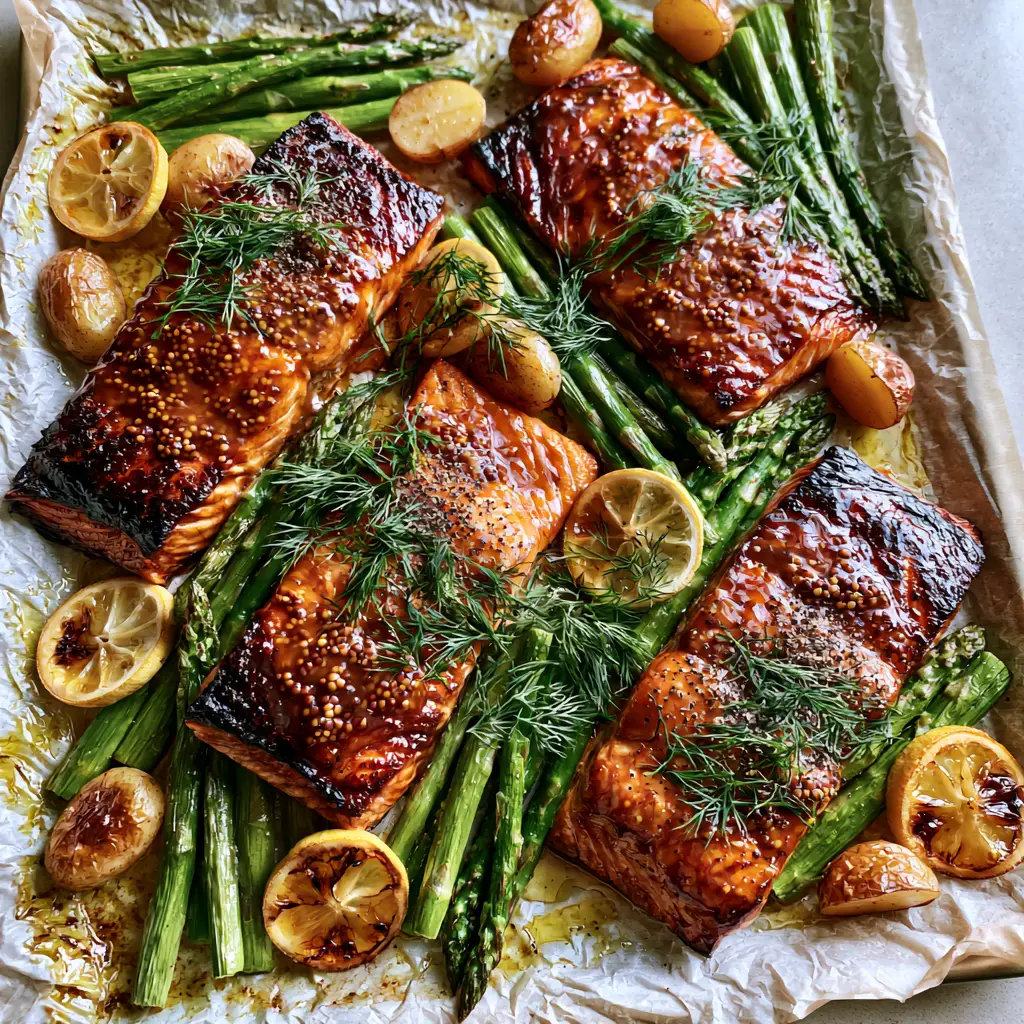
There is nothing quite as satisfying as a restaurant-quality meal that comes together on a single sheet pan. This Honey Dijon Baked Salmon is the epitome of effortless elegance, featuring succulent Atlantic salmon fillets coated in a thick, glossy glaze that caramelizes into deeply charred, golden edges.
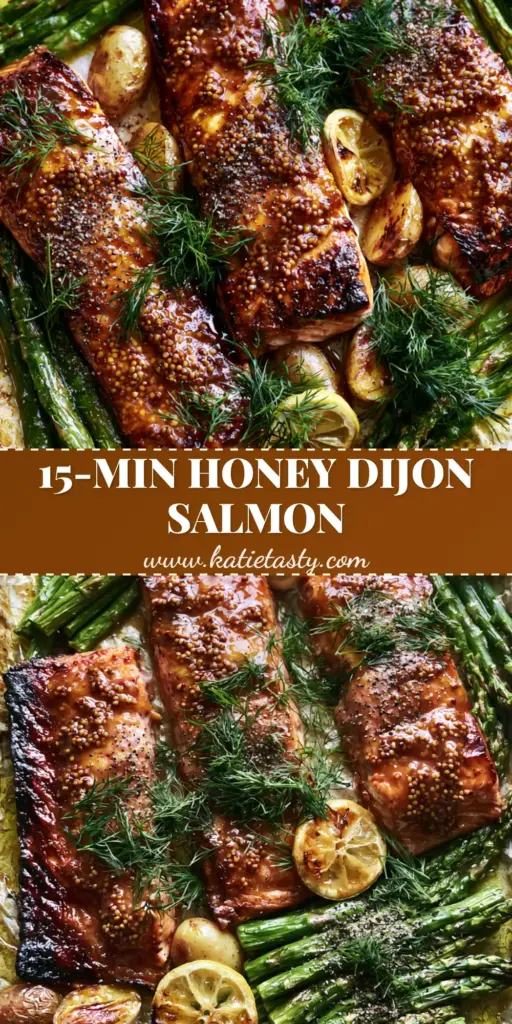
Imagine pulling a tray out of the oven where the vibrant green of roasted asparagus meets the golden-brown crispness of halved baby potatoes. The air is filled with the scent of toasted mustard seeds and citrusy charred lemons, all resting on a rustic sheet of oil-stained parchment paper.
Whether you are hosting a weekend dinner party or looking for a nutritious weeknight upgrade, this Honey Dijon Baked Salmon delivers on every sensory front. From the audible flake of the fish to the visual pop of fresh dill and cracked black pepper, this recipe is a masterclass in balance.
The Anatomy of a Perfect Sheet Pan Salmon Meal
To achieve the high-end food photography aesthetic of this dish, we focus on three pillars: texture, color, and depth of flavor. The thick honey dijon glaze isn’t just for taste; it acts as a protective barrier that keeps the salmon moist while the sugars undergo the Maillard reaction.
We use a combination of Dijon and whole grain mustard to provide both a sharp tang and a visible, rustic texture. When paired with the natural sweetness of honey, the glaze creates a sticky, lacquer-like finish that clings to every crevice of the fish.
The accompaniment of baby potatoes and asparagus ensures a complete meal. By timing the addition of the vegetables, we ensure the potatoes are soft with crispy skins, while the asparagus remains tender-crisp and bright green.
Essential Ingredients for the Signature Honey Dijon Glaze
Atlantic Salmon Fillets: We recommend using three large Atlantic salmon fillets (about 6oz/170g each) for their high fat content. This ensures the fish remains buttery and flaky even under the high heat required for caramelization.
Honey: 3 tbsp (45ml) of high-quality honey provides the necessary sugars for those iconic charred edges. It balances the acidity of the mustard and creates that beautiful, glossy sheen seen in the visual blueprint.
Whole Grain Mustard: 2 tbsp (30g) of whole grain mustard adds incredible visual appeal with its visible seeds. It provides a popping texture and a deep, earthy spice that complements the maple-dijon flavor profile.
Dijon Mustard: 1 tbsp (15g) of creamy Dijon acts as the emulsifier for the glaze. It ensures the sauce is thick enough to stay on top of the salmon rather than sliding off onto the parchment paper.
Baby Potatoes: 1 lb (450g) of baby potatoes, halved, provide the starchy base. Their small size allows them to roast to a golden-brown finish in the same timeframe as the rest of the ingredients.
Fresh Asparagus: 1 bunch (approx. 1 lb/450g) of asparagus spears adds a vibrant green contrast. These roast quickly, soaking up the juices from the salmon and the charred lemons.
Charred Lemon Rounds: One large lemon, sliced into thin rounds, is essential. Roasting the lemons mellows their acidity and concentrates their sugars, making them a delicious garnish rather than just a decoration.
Fresh Dill & Cracked Black Pepper: These are our finishing touches. A heavy sprinkling of fresh dill adds a feathery texture and herbal brightness, while coarse cracked pepper provides a final punch of heat.
Foundational Elements: You will also need 2 tbsp (30ml) of extra virgin olive oil for roasting, 1 tsp (5g) of kosher salt for seasoning, and 1/2 tsp (2g) of garlic powder to add a baseline savory note to the vegetables.
Must-Have Tools for Professional Results
To replicate the handheld smartphone photo aesthetic, you need the right gear for the cook. A heavy-duty rimmed baking sheet is non-negotiable to prevent warping under high heat.
Using a sheet of parchment paper is a culinary secret for both cleanup and presentation. It absorbs excess oil, creating those authentic “oil-stained” marks that signal a home-cooked, rustic meal.
A sharp chef’s knife is required for halving the potatoes and slicing the lemons into perfect, uniform rounds. Finally, a small whisk and mixing bowl are needed to emulsify the honey and mustards into a thick, spreadable paste.
Step-By-Step: Achieving the Perfect Sheet Pan Roast
Preheating and Prepping the Potatoes
Start by preheating your oven to 400°F (200°C). Because potatoes take longer to cook than salmon, we give them a head start. Toss the halved baby potatoes with 1 tbsp (15ml) of olive oil, salt, and pepper directly on the parchment-lined tray.
Spread them cut-side down to ensure they develop those golden-brown roasted edges. Roast for 12-15 minutes before adding the other components. This ensures every element of the sheet pan meal is finished at the exact same time.
Building the Honey Dijon Glaze
While the potatoes are roasting, whisk together the honey, Dijon mustard, whole grain mustard, and garlic powder. The consistency should be thick and glossy. If it feels too thin, add another teaspoon of whole grain mustard.
Pat the salmon fillets dry with a paper towel. This is a critical culinary step; moisture on the surface of the fish will steam it rather than sear it. We want that glaze to sit on a dry surface so it can caramelize properly.
Assembling the Pan for the Final Roast
Slide the baking sheet out and move the potatoes to the edges. Place the salmon fillets in the center and the asparagus spears in the remaining gaps. Lay the lemon rounds directly on top of the asparagus and potatoes.
Spoon the thick honey dijon glaze generously over each salmon fillet. Use the back of the spoon to ensure it covers the top and sides. This thick coating is what creates the “deeply caramelized” look described in the Midjourney prompt.
The High-Heat Finish
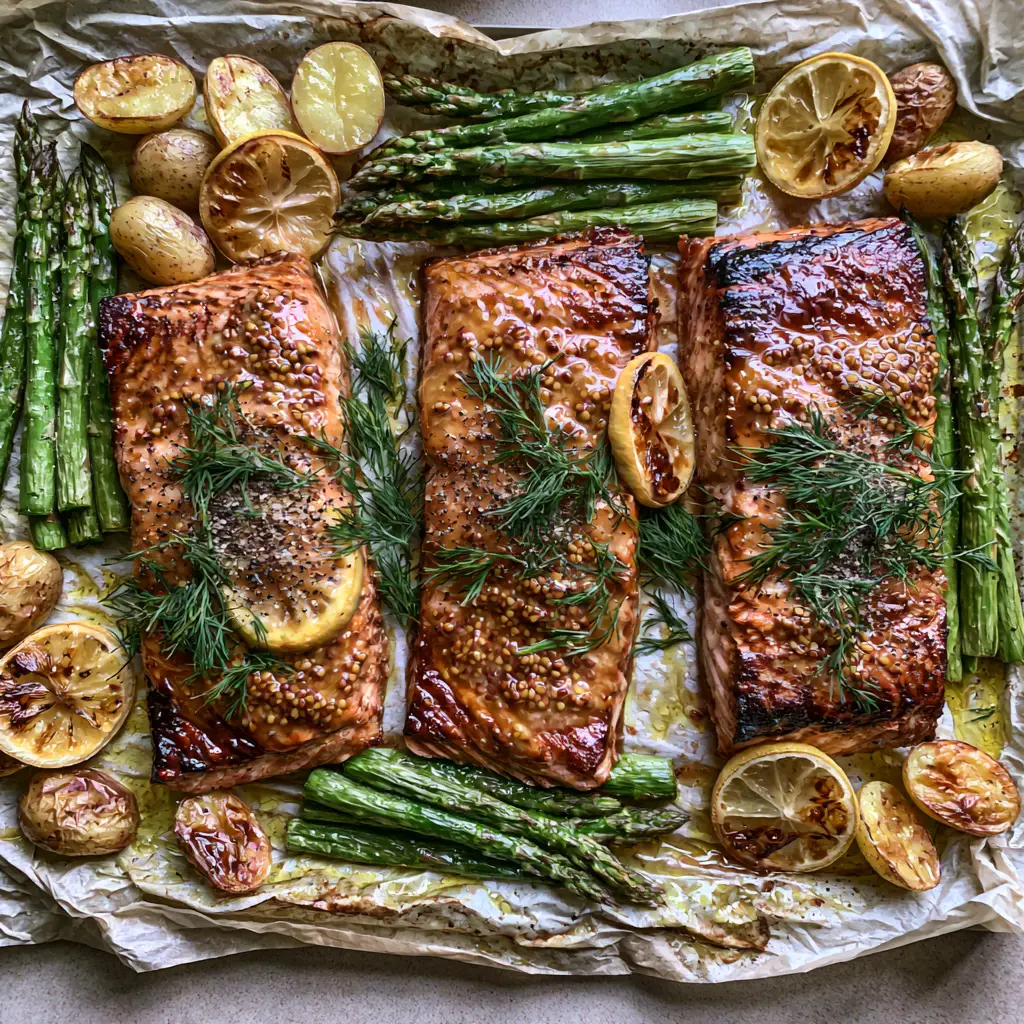
Return the pan to the oven for another 10-12 minutes. For the final 2 minutes, switch the oven to the “Broil” setting. Watch closely! The sugars in the honey will bubble and turn dark brown, creating those professional charred edges.
Look for the visual cues: the salmon should be opaque and flake easily with a fork, the asparagus should have slightly shriveled tips, and the lemons should be darkened and softened.
Expert Tips for Success
- Size Matters: Ensure your asparagus spears are of medium thickness. If using “pencil” asparagus, add them only for the last 5 minutes of roasting to prevent them from becoming mushy.
- The Dry Flake: To test for doneness without a thermometer, press the side of a fork against the fillet. If the muscle fibers separate easily (the “flake”), it is ready.
- Parchment Choice: Use unbleached parchment paper for that specific rustic, tan look seen in high-end food photography.
- Freshness Factor: Never substitute dried dill for fresh in this recipe. The feathery texture of fresh dill is essential for the visual and aromatic profile of the Honey Dijon Baked Salmon.
Storage, Reheating, and Meal Prep
This dish is excellent for meal prep. Store leftovers in an airtight container in the refrigerator for up to 3 days. The flavors of the honey and mustard actually deepen overnight.
When reheating, avoid the microwave if possible, as it can make the salmon rubbery. Instead, place the salmon and vegetables back on a tray in a 300°F (150°C) oven for 8-10 minutes until warmed through. This preserves the texture of the roasted vegetables.
What to Serve with Honey Dijon Baked Salmon
While this is a complete sheet pan meal, you can stretch it further by serving it over a bed of fluffy quinoa or wild rice. The grains will soak up the extra glaze and lemon juice from the pan.
If you prefer a lighter side, a crisp cucumber salad provides a refreshing, acidic contrast to the rich, fatty salmon. For those who love a variety of textures, adding a side of roasted cauliflower can round out the plate beautifully.
Common Questions About Sheet Pan Salmon
Yes, but ensure it is completely thawed and patted very dry with paper towels to prevent the glaze from sliding off during roasting.
The salmon is done when it reaches an internal temperature of 145°F (63°C) or when it easily flakes into layers when pressed with a fork.
By roasting the halved baby potatoes cut-side down for 15 minutes before adding the salmon, you allow them to develop a golden-brown crust.
Atlantic salmon is preferred for this recipe because its higher fat content prevents it from drying out under the honey glaze’s high-heat caramelization.
Dijon provides the creamy base and sharp flavor, while whole grain mustard adds visual texture and a rustic aesthetic to the final dish.
The Ultimate Honey Dijon Baked Salmon Recipe
Honey Dijon Baked Salmon with Roasted Potatoes and Asparagus
Ingredients
Equipment
Method
- Preheat oven to 400°F (200°C) and line a sheet pan with parchment paper.
- Toss halved baby potatoes with 1 tbsp olive oil, salt, and pepper. Roast for 15 minutes.
- Whisk together honey, whole grain mustard, Dijon, and garlic powder in a small bowl.
- Add salmon and asparagus to the pan. Coat salmon with glaze and top with lemon rounds.
- Bake for 10-12 minutes, then broil for 2 minutes until edges are deeply caramelized.
Notes
Don't skip the broiling step; it's what creates the signature charred edges.
Conclusion: A Feast for the Senses
Mastering this Honey Dijon Baked Salmon means more than just following a recipe; it’s about understanding the harmony of heat, sugar, and acid. The result is a dish that looks as if it stepped out of a professional studio—glossy, vibrant, and incredibly inviting.
We invite you to try this at home and experience the satisfying snap of the roasted asparagus and the melt-in-your-mouth texture of the glazed salmon. If you enjoyed this recipe, please leave a comment below and share your results!
Don’t forget to follow us on Pinterest and pin this recipe to your “Healthy Dinners” board for later!