There is a specific kind of culinary magic that happens when high-grade maple syrup meets the pungent, textured bite of whole-grain mustard. When applied to a succulent Atlantic salmon fillet and subjected to the concentrated heat of an oven, these ingredients transform into a bubbling, caramelized crust that is the hallmark of a world-class meal.
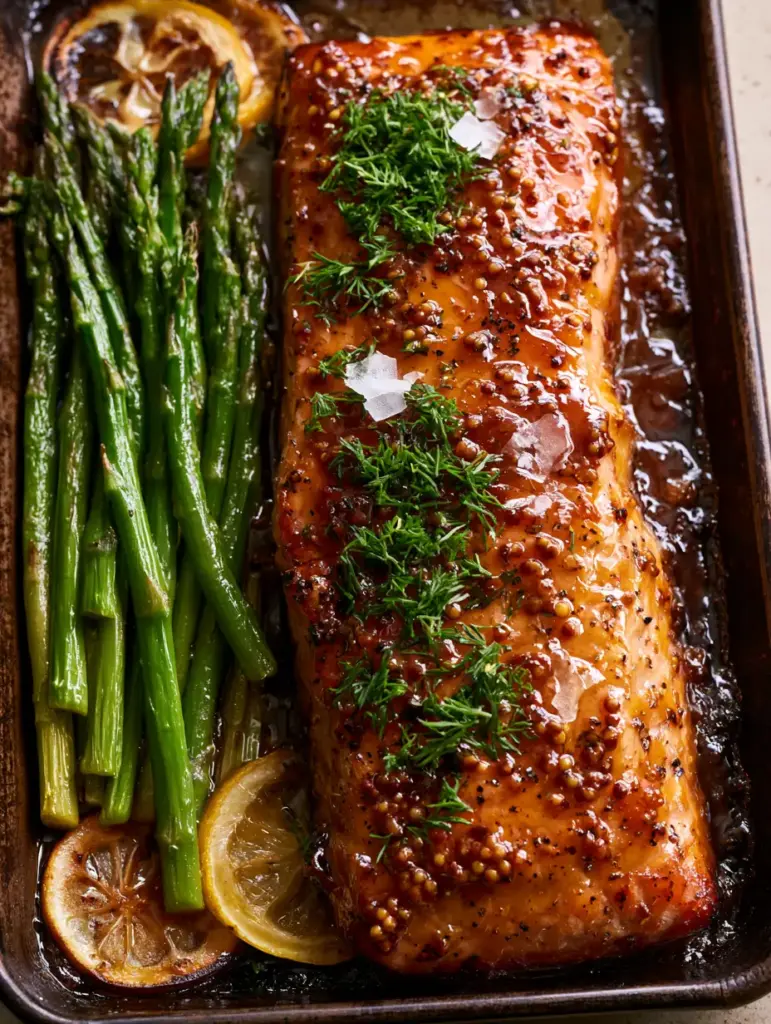
Our Maple dijon baked salmon isn’t just a recipe; it’s a sensory experience designed to bridge the gap between “healthy weeknight dinner” and “gourmet centerpiece.” As the salmon roasts on a rustic dark baking sheet, the glaze thickens into a glistening lacquer, while thin rounds of lemon begin to char, releasing a smoky citrus aroma that fills your kitchen.
In this guide, we are diving deep into the science of the perfect bake. From ensuring your asparagus remains tender-crisp to achieving that “buttery, flake-at-the-touch” salmon texture, every element has been meticulously tested to match the vibrant, handheld food photography that inspired this dish.
Why This Sheet Pan Salmon Recipe Is a Weeknight Game Changer
- The Maillard Masterpiece: The natural sugars in the maple syrup undergo a Maillard reaction, creating a deep, caramelized crust at the edges of the salmon that provides a satisfying crunch against the tender interior.
- Whole-Grain Texture: Unlike smooth mustard, the whole grain mustard seeds in this glaze provide “flavor pops” that burst with acidity, cutting through the richness of the Atlantic salmon.
- One-Pan Efficiency: By roasting the asparagus and charred lemon slices alongside the fish, we create a harmonious flavor profile where the vegetable juices and citrus oils meld with the maple-dijon drippings.
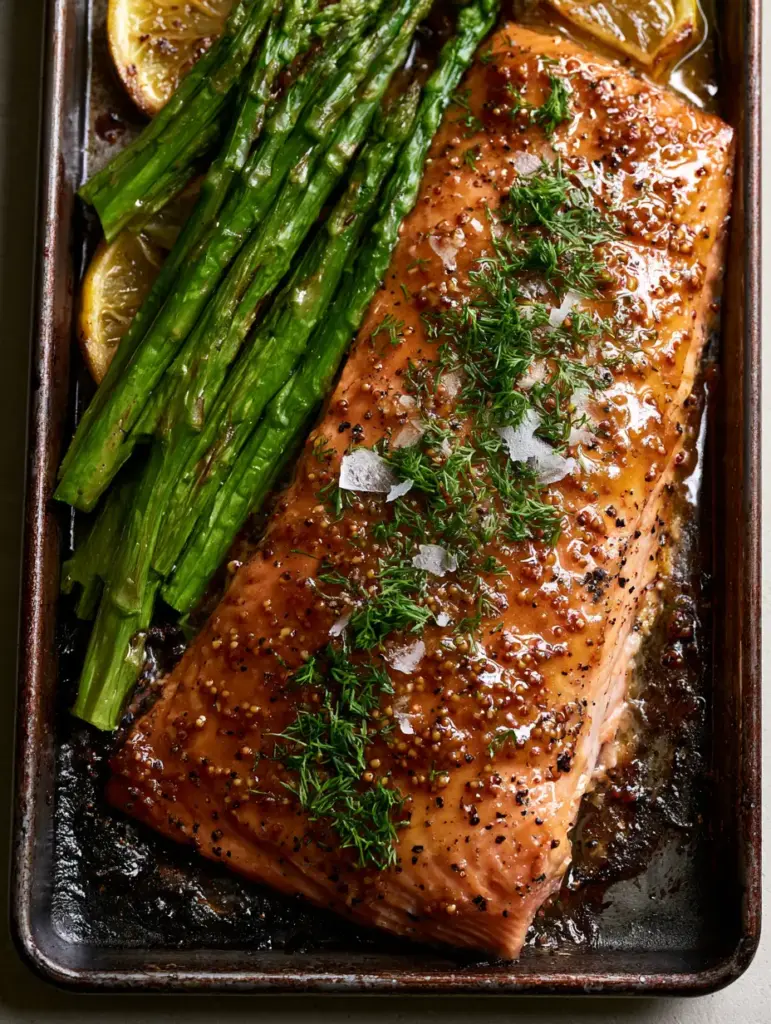
- Visual Vibrancy: The contrast between the bright green chopped dill, the pink salmon, and the charred yellow lemons makes this a “Pinterest-perfect” meal that tastes even better than it looks.
Essential Components for the Perfect Maple Glaze
To achieve the high-gloss reflections and sticky texture seen in our visual blueprint, we must select ingredients that balance moisture, sugar, and acidity. This is the foundation of our Maple dijon baked salmon.
Atlantic Salmon Fillet (1.5 lbs / 680g): We specifically recommend Atlantic salmon for its higher fat content. This “marbling” ensures the fish remains succulent and buttery even when subjected to the high heat required to bubble the glaze.
Maple Syrup (3 tbsp / 45ml): Use 100% pure Grade A maple syrup. The viscosity of real maple syrup is essential for creating that thick, glistening coating that doesn’t just slide off the fish during the baking process.
Whole Grain Mustard (2 tbsp / 30g): This provides the visual “seeds” and a rustic texture. If you enjoy a sharper bite, you can also look at our honey dijon baked salmon for a slightly sweeter variation.
Dijon Mustard (1 tbsp / 15g): Smooth Dijon acts as an emulsifier, helping the maple syrup and mustard seeds bond together into a cohesive sauce that smothers the fillet entirely.
Fresh Asparagus (1 lb / 450g): Look for medium-thickness spears. These will cook at the exact same rate as a 1-inch thick salmon fillet, ensuring they stay tender-crisp rather than becoming mushy.
Lemon Slices: Two lemons, sliced into thin rounds. These aren’t just for garnish; as they char, their juices become concentrated and sweet, providing a built-in sauce for the fish.
Fresh Dill (2 tbsp / 5g): Chopped finely and added at the very end. The residual heat from the salmon will wake up the dill’s aromatic oils without wilting the herb’s bright green color.
Foundational Seasonings: We use 1 tsp (6g) flaky sea salt and 1/2 tsp (2g) cracked black pepper. The large flakes of salt provide a crystalline crunch that highlights the sweetness of the maple.
Choosing Your Salmon: Wild-Caught vs. Farmed
When preparing Maple dijon baked salmon, the type of fish you buy significantly impacts the final cook time and mouthfeel. Atlantic salmon is almost always farm-raised, which gives it a consistent thickness and high fat content—perfect for high-heat roasting.
If you choose wild-caught varieties like Sockeye or Coho, keep in mind they are much leaner. You will need to reduce the cooking time by 3-4 minutes to prevent the fish from drying out. For those who prefer a more robust texture, our baked salmon with pistachio crust is another excellent high-protein option.
Regardless of the variety, always look for fillets that are vibrant in color and firm to the touch. Avoid any fish that has a strong “fishy” odor; fresh salmon should smell like the clean ocean.
Mastering the “Tender-Crisp” Asparagus Technique
The biggest pitfall of sheet pan meals is uneven cooking. To ensure your asparagus matches the “vibrant green” visual of our blueprint, you must prep them correctly. Always snap off the woody ends—usually the bottom 1-2 inches (2.5-5cm).
Toss the spears in a light coating of olive oil (1 tbsp / 15ml) before placing them on the pan. This oil acts as a heat conductor, allowing the exterior to sear and “blister” slightly while the interior stays snappy. This technique is similar to how we handle vegetables in our sheet pan lemon garlic butter salmon recipe.
The Step-by-Step Guide to Professional Roasting
Preheating and Pan Preparation
Position your oven rack in the upper-middle third of the oven and preheat to 400°F (200°C). A hot oven is non-negotiable for achieving caramelized edges. Use a rustic dark baking sheet or a heavy-duty rimmed sheet pan lined with parchment paper for easy cleanup.
Constructing the Maple Dijon Glaze
In a small bowl, whisk together the maple syrup, whole grain mustard, Dijon mustard, and a pinch of cracked black pepper. The glaze should be thick enough to coat the back of a spoon. If it feels too thin, let it sit for 5 minutes; the mustard solids will slightly hydrate and thicken the mixture.
Assembling the Sheet Pan
Place the salmon fillet in the center of the pan. Pat it dry with paper towels—this is a professional secret for ensuring the glaze sticks. Surround the salmon with the asparagus and lemon rounds. Drizzle the vegetables with oil and a sprinkle of salt.
Applying the Glaze and Baking
Generously pour the glaze over the salmon, using a brush or spoon to ensure it covers the top and sides. Bake for 12-15 minutes. Look for the “visual cues”: the glaze should be bubbling aggressively, and the edges of the salmon should show signs of deep browning and caramelization.
The Final Flourish
Remove the pan from the oven. The salmon should start to flake naturally when pressed with a fork. Immediately garnish with the heavy sprinkle of fresh bright green chopped dill and the large flakes of sea salt. The “side-lighting” of your kitchen window will catch the glossy reflections of the glaze at this moment.
Expert Tips for Success
- The Temperature Test: For the most buttery results, pull the salmon when the internal temperature reaches 135°F (57°C). It will rise to the perfect 145°F (63°C) while resting.
- Broiler Boost: If your glaze hasn’t caramelized enough by the time the fish is cooked, turn on the broiler for the last 60 seconds. Watch it closely to prevent burning!
- Citrus Squeeze: Use a fork to press down on the charred lemon slices before serving. The warm, smoky juice acts as a natural deglazer for the pan drippings.
- Room Temp Start: Let your salmon sit on the counter for 15 minutes before baking. This ensures the center cooks at the same rate as the exterior.
How to Store and Reheat Your Leftovers
Maple dijon baked salmon makes for an incredible cold lunch the next day, often used in salads or grain bowls. Store any leftovers in an airtight container in the refrigerator for up to 3 days.
When reheating, avoid the microwave if possible, as it can make the salmon rubbery. Instead, place the salmon in a 275°F (135°C) oven with a splash of water and cover with foil until warmed through. This preserves the “succulent” texture we worked so hard to achieve.
Perfect Pairings for a Complete Meal
While the asparagus provides a built-in side, you can round out this meal with other nutrient-dense options. A crisp korean cucumber kimchi salad offers a spicy acidity that cuts through the sweetness of the maple.
For a heartier dinner, serve the salmon over a bed of quinoa or alongside baked cauliflower steaks. If you’re looking for more seafood inspiration, our baked salmon with lemon and dill is a classic alternative that utilizes the same fresh herb profile.
Frequently Asked Questions
Yes, honey works well, but maple syrup provides a unique woody depth and a thinner consistency that caramelizes more evenly in this specific glaze.
Yes, but ensure it is completely thawed and patted extremely dry with paper towels before applying the glaze to prevent excess moisture from steaming the fish.
The salmon is done when it reaches an internal temperature of 145°F (63°C) or when it flakes easily with a fork at the thickest part.
Leaving the skin on provides a protective layer against the hot baking sheet, helping the fish stay moist. It can easily be removed after cooking if preferred.
You can substitute with extra Dijon mustard, though you will lose the specific ‘popping’ texture and rustic visual of the mustard seeds.
The Ultimate Maple Dijon Baked Salmon Recipe
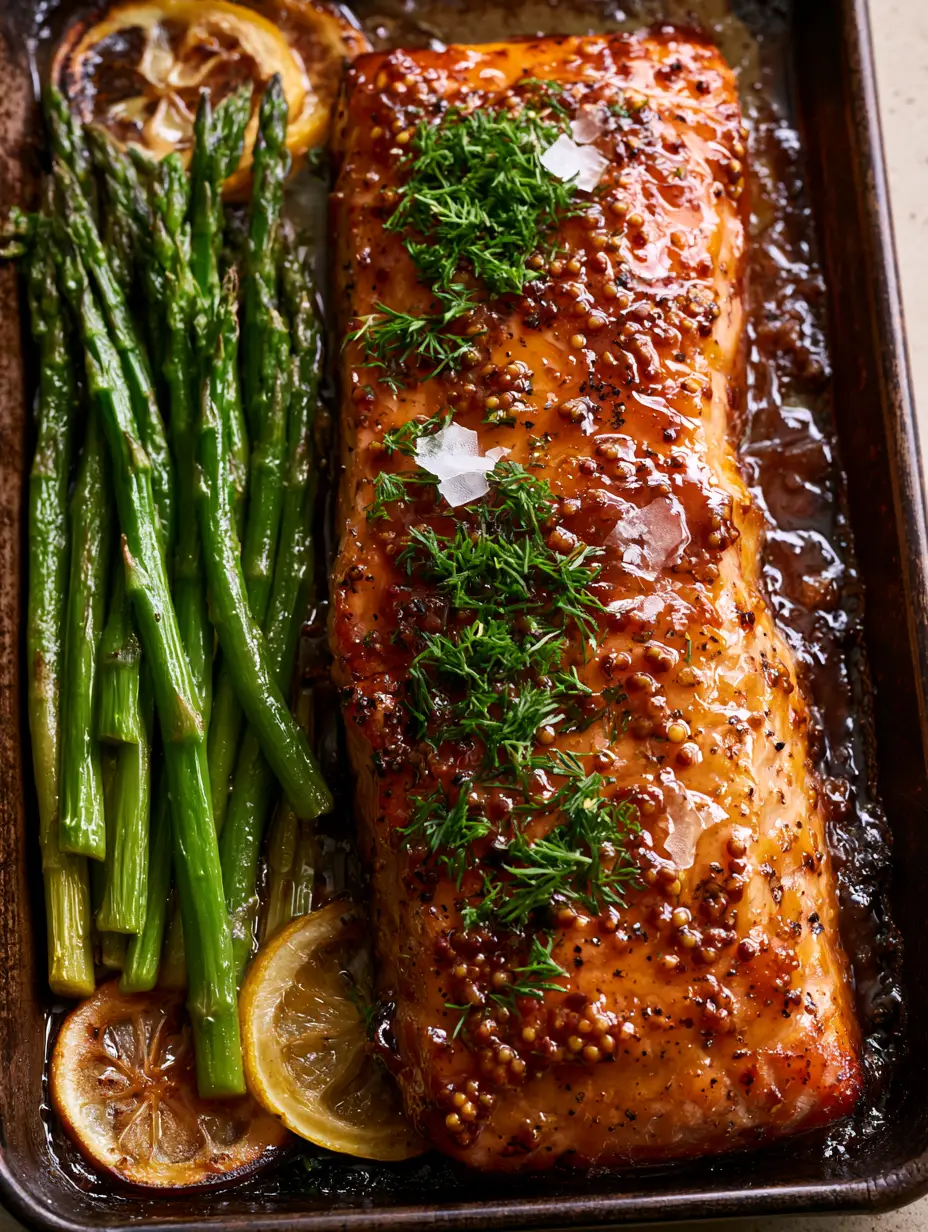
Maple dijon baked salmon with Roasted Asparagus and Charred Lemon
Ingredients
Equipment
Method
- Preheat your oven to 400°F (200°C) and line a baking sheet with parchment paper.
- In a small bowl, combine maple syrup, whole grain mustard, Dijon mustard, and black pepper.
- Place the salmon in the center of the pan. Arrange asparagus and lemon rounds around it. Drizzle veg with oil.
- Smother the salmon fillet with the glaze, ensuring the top is thick and glistening.
- Bake for 12-15 minutes until the glaze is bubbling and the salmon flakes easily.
- Sprinkle with fresh dill and flaky sea salt before serving immediately.
Notes
Pat the salmon completely dry before glazing to prevent the sauce from sliding off.
Closing & Call to Action
This Maple dijon baked salmon proves that you don’t need hours in the kitchen to produce a restaurant-quality meal. The combination of sticky maple, tangy mustard, and charred citrus creates a flavor profile that is both sophisticated and comforting. Whether you’re a seasoned pro or a home cook looking for a reliable “win,” this recipe is sure to become a staple in your rotation.
If you enjoyed this recipe, please leave a comment below and let us know how your caramelization turned out! Don’t forget to follow us on Pinterest for more visual recipe inspiration and share your creations with the hashtag #KatieTasty.