There is something deeply primal and satisfying about a seasoned cast iron skillet overflowing with Brazilian dirty rice. Known in its homeland as Arroz de Carreteiro, or “Wagoner’s Rice,” this dish is a masterclass in rustic, high-protein comfort. Traditionally prepared by gauchos traveling across the pampas of Southern Brazil, this recipe transforms humble long-grain rice into a glistening, flavor-packed treasure chest of charred meats and aromatic vegetables.
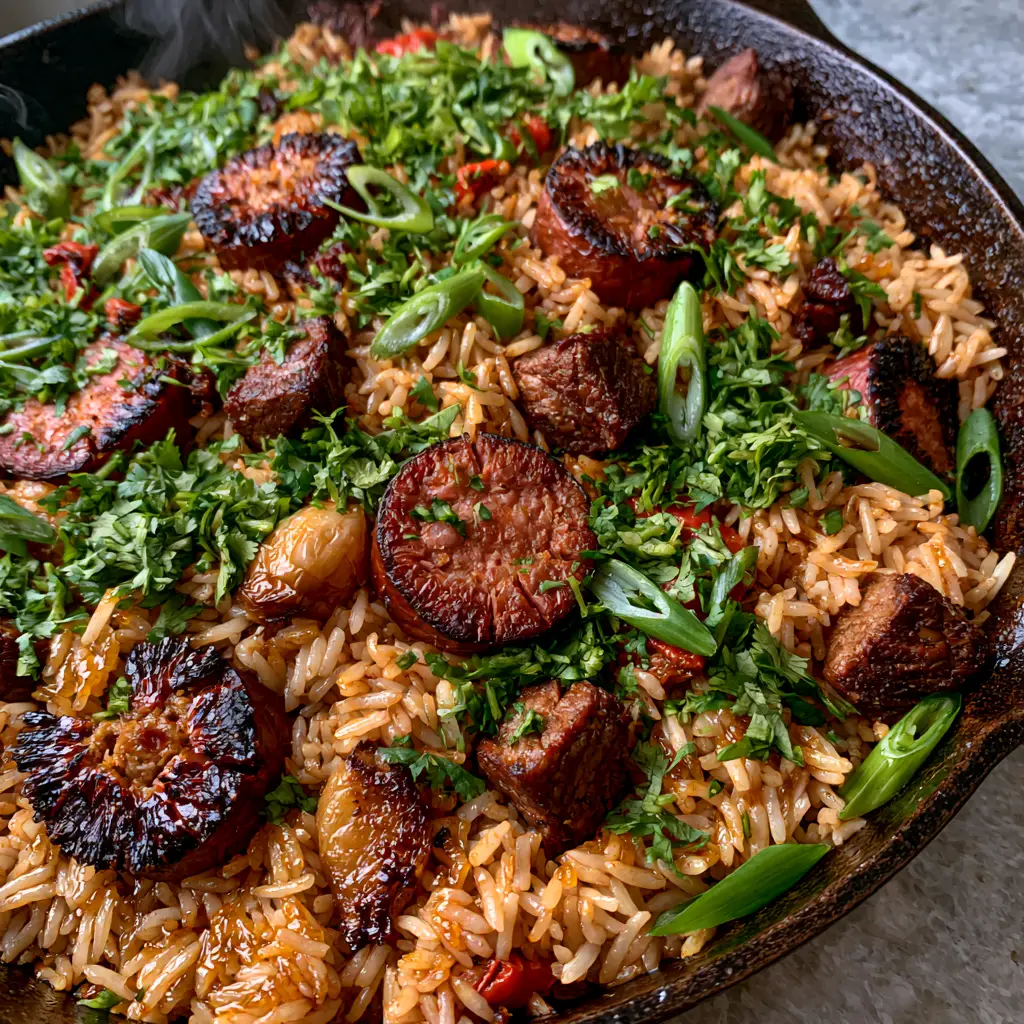
When you look at a perfectly executed skillet of this Brazilian classic, you should see a vibrant tapestry of textures. Every grain of rice is individual and fluffy, kissed by the golden fat rendered from succulent beef chuck and smoked sausage. The visual appeal is undeniable: the deep reddish-brown hue of the rice, the bright green of fresh cilantro, and the charred, crispy edges of the sausage rounds create a sensory experience even before the first bite. Let’s dive into how you can recreate this authentic masterpiece in your own kitchen.
Why You Will Love This Hearty Brazilian Arroz de Carreteiro
- Unbeatable Texture: The rice is toasted in rendered fat before simmering, ensuring every grain remains fluffy and distinct rather than mushy.
- Maillard-Driven Flavor: By searing the beef chuck and smoking sausage to a deep char, we unlock complex savory notes that infuse the entire skillet.
- Visual Vibrancy: The “confetti” of sautéed red bell peppers, cilantro, and scallions provides a fresh contrast to the rich, glistening meats.
- One-Pan Simplicity: Using a seasoned cast iron skillet allows for superior heat retention and a seamless transition from searing to simmering.
- Authentic Heritage: This recipe respects the Gaucho tradition while utilizing modern techniques to ensure the most succulent beef and aromatic garlic cloves.
Essential Elements for Authentically Fluffy Brazilian Dirty Rice
To achieve the specific visual and flavor profile of Brazilian dirty rice, you need a balance of high-quality proteins and foundational aromatics. Each ingredient serves a specific culinary purpose in building the dish’s signature depth.
1 lb (450g) Beef Chuck: Cut into small, 1/2-inch (1.3cm) cubes, this cut provides the succulent, “melt-in-your-mouth” texture visible in the blueprint. Its high fat content renders down to create the “golden fat” that coats the rice grains.
12 oz (340g) Smoked Sausage: Sliced into thick circular coins, a smoked linguiça or high-quality kielbasa is essential for those charred, crispy edges. The smokiness permeates the rice, giving it a campfire-cooked soul.
2 cups (400g) Long-Grain White Rice: Use a high-quality long-grain variety to ensure the “fluffy” result described in the Midjourney prompt. Avoiding short-grain varieties prevents the dish from becoming sticky or risotto-like.
4-6 Whole Garlic Cloves: These are left whole or lightly smashed to become softened, caramelized gems hidden among the grains. They provide a sweet, mellow pungency rather than a sharp bite.
1 Large Red Bell Pepper: Finely diced bits of pepper add a subtle sweetness and the “vibrant confetti” look that breaks up the brown tones of the meat. Sautéing them just enough keeps their color bright.
3 cups (720ml) Beef Bone Broth: This is the secret to the light reddish-brown hue of the rice. It provides more depth than water and reinforces the “meat juices” visual mentioned in the blueprint.
1/2 cup (15g) Fresh Cilantro and Scallions: Finely chopped cilantro and thin slices of bright green scallions are non-negotiable for the final garnish. They provide the necessary aromatic lift and “vibrant green” visual contrast.
2 tbsp (30ml) Neutral Oil or Lard: While the meats render fat, a little starting oil ensures the initial sear on the beef chuck is hard and fast, locking in juices immediately.
1 tsp (6g) Smoked Paprika and Cumin: These “invisible” ingredients bolster the color of the rice and bridge the gap between the smoked sausage and the fresh vegetables.
Tools for the Perfect Cast Iron Sear
The “seasoned black cast iron skillet” is more than just a serving vessel; it is a functional requirement for this recipe. The heavy bottom provides the thermal mass needed to sear the beef cubes without the pan temperature dropping, which would lead to steaming instead of browning.
A 12-inch (30cm) skillet is ideal for this volume of rice and meat. You will also need a sharp chef’s knife for the “finely chopped” garnishes and a sturdy wooden spoon to scrape up the fond—the brown bits stuck to the bottom of the pan that hold all the concentrated flavor. Achieving the “glistening meat juices” visual requires a pan that can distribute heat evenly to prevent the rice from scorching at the bottom while the top remains fluffy.
Mastering the Art of Arroz de Carreteiro: Step-by-Step Instructions
Step 1: The Hard Sear on the Proteins
Heat your cast iron skillet over medium-high heat with a tablespoon of oil. Once the pan is shimmering, add the beef chuck cubes in a single layer. Do not crowd the pan; work in batches if necessary. Let the beef sit undisturbed for 2-3 minutes until a deep, dark brown crust forms—this is the Maillard reaction in action. Flip and sear for another 2 minutes, then remove. In the same pan, add the sausage coins. Fry until the edges are charred and crispy, resembling the “thick circular coins” in the visual prompt. Remove and set aside with the beef.
Step 2: Caramelizing the Aromatics
Reduce the heat to medium. In the rendered meat fat, toss in the whole garlic cloves and the diced red bell pepper. Sauté until the garlic turns a soft golden-brown and the peppers are tender. These “softened, caramelized garlic cloves” will eventually nestle into the rice. Add the white parts of the scallions now for a foundational onion flavor that builds the aromatic base of the Brazilian dirty rice.
Step 3: Toasting the Grains for Maximum Fluffiness
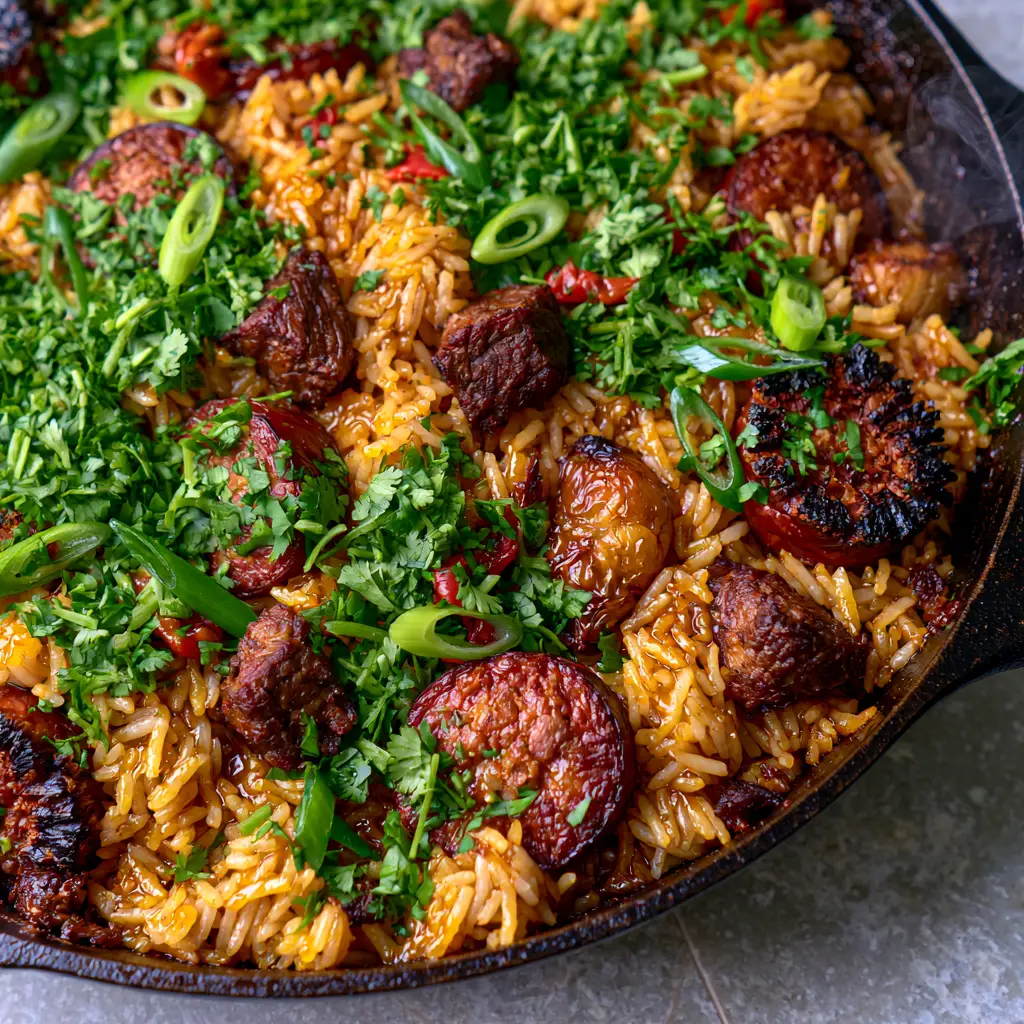
Add the dry rice directly into the skillet with the garlic and peppers. Stir frequently for 3 minutes. This process, known as nacarar in Latin cooking, coats each grain in the “golden fat.” You will see the rice turn from translucent to an opaque, pearly white. This technique is the scientific key to ensuring the rice stays fluffy and doesn’t clump together once the liquid is added.
Step 4: The Simmer and Infusion
Return the seared beef and charred sausage to the pan, along with any accumulated meat juices. Pour in the beef broth and add a pinch of salt and the spices. Bring the liquid to a boil, then immediately drop the heat to the lowest setting. Cover the skillet tightly. Let it simmer for 18-20 minutes. During this time, the rice absorbs the broth and the “reddish-brown hue” from the proteins, resulting in the “succulent” texture we are aiming for.
Step 5: The Rest and Garnish Confetti
Turn off the heat but keep the lid on for 5 more minutes. This allows the steam to finish cooking the top layer of rice perfectly. Remove the lid and use a fork to gently fluff the grains. Now, shower the skillet with the “vibrant confetti” of chopped cilantro and green scallion rounds. The residual heat will release the oils from the herbs, creating that “ultra-appetizing” aroma.
Chef’s Secrets for Unrivaled Rice Texture
- Rinse your Rice: Before cooking, rinse the long-grain rice under cold water until the water runs clear. This removes excess surface starch, which is the primary culprit of sticky rice.
- The Fond is Gold: If the bottom of your skillet looks dark after searing the beef, don’t wash it! That “dirty” appearance is where the flavor lives and what gives the rice its characteristic color.
- Whole Garlic Hack: If you find the whole garlic cloves are browning too fast, move them to the center of the meat pile to insulate them while they soften.
- Don’t Peek: Resisting the urge to lift the lid during the simmer is crucial. Every time the lid is lifted, steam escapes, and the temperature drops, which can lead to unevenly cooked grains.
Preserving the Smokiness: Storage and Reheating
Brazilian dirty rice actually tastes better the next day as the spices and meat juices further penetrate the rice grains. Store leftovers in an airtight container in the refrigerator for up to 4 days. When reheating, the goal is to maintain the “glistening” moisture without making the rice soggy.
For the best results, reheat the rice in a skillet over medium heat with a splash of beef broth or water. Cover the pan to allow the steam to revive the fluffiness of the grains. Avoid the microwave if possible, as it can toughen the beef chuck cubes. This dish does not freeze particularly well, as the texture of the rice can become grainy upon thawing.
Perfect Pairings to Elevate Your Brazilian Feast
While this Arroz de Carreteiro is a complete meal on its own, it pairs beautifully with other rustic flavors. For a full Brazilian-inspired spread, consider serving it alongside tender pork bites with bell pepper sauce to complement the peppers in the rice. If you want to lean into the smoky profile, a side of juicy herb pork tenderloin offers a leaner protein contrast.
For those looking for a lighter accompaniment, baked lemon and dill salmon provides a citrusy brightness that cuts through the richness of the sausage and beef. You could also serve it with a simple side of savory mushrooms for an extra earthy element on the plate.
Your Burning Questions Answered
Yes, any heavy-bottomed skillet or Dutch oven will work, but cast iron is preferred for its superior ability to create charred, crispy edges on the sausage.
Ensure your heat is at the lowest possible setting during the simmer and that your lid fits tightly to trap steam. The heavy bottom of a cast iron pan also helps distribute heat evenly.
A high-quality smoked Kielbasa or Andouille sausage makes an excellent substitute, providing the necessary smoky flavor and firm texture.
Long-grain white rice is best. It has less starch than short-grain varieties, ensuring the grains stay fluffy and distinct rather than clumping together in the skillet.
While ‘dirty rice’ is a Cajun term, the Brazilian Arroz de Carreteiro is often called this in English because the rice becomes ‘stained’ a deep reddish-brown by the meat juices and fond.
Brazilian Dirty Rice: The Official Recipe Card
Brazilian dirty rice: The Ultimate Arroz de Carreteiro with Seared Beef and Smoked Sausage
Ingredients
Equipment
Method
- Heat oil in the cast iron skillet. Sear beef chuck cubes until a deep brown crust forms. Remove.
- Fry sausage coins in the same pan until edges are charred and crispy. Remove.
- Cook peppers and whole garlic cloves in the rendered fat until softened and caramelized.
- Add rice to the pan and stir for 3 minutes until grains are opaque and coated in fat.
- Add broth and meats back to the skillet. Bring to a boil, then cover and simmer on low for 18-20 minutes.
- Let rest for 5 minutes, fluff with a fork, and top with fresh cilantro and green onions.
Notes
Don't skip the rest period; it's vital for the final texture.

Join the Kitchen Conversation
This Brazilian dirty rice is more than just a meal; it’s a celebration of bold flavors and time-honored techniques. The combination of charred meats, fluffy grains, and fresh herbs creates a dish that is as visually stunning as it is delicious. We would love to see your version of this Arroz de Carreteiro! Did you get those perfect charred edges on your sausage?
Leave a comment below with your results, and don’t forget to follow us on Pinterest for more visually inspired recipes. If you loved this skillet meal, please share it with your fellow home cooks!