This cabbage and sausage recipe is the quintessential comfort meal, combining humble ingredients with high-heat techniques to create something truly spectacular. We are moving far beyond the soggy, boiled cabbage of the past and leaning into the world of intense caramelization and savory depth.
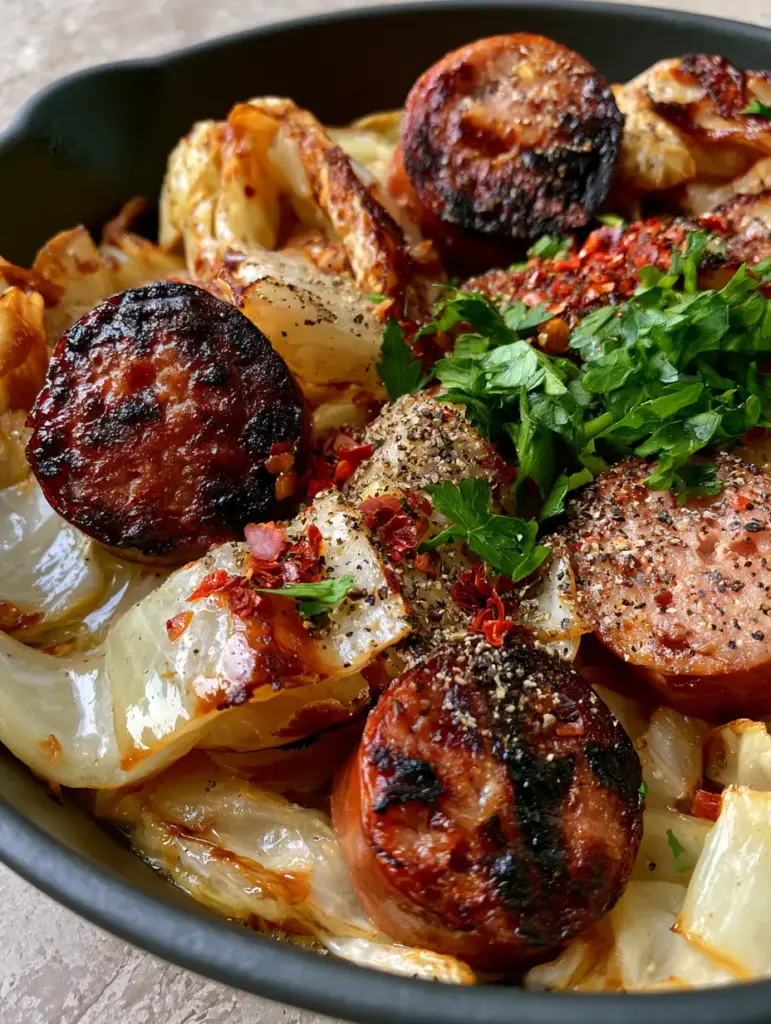
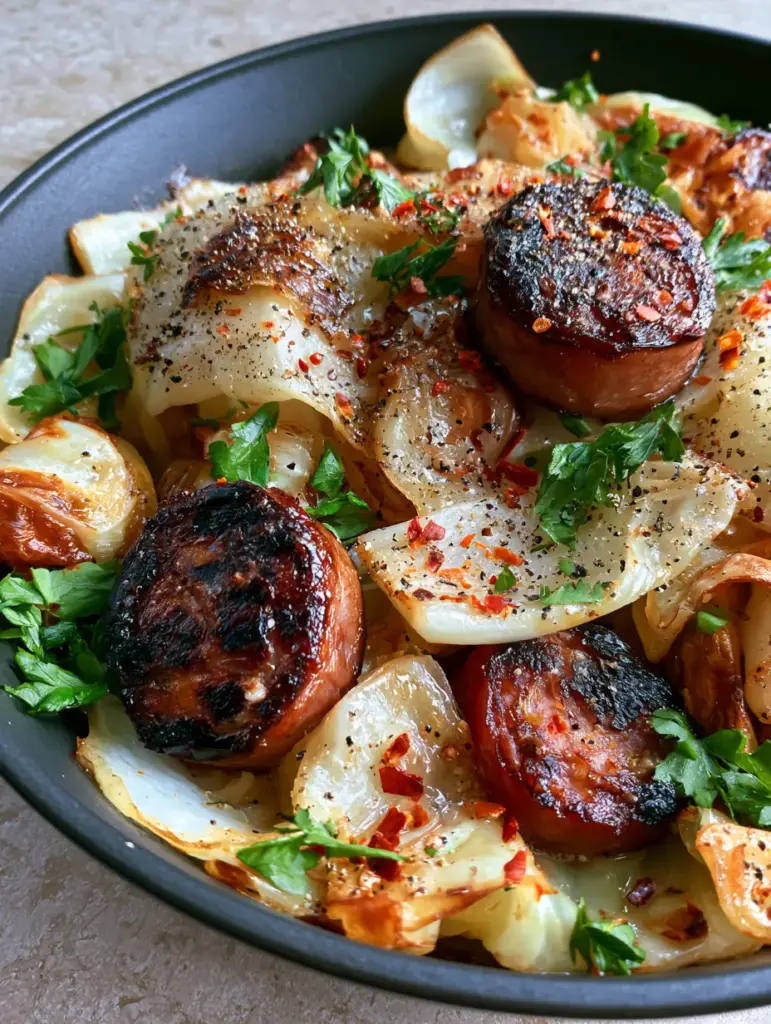
By using a rustic cast iron skillet, we achieve deep, dark caramelized char marks on thick-cut smoked sausage while transforming green cabbage into tender, shimmering ribbons. The result is a dish that is as visually stunning as it is delicious, finished with a heavy dusting of cracked pepper and a vibrant scatter of fresh parsley.
Whether you are looking for a quick weeknight dinner or a low-carb masterpiece, this one-pan wonder delivers on every level of flavor and texture. Let’s dive into the culinary science of how to turn these simple staples into a restaurant-quality meal.
Why You Will Love This Pan-Seared Southern Delight
- Textural Contrast: You get the snap of the seared sausage against the dual nature of the cabbage—some ribbons are translucent and tender, while others are blistered and golden-brown.
- Flavor Complexity: The combination of toasted garlic, red pepper flakes, and a shimmering butter glaze creates a profile that is smoky, sweet, and subtly spicy.
- Effortless Cleanup: This entire cabbage and sausage recipe is prepared in a single skillet, making it perfect for busy evenings when you want maximum flavor with minimum dishes.
- Nutritionally Dense: High in protein and fiber while remaining naturally low-carb, this meal satisfies the appetite without the heavy weight of processed grains.
Essential Components for the Perfect Skillet
Smoked Sausage: 1 lb (450g) of high-quality smoked sausage, such as Kielbasa or Andouille, provides the primary protein and smoky base. Slicing these into thick rounds allows for a juicy interior even after achieving a deep external char.
Green Cabbage: 1 medium head (approx. 900g) of green cabbage, sliced into wide ribbons, acts as the heart of the dish. It absorbs the rendered fats and eventually caramelizes to a natural, nutty sweetness.
Yellow Onion: 1 large (200g) yellow onion, cut into thin slivers, provides a foundational aromatic sweetness. These slivers melt into the cabbage, adding another layer of savory complexity.
Fresh Garlic: 4 cloves (approx. 20g) of minced garlic add a pungent, earthy bite that becomes mellow and toasted during the cooking process. Always use fresh garlic rather than the jarred variety for the most vibrant flavor profile.
Unsalted Butter: 2 tbsp (28g) of unsalted butter creates the signature shimmering glaze that coats every ribbon of cabbage. It adds a luxurious mouthfeel that oil alone cannot replicate.
Red Pepper Flakes: 1 tsp (2g) of crushed red pepper flakes provides a gentle, building heat that cuts through the richness of the sausage and butter. Adjust this to your personal spice tolerance.
Coarse Black Pepper: 1.5 tsp (3g) of coarse cracked black pepper is essential for that rustic, “heavy dusting” visual and a sharp, floral heat. Freshly cracked peppercorns are non-negotiable here.
Flat-Leaf Parsley: 1/4 cup (15g) of fresh chopped flat-leaf parsley is the final touch of brightness. It adds a grassy freshness and a pop of vibrant green color to the dark, caramelized skillet.
Foundational Fats and Seasoning: 1 tbsp (15ml) of neutral oil (like avocado oil) for the initial sear and 1/2 tsp (3g) of Kosher salt to draw out moisture from the vegetables. These invisible ingredients are what make the “visible” ones shine.
Must-Have Tools for High-Heat Searing
To achieve the specific blistered edges and deep char described in this cabbage and sausage recipe, a 12-inch (30cm) cast iron skillet is the gold standard. The heavy metal retains heat far better than stainless steel or non-stick pans, allowing the cabbage to sear rather than just steam.
You will also need a sharp Chef’s knife for creating those wide cabbage ribbons and thin onion slivers. A sturdy wooden spatula or metal turner is necessary to scrape up the “fond” (those flavorful browned bits) from the bottom of the pan as the ingredients caramelize.
Mastering the Sear: Step-by-Step Instructions
Prep the Aromatics and Greens
Begin by removing any damaged outer leaves from your cabbage head. Quarter the cabbage, remove the core, and slice it into wide ribbons, roughly 1 inch (2.5cm) in thickness.
Peel your yellow onion and slice it into thin, longitudinal slivers to match the length of the cabbage. Mince your garlic finely, but keep it separate from the onions as it cooks much faster and can easily burn.
Achieving the Perfect Sausage Char
Heat your cast iron skillet over medium-high heat with 1 tbsp (15ml) of oil. Once the oil is shimmering and just starting to smoke, add your sausage rounds in a single layer.
Do not crowd the pan; work in batches if necessary. Sear the sausage for 3-4 minutes per side until you see deep, dark caramelized char marks and the fat has begun to render into the pan.
Caramelizing the Cabbage Ribbons
Remove the sausage and set it aside, leaving the rendered fat in the skillet. Toss in your onion slivers and cabbage ribbons, stirring to coat them in the smoky oils.
Spread the cabbage out and let it sit undisturbed for 2-3 minutes at a time. This is the secret to achieving those blistered, golden-brown edges while the centers remain translucent and tender.
The Final Glaze and Seasoning
Once the cabbage has reduced in volume by half and is beautifully browned, clear a small space in the center. Add the minced garlic, red pepper flakes, and 2 tbsp (28g) of butter.
As the butter melts and foams, stir it into the vegetables to create a shimmering glaze. Return the sausage to the pan and toss everything together to ensure the flavors are fully integrated.
Professional Tips for Skillet Success
- Don’t Overcrowd: If you add too much cabbage at once, the moisture will cause it to steam rather than fry. Cook in two batches if your skillet is smaller than 12 inches (30cm).
- The Maillard Reaction: Patience is key for this cabbage and sausage recipe. The dark char marks on the sausage are not just for looks; they represent the Maillard reaction, which creates hundreds of new flavor compounds.
- Control the Garlic: Only add the garlic during the last 2 minutes of cooking. Toasted garlic is delicious; burnt garlic is bitter and will ruin the entire dish.
- Salt Timing: Add salt toward the end of the cabbage’s cooking time. Salting too early draws out water immediately, which prevents the edges from blistering properly.
Optimal Storage and Reheating Methods
This dish stores exceptionally well, making it a favorite for meal prep. Place leftovers in an airtight container and refrigerate for up to 4 days. The flavors often deepen as the garlic and spices meld with the cabbage overnight.
To reheat, return the mixture to a hot skillet with a tiny splash of water or an extra pat of butter. Avoid the microwave if possible, as it can make the cabbage ribbons mushy rather than maintaining their tender-crisp structure.
Freezing is not recommended for this specific recipe, as the high water content in the cabbage will cause it to become soft and lose its distinct ribbon texture upon thawing.
Perfect Pairings and Serving Suggestions
While this cabbage and sausage recipe is a complete meal on its own, it pairs beautifully with other rustic sides. For a heartier dinner, serve it alongside garlic butter noodles or a portion of savory smoked sausage and rice.
If you are looking to maintain a lower-carb profile, try serving this with a simple spinach salad. If you enjoy the technique used here for the cabbage, you might also be interested in our technique for meltingly tender cabbage or even a side of creamy orzo and mushrooms.
Common Questions About Cabbage and Sausage
This recipe is naturally keto-friendly and low-carb. Just ensure your smoked sausage doesn’t have added sugars or fillers, and serve it as a standalone meal.
Use a large cast iron skillet and cook the cabbage over medium-high heat. Do not cover the pan with a lid, as this traps steam and turns the cabbage soft rather than caramelized.
Smoked sausages like Kielbasa, Andouille, or even smoked Bratwurst work best because they are pre-cooked and hold their shape during high-heat searing, providing excellent fat for the cabbage.
Butter has a low smoke point. By adding it at the end, we create a shimmering glaze and rich flavor without burning the milk solids during the high-heat searing phase.
The Ultimate Cabbage and Sausage Recipe
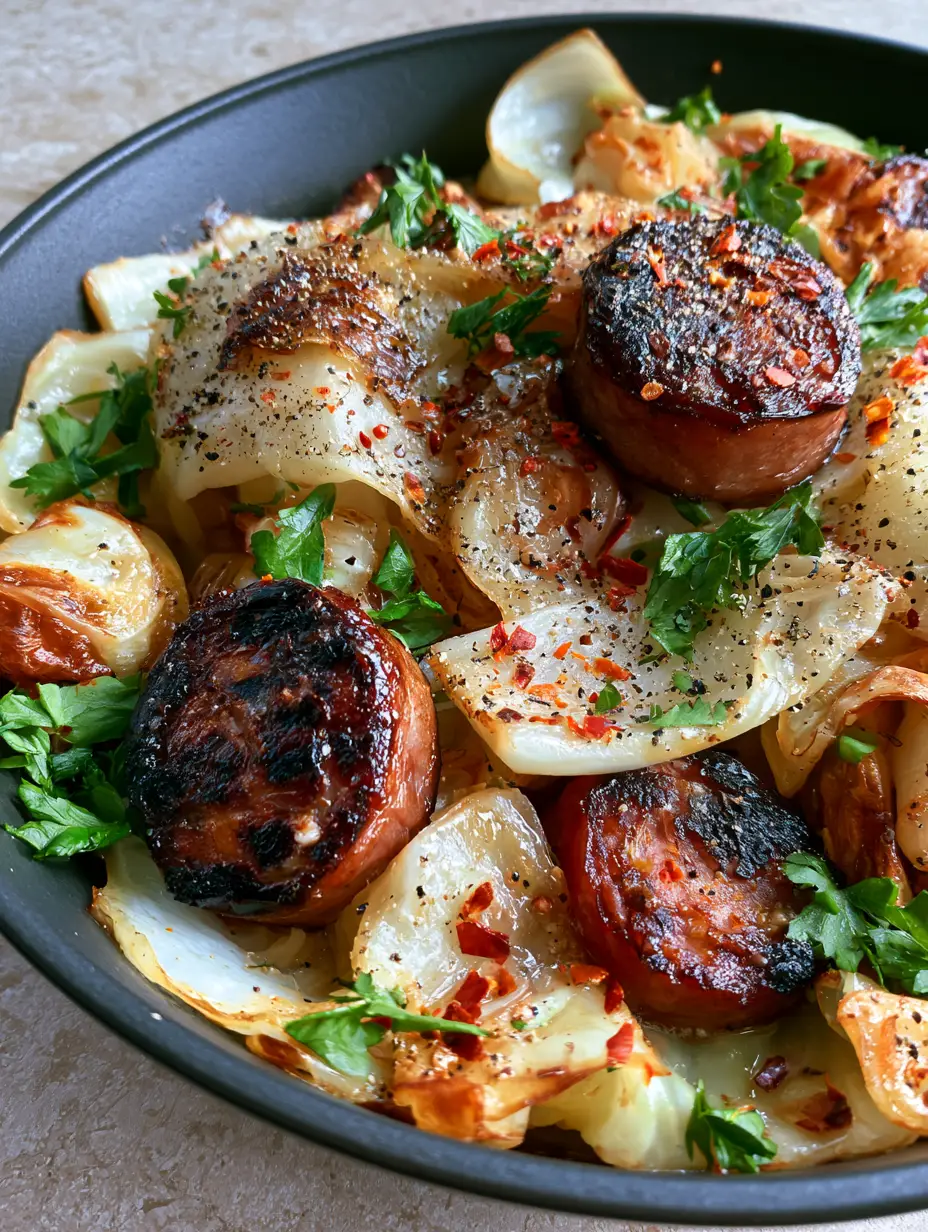
Cabbage and Sausage Recipe: The Ultimate Southern-Style Skillet
Ingredients
Equipment
Method
- Core the green cabbage and slice into 1-inch (2.5cm) wide ribbons. Slice the yellow onion into thin slivers and mince the garlic cloves.
- Heat oil in a 12-inch (30cm) cast iron skillet over medium-high heat. Add sausage rounds and sear for 3-4 minutes per side until deep, dark caramelized char marks form. Remove and set aside.
- In the same skillet with rendered fats, add cabbage ribbons and onion slivers. Sauté for 8-10 minutes, allowing edges to blister and become golden-brown while some pieces remain translucent.
- Clear a space in the center, add butter, garlic, red pepper flakes, and salt. Once butter melts into a shimmering glaze, toss everything together with the seared sausage and coarse black pepper.
- Remove from heat and scatter fresh chopped parsley over the top before serving directly from the skillet.
Notes
Use high-quality smoked sausage for better fat rendering.
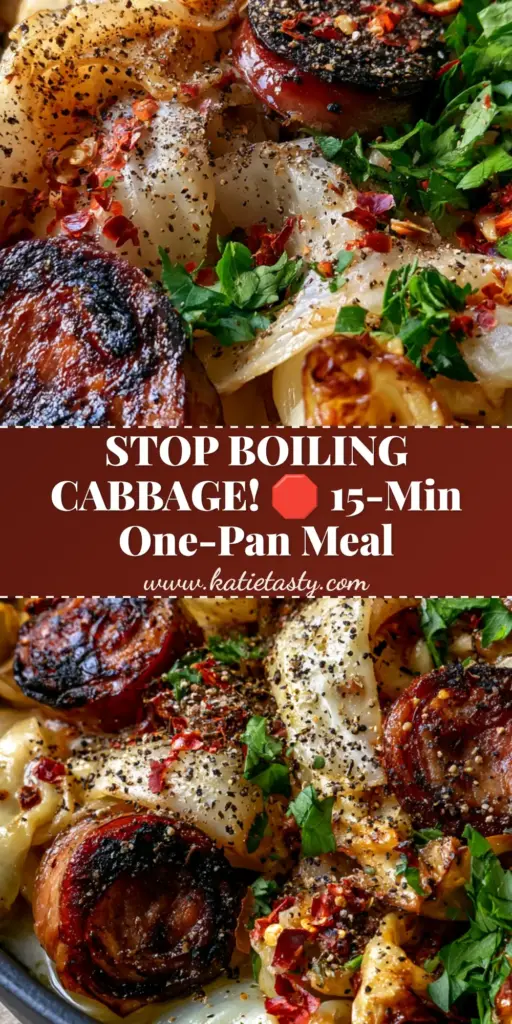
Bring the Southern Skillet Home
This cabbage and sausage recipe proves that you don’t need expensive ingredients to create a five-star meal. The combination of smoky char, buttery glaze, and the bite of cracked pepper creates a sensory experience that is hard to beat.
If you enjoyed this recipe, please leave a comment below and tell us how yours turned out! Don’t forget to share your photos and save this to your favorite boards on Pinterest so you never lose this weeknight staple.