There is a specific kind of magic that happens in a kitchen during the early morning hours when the scent of browning butter meets the sizzle of savory pork. These gourmet egg biscuits are designed to be the ultimate breakfast experience, capturing the essence of a high-end bistro sandwich right in your own home.
Every element of these egg biscuits has been meticulously engineered for texture and flavor. From the towering, shatteringly crisp layers of the buttermilk biscuit to the velvety fold of the seasoned eggs, this is more than just a quick meal; it is a culinary event.
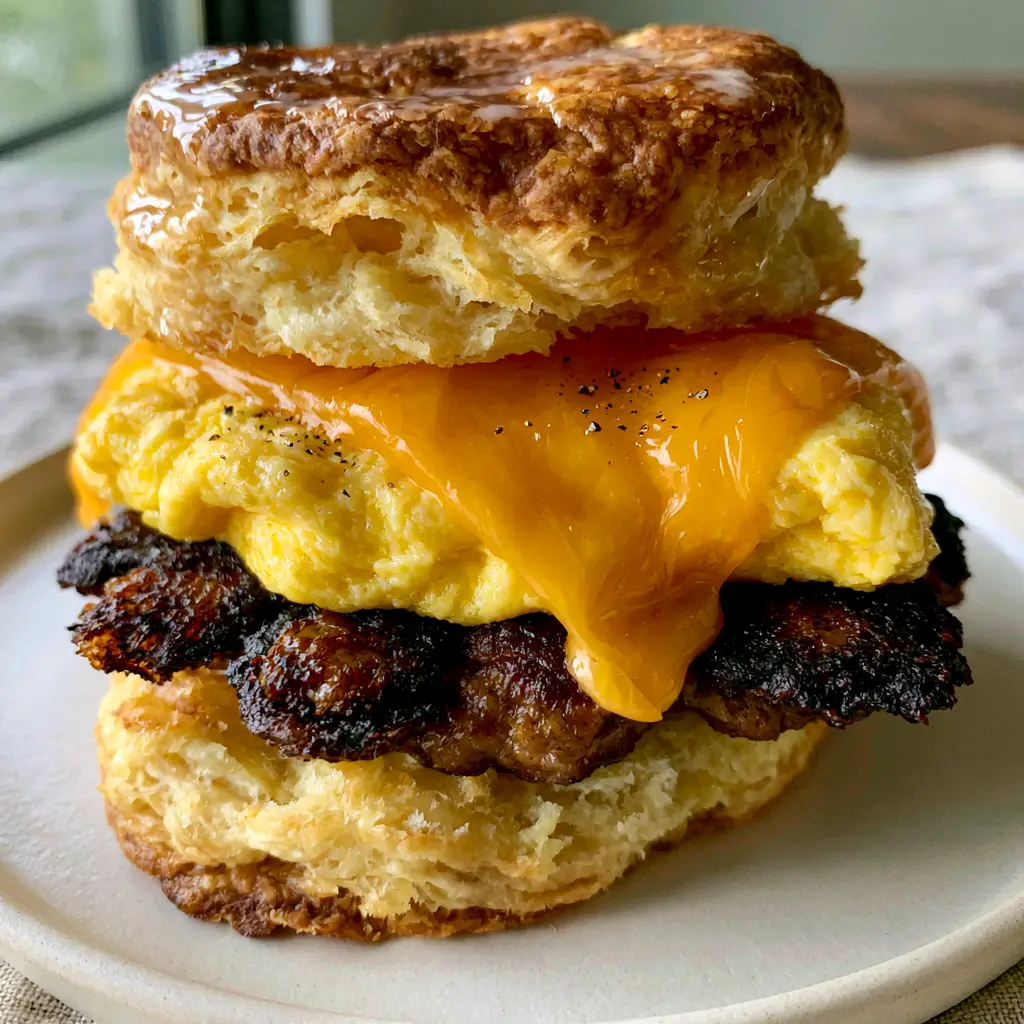
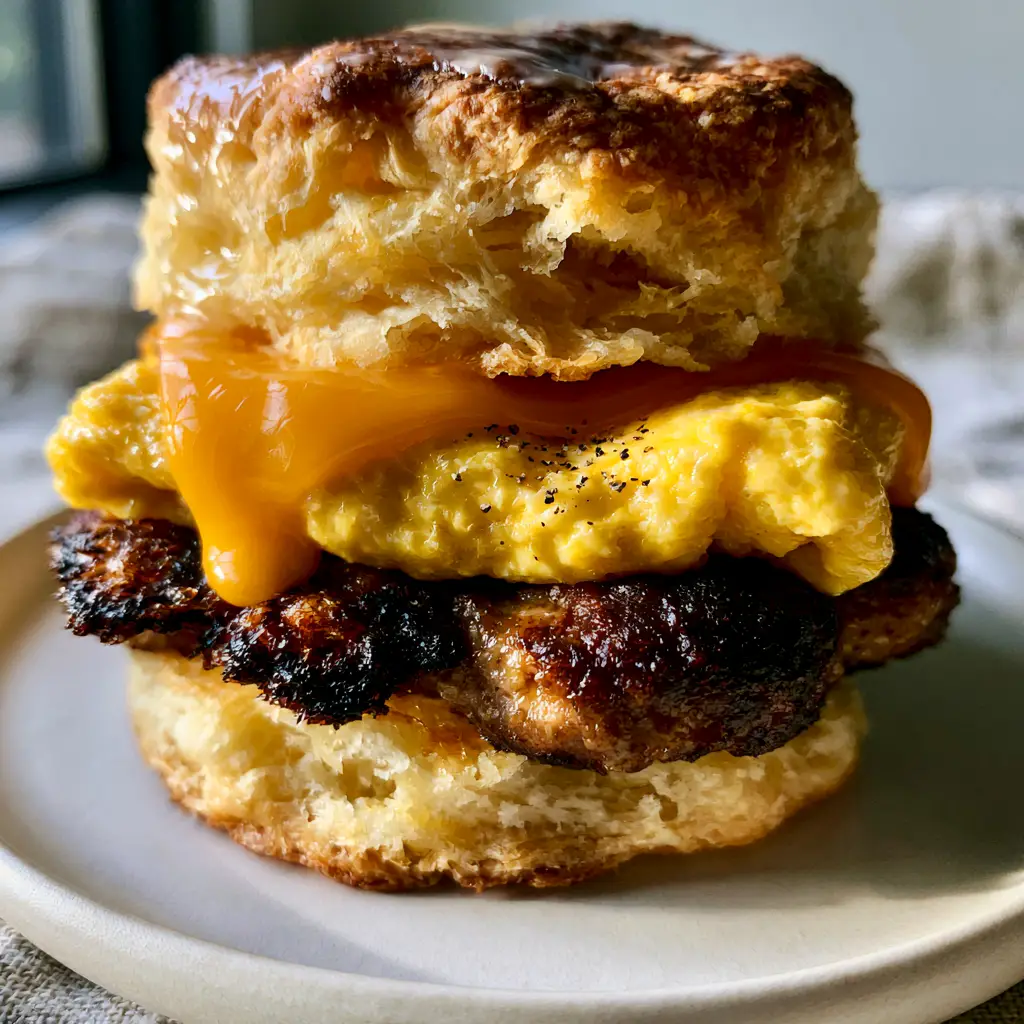
Imagine holding a warm, heavy sandwich where the sharp orange cheddar has reached its perfect melting point, cascading down the sides of a seared sausage patty. You see the fine specks of cracked black pepper against the vibrant yellow of the eggs, promising a gentle heat that cuts through the rich, buttery crumb.
Why These Are the Best Gourmet Egg Biscuits You’ll Ever Make
When we set out to develop this recipe, we focused on the “Forensic Visuals” of a perfect breakfast. We wanted a sandwich that looked as incredible as it tasted, prioritizing structural integrity and flavor density in every bite.
- Ultra-Flaky Architecture: We use a specific folding technique to create visible buttery layers that provide a distinct “crunch” before melting away.
- The Perfect Sear: The pork sausage isn’t just cooked; it is seared until the edges are dark brown and caramelized, providing a savory counterpoint to the soft egg.
- Velvety Egg Texture: Instead of a rubbery fried egg, we use a folded method that creates a thick, pillowy yellow patty infused with cracked black pepper.
- The “Drip” Factor: By using high-quality sharp cheddar and a specific assembly order, we ensure the cheese becomes a molten ribbon that binds the sandwich together.
The Foundation: Essential Ingredients for Superior Egg Biscuits
To achieve the result seen in professional food photography, you cannot settle for generic components. Every ingredient in these egg biscuits serves a functional and aesthetic purpose.
All-Purpose Flour: 2 ½ cups (312g). This provides the necessary protein structure to hold those tall, flaky layers without becoming tough or bread-like.
Baking Powder: 1 tbsp (14g). This is our primary leavening agent, responsible for the “lift” that creates a tall biscuit rather than a flat puck.
Cold Unsalted Butter: ½ cup (113g) for the dough, plus 2 tbsp (28g) for brushing. Cold fat is non-negotiable; as it melts in the oven, it creates steam pockets that force the dough layers apart.
Cold Buttermilk: 1 cup (240ml). The acidity in buttermilk reacts with the baking powder for a superior rise and adds that classic tangy flavor profile.
Bulk Pork Sausage: 1 lb (450g). Look for a high-fat content to ensure the patties remain juicy even after achieving those signature charred, crispy edges.
Large Eggs: 4 to 6. Fresh eggs will yield a more vibrant yellow color and a loftier “folded” texture once whisked and cooked.
Sharp Orange Cheddar: 4 thick slices (approx. 113g). A sharp cheddar provides the necessary acid to cut through the richness of the sausage and butter.
Cracked Black Pepper: 1 tsp (2g). Use a coarse grind to ensure the black specks are visually prominent and provide a textural “pop” of heat.
Fine Sea Salt: 1 tsp (6g). This enhances the natural flavors of the flour and eggs, ensuring the sandwich doesn’t taste flat or bland.
Tools for Achieving a Gourmet Breakfast Aesthetic
While you can make a basic sandwich with any pan, achieving the “Gourmet Handheld” look requires a few specific tools. These help manage heat and shape for a professional finish.
A heavy cast-iron skillet is the best choice for the sausage patties. The superior heat retention is what allows you to get those dark-brown caramelized edges without overcooking the center of the meat.
For the biscuits, a sharp 3-inch (7.6cm) circular biscuit cutter is essential. Never “twist” the cutter; a straight downward motion preserves the exposed layers so they can rise properly in the oven.
A small, 8-inch (20cm) non-stick skillet is ideal for the eggs. This size allows you to create a thin omelet-style sheet that can be folded into a thick, square patty that fits perfectly on the biscuit.
The Secret to Sky-High Flaky Biscuit Layers
The success of these egg biscuits depends entirely on how you handle the fat. If the butter melts before it hits the oven, you will lose the flaky texture that makes this sandwich “gourmet.”
Start by whisking your dry ingredients in a large bowl. Grate your frozen butter directly into the flour; this ensures the butter pieces are uniform and stay cold longer than hand-cubing.
Gently toss the butter in the flour and add the buttermilk. Stir just until a shaggy dough forms—do not overmix or you will develop too much gluten, resulting in a tough biscuit.
Turn the dough onto a floured surface and pat it into a rectangle. Fold the dough over itself five times; this “lamination” process is what creates the visible, buttery layers seen in the visual prompt.
Cut the biscuits using a straight-down motion. Arrange them on a baking sheet so they are just touching; this forces them to rise upward rather than outward, giving you that “tall” gourmet profile.
Bake at 425°F (218°C) for 12-15 minutes. You are looking for a deep golden-brown top and visible separation in the side layers.
Mastering the Savory Pork Sausage Sear
To get those “charred edges” mentioned in the blueprint, you need to use high heat and avoid crowding the pan. The Maillard reaction is your friend here, transforming the exterior of the meat into a savory crust.
Divide your pork sausage into 4 equal portions and press them into patties that are slightly wider than your biscuit. Sausage shrinks as it cooks, and you want the meat to reach the very edge of the sandwich.
Heat your cast iron over medium-high heat until a drop of water sizzles instantly. Place the patties in the pan and press down firmly with a spatula to ensure maximum surface contact.
Cook for 3-4 minutes per side. Do not move them until a dark-brown, crispy crust has formed. Once cooked, set them aside to rest so the juices redistribute.
The Art of the Thick Folded Fluffy Egg
The egg biscuits in the photo feature a thick, velvety yellow patty rather than a scrambled mess. This is achieved through a “crepe-fold” technique that traps air between thin layers of cooked egg.
Whisk your eggs with a pinch of salt until no streaks of white remain. Heat a small non-stick pan over medium-low heat with a tiny bit of butter.
Pour a thin layer of egg into the pan, swirling to cover the bottom. Once the bottom is set but the top is still slightly moist, fold the sides inward to create a square shape.
This “folding” creates height and a soft, pillowy texture. Sprinkle the top generously with cracked black pepper while the egg is still slightly tacky so the spice adheres to the surface.
Assembly: Achieving the Melting Cheese Cascade
Assembly is where the visual and culinary elements merge. Start by splitting your warm buttermilk biscuit in half. The interior should be steamy and crumbly.
Place the seared sausage patty on the bottom half. The heat from the meat will begin to warm the biscuit from the bottom up. Next, place your folded egg patty directly onto the hot sausage.
Immediately top the egg with a thick slice of sharp cheddar. If you want that “dripping” effect, place the assembled bottom half under a broiler for 30 seconds or cover it with a metal bowl for a minute to trap the steam.
Finally, brush the top biscuit crown with melted salted butter. This gives the sandwich a shimmering, “morning sunlight” glow. Place the crown on top and watch as the cheese begins to cascade over the charred edges of the pork.
Expert Tips for Success
- Chill your Flour: For the flakiest results, put your mixing bowl and flour in the freezer for 15 minutes before starting.
- Don’t Over-Bake: Check the biscuits at the 12-minute mark. Over-baked biscuits become dry and lose their buttery “melt-in-your-mouth” quality.
- Season the Sausage: If using plain ground pork, ensure you add plenty of sage, thyme, and red pepper flakes to mimic a high-quality breakfast sausage flavor.
- Steam for Melt: If your cheese isn’t cascading, add a teaspoon of water to the side of the pan and cover it with a lid; the steam will melt the cheddar instantly.
Storage, Reheating, and Make-Ahead Advice
These egg biscuits are best served immediately, but they can be prepped in advance for busy mornings. You can bake the biscuits and sear the sausage up to two days ahead of time.
Store the components separately in airtight containers in the refrigerator. To reheat, place the biscuit and sausage in a 350°F (177°C) oven for 5-8 minutes until warmed through.
We recommend cooking the folded eggs fresh, as they only take two minutes and provide the best texture when just-cooked. However, the entire sandwich can be wrapped in foil and frozen for up to a month.
What to Serve With Gourmet Breakfast Sandwiches
While these sandwiches are a meal on their own, they pair beautifully with vibrant sides that balance the richness of the butter and pork. For a summer brunch, try serving them alongside these summer vegetable side dishes.
If you prefer a more Mexican-inspired breakfast spread, a side of mexican street corn salad adds a lovely creamy and charred element to the plate. For those who enjoy a bit of sweetness, follow up your savory meal with these light lavender cupcakes.
If you are hosting a large crowd and need more handheld options, these sausage-egg-and-cheese-roll-ups are a great companion piece that uses similar flavor profiles.
Frequently Asked Questions
Yes, you can bake the biscuits and sear the sausage 2 days early. Reheat in the oven at 350°F (177°C) before assembling with freshly cooked eggs.
While you can, store-bought biscuits often lack the structural integrity and distinct flaky layers of this homemade buttermilk recipe designed for heavy fillings.
The secret is cold butter and minimal handling. Use a sharp biscuit cutter and press straight down without twisting to ensure the layers aren’t pinched shut.
Whisk the eggs well and pour them into a small non-stick pan. Once set, fold the four sides into the center to create a thick, square patty that matches the biscuit’s shape.
You likely need more heat. Use a cast-iron skillet and wait until it is smoking slightly before adding the patties. Don’t move them for at least 3 minutes.
The Ultimate Egg Biscuits Recipe Card
Egg Biscuits with Flaky Buttermilk Layers and Savory Sausage
Ingredients
Equipment
Method
- Whisk flour, baking powder, and salt. Grate frozen butter into the mix and toss gently.
- Add buttermilk and stir until a shaggy dough forms. Turn onto a floured surface, pat into a rectangle, and fold 5 times to create layers.
- Cut into 3-inch rounds and bake at 425°F (218°C) for 12-15 minutes until golden brown.
- Cook sausage patties in a hot cast-iron skillet for 3-4 minutes per side until edges are dark brown and charred.
- Pour whisked eggs into a non-stick pan to form a thin sheet. Fold into a square patty and top with cracked black pepper.
- Split biscuit, layer sausage, folded egg, and cheese. Steam or broil briefly to melt cheese, then brush the top with melted salted butter.
Notes
Do not twist the biscuit cutter or the layers will be sealed shut.

Closing & Call to Action
These egg biscuits represent the pinnacle of home-cooked breakfast. By focusing on the science of flaky dough and the art of a perfect sear, you can transform simple ingredients into a restaurant-quality masterpiece. The combination of the golden buttermilk biscuit and the dripping sharp cheddar is a flavor profile that never goes out of style.
If you enjoyed this deep dive into breakfast architecture, please leave a comment below and let us know how your layers turned out! Don’t forget to share your creations and follow us on Pinterest for more gourmet inspiration.