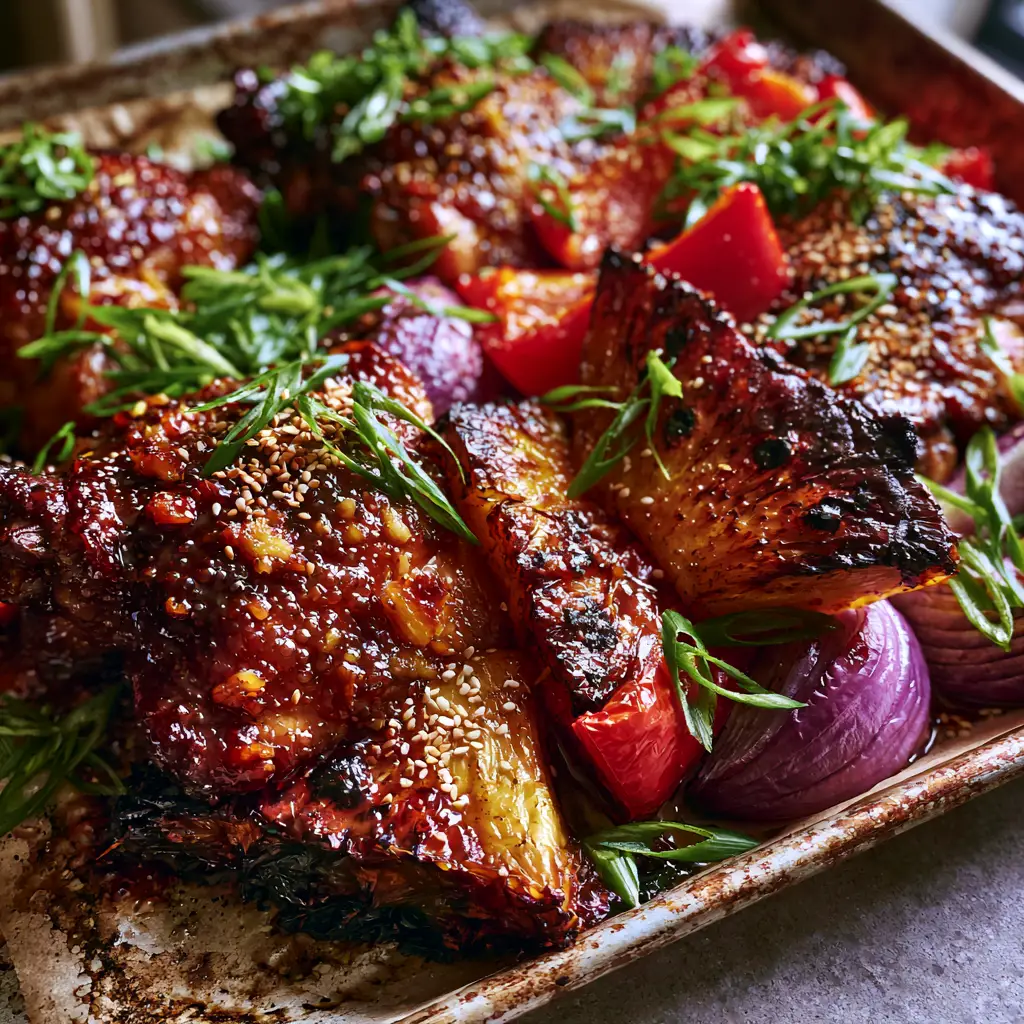
Huli Huli Chicken is more than just a recipe; it is a sensory journey to the shores of Hawaii, right from your own kitchen. Imagine succulent, skin-on chicken thighs dripping in a thick, mahogany-colored glaze that sparkles under the kitchen lights. The aroma of toasted ginger and pungent garlic fills the air as the chicken roasts to crispy perfection on a rustic metal sheet pan.
This version focuses on achieving that authentic “huli” (turn) flavor without needing a rotisserie. By using a high-heat roasting method on wrinkled parchment paper, we encourage the chicken fat to render into a golden pool, mingling with caramelized pineapple juices. Every bite offers a balance of sweet, savory, and charred notes that will redefine your weeknight dinner rotation.
Whether you are a fan of a classic teriyaki chicken recipe or you prefer something with more citrus zing, this Hawaiian staple delivers a complex profile that is remarkably easy to achieve. Let’s dive into the culinary science of achieving that signature sticky shine and the perfectly charred edges that make this dish a visual and edible masterpiece.
Why This Hawaiian BBQ Chicken Stands Above the Rest
- The Mahogany Glaze: A meticulously balanced reduction of soy, pineapple, and brown sugar that clings to the chicken for a professional, bubbling finish.
- Texture Contrast: Crispy, rendered chicken skin paired with softened red onion petals and snap-fresh red bell pepper chunks.
- Caramelized Fruit: Fresh pineapple wedges that undergo a Maillard transformation, turning deep brown and intensely sweet under the broiler.
- Visual Brilliance: A vibrant palette of deep reds, bright greens from fresh scallions, and the golden sheen of rendered schmaltz.
- One-Pan Simplicity: All the complexity of a tropical BBQ with the cleanup of a single sheet pan.
Essential Components for the Perfect Huli Huli Glaze
Skin-on Chicken Thighs: You need 2 lbs (907g) of bone-in, skin-on thighs. The skin is non-negotiable as it acts as a protective barrier, allowing the meat to stay succulent while providing a surface for the glaze to caramelize.
Unsweetened Pineapple Juice: 1 cup (240ml) provides the acidity needed to tenderize the proteins. The natural sugars in the juice are what create those iconic charred spots on the fruit wedges.
Soy Sauce (Tamari for Gluten-Free): 1/2 cup (120ml) delivers the essential umami base. It provides the salt necessary to penetrate the chicken meat and helps develop the deep mahogany hue.
Dark Brown Sugar: 1/2 cup (100g) packed sugar creates the “sticky” factor. It lowers the evaporation point of the sauce, allowing it to thicken into a bubbling glaze rather than a thin wash.
Fresh Ginger and Garlic: 2 tbsp (12g) of minced ginger and 4 cloves (12g) of minced garlic. These should be visible in the final glaze, providing tiny bursts of aromatic heat and texture.
Ketchup: 1/4 cup (60ml) adds body and a hint of vinegar tang. It helps the glaze stay emulsified and contributes to the rich red-brown color profile.
The Aromatics: 2 large red bell peppers (300g) and 1 large red onion (200g). The peppers should be cut into large chunks to withstand the high heat, while the onion petals soften into sweet, translucent layers.
Fresh Pineapple: 1/2 of a medium pineapple, sliced into thick wedges. Avoid canned pineapple if possible; fresh wedges hold their structural integrity better under the intense heat of the oven.
Must-Have Tools for Culinarians
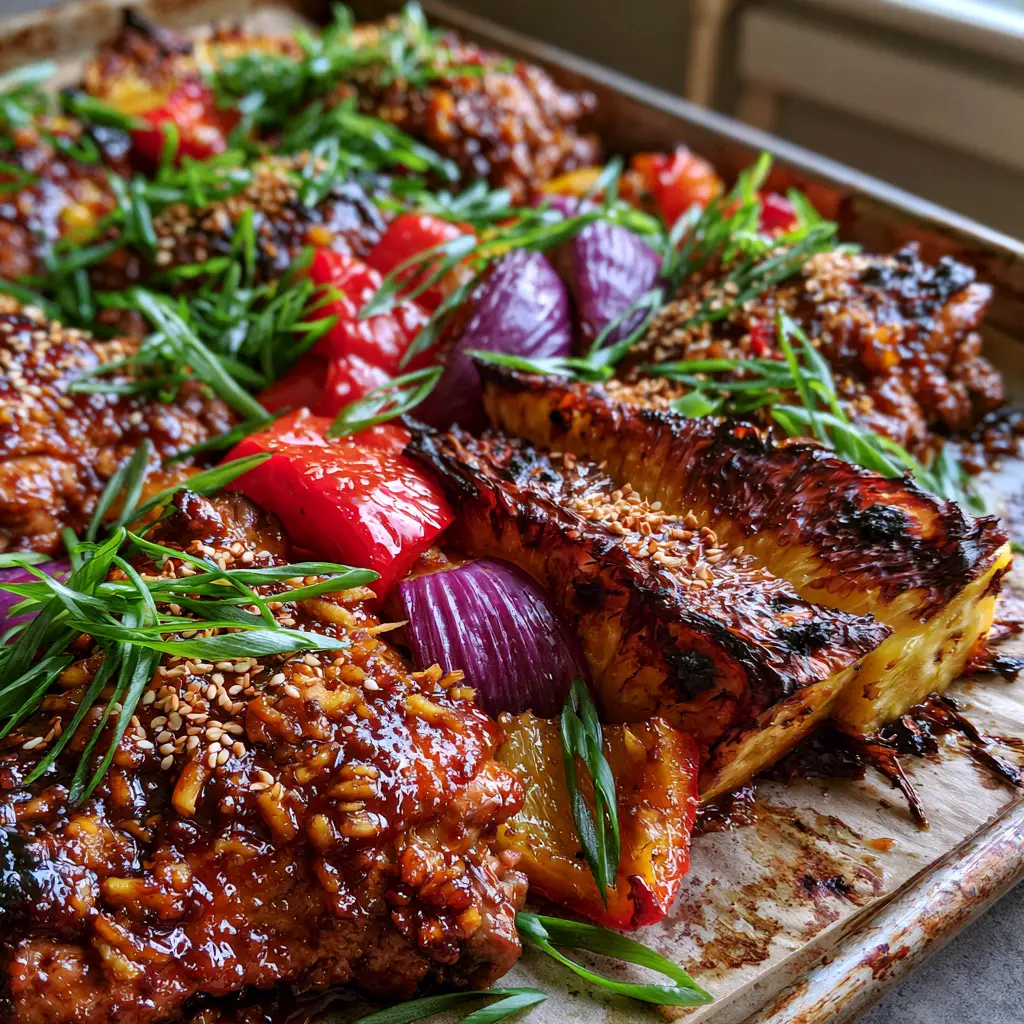
To achieve the look of a professional food photo, you need a rustic metal sheet pan. A heavy-duty rimmed baking sheet ensures even heat distribution so the chicken fat renders without burning the sugars in the glaze. Avoid thin pans that warp, as this causes the glaze to pool in one corner.
Always line your pan with wrinkled parchment paper. The wrinkles catch the extra glaze and chicken fat, creating concentrated pockets of flavor that stick to the vegetables. It also prevents the high-sugar sauce from bonding to the metal, making cleanup a breeze.
A silicone basting brush is your best friend here. You will be applying multiple layers of glaze to build that thick, mahogany crust. Silicone carries more sauce than hair-bristle brushes and is easier to sanitize after touching partially cooked poultry.
Building the Mahogany Crust: Step-by-Step Instructions
Phase 1: The Flavor Infusion
In a medium saucepan, combine the pineapple juice, soy sauce, brown sugar, ketchup, minced ginger, and minced garlic. Bring the mixture to a simmer over medium heat, stirring constantly until the sugar dissolves. Let it reduce by one-third until it coats the back of a spoon; it should look like molten mahogany.
Reserve half of this glaze in a small bowl for basting later. Place the chicken thighs in a large bowl and pour the remaining glaze over them, ensuring every inch of skin is covered. If you have time, let them marinate for 30 minutes, similar to how you would prep honey chicken for maximum flavor penetration.
Phase 2: Preparing the Sheet Pan Landscape
Preheat your oven to 400°F (200°C). Lay your wrinkled parchment paper onto the metal sheet pan. Arrange the chicken thighs skin-side up, leaving space between each piece to allow for air circulation—this is the secret to crispy skin.
Nestle the thick pineapple wedges, red bell pepper chunks, and red onion petals in the gaps between the chicken. Drizzle the vegetables with a tablespoon of neutral oil and a pinch of salt to help them blister. The pan should look crowded and vibrant, just like a professional kitchen setup.
Phase 3: The Roasting and Glazing Cycle
Slide the pan into the oven and roast for 20 minutes. At this point, you will see the chicken fat beginning to render into a golden liquid. Remove the pan and use your basting brush to apply a thick layer of the reserved glaze onto the chicken and the pineapple edges.
Return to the oven for another 15-20 minutes. Look for sensory cues: the glaze should be bubbling aggressively, and the edges of the pineapple should show deep, caramelized brown spots. The internal temperature of the chicken should reach 165°F (74°C). For an extra “authentic” look, turn on the broiler for the last 2 minutes to create those signature charred highlights.
Phase 4: The Final Flourish
Remove the pan from the oven and let it rest for 5 minutes. This allows the juices to redistribute and the glaze to set into a sticky, glistening lacquer. Scatter a generous handful of thinly sliced scallions and a sprinkle of toasted white sesame seeds over the entire spread. The green of the scallions against the mahogany chicken is the hallmark of an elite Huli Huli Chicken presentation.
Professional Secrets for Sheet Pan Success
- Dry the Skin: If you aren’t marinating long, pat the chicken skin dry with a paper towel before applying the first layer of glaze. This helps the sauce stick rather than slide off.
- The Ginger Grate: Use a microplane for the ginger. The tiny bits of ginger fiber catch the light in the glaze, providing that authentic home-cooked aesthetic seen in high-end food photography.
- Don’t Crowd the Veggies: If the vegetables are piled on top of each other, they will steam instead of roast. Keep them in a single layer to ensure those charred, blackened edges.
- Acid Balance: If your glaze tastes too sweet, add a teaspoon of apple cider vinegar. This cuts through the richness of the rendered chicken fat.
Optimal Storage and Reheating Techniques
Huli Huli Chicken is excellent for meal prep. Store leftovers in an airtight container in the refrigerator for up to 4 days. The flavors actually deepen as the ginger and garlic continue to infuse the meat.
To reheat, avoid the microwave if possible, as it can make the skin rubbery. Instead, place the chicken and vegetables back on a sheet pan and heat at 350°F (175°C) for 10-12 minutes. This will re-crisp the skin and keep the pineapple succulent. If the glaze has dulled, a tiny splash of water or pineapple juice before reheating will bring back that mahogany shine.
Transforming Your Meal: What to Serve Beside the Chicken
While this dish is a powerhouse on its own, it pairs beautifully with neutral grains that can soak up the extra glaze. A side of jasmine rice or one-pot chicken and rice makes for a filling, cohesive meal. The sweetness of the pineapple also complements a crisp, refreshing simple spinach salad recipe.
If you’re looking for more sticky, savory options for your weekly menu, consider trying our sticky honey glazed chicken or exploring the rich textures of our bruschetta chicken. The goal is to balance the heavy umami of the Huli Huli glaze with fresh, acidic, or starchy components.
Frequently Asked Questions
Yes, but be careful not to overcook them. Since breasts are leaner, they won’t render as much fat (schmaltz), so you may need to add a bit more oil to the vegetables to prevent burning.
Ensure the chicken skin is dry before the first application and reduce your sauce until it’s thick enough to coat a spoon. Basting multiple times during the last 15 minutes of cooking builds up the layers.
Traditionally, it is sweet and savory. The ginger provides a mild aromatic heat, but it is not spicy. You can add red pepper flakes to the glaze if you prefer a spicy kick.
The deep mahogany hue comes from the combination of soy sauce, dark brown sugar, and ketchup. As the glaze reduces in the oven, the sugars undergo caramelization, creating a dark, glossy lacquer.
Fresh pineapple contains bromelain, which helps tenderize the meat, and it has a firmer structure that holds up better to the high-heat roasting and charring process without turning to mush.
The Ultimate Hawaiian Huli Huli Chicken Recipe
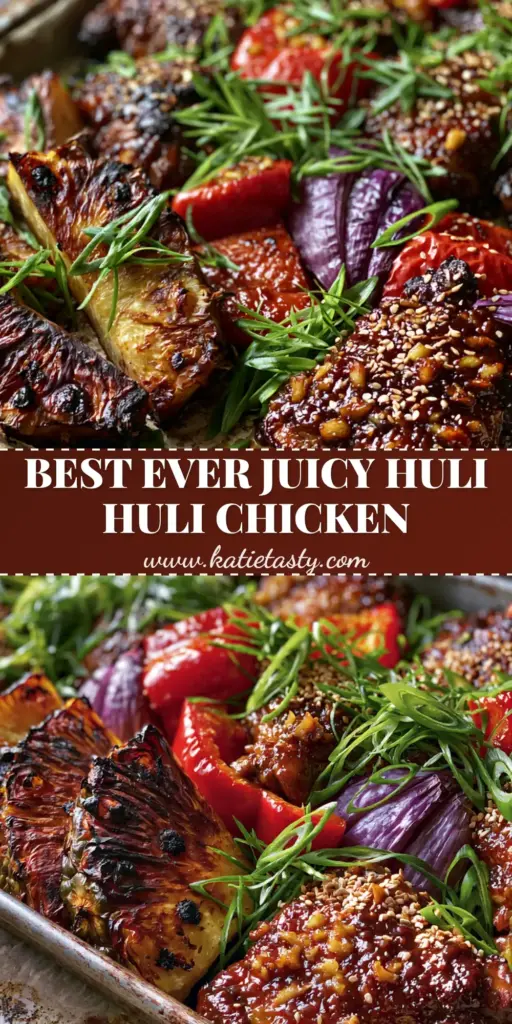
Huli Huli Chicken: The Ultimate Sheet Pan Guide to Mahogany Glazed Bliss
Ingredients
Equipment
Method
- In a saucepan, whisk pineapple juice, soy sauce, brown sugar, ketchup, ginger, and garlic. Simmer over medium heat until reduced by one-third and thickened into a mahogany syrup.
- Arrange chicken, pineapple wedges, peppers, and onions on a parchment-lined sheet pan. Coat chicken with half the glaze.
- Roast at 400°F (200°C) for 20 minutes. Baste the chicken and pineapple generously with the remaining glaze.
- Continue roasting for 15-20 minutes until the glaze is bubbling and the chicken reaches 165°F (74°C). Broil for 2 minutes for extra char.
- Rest for 5 minutes, then top with fresh scallions and toasted sesame seeds directly on the pan.
Notes
If the glaze is too thin, simmer it for an extra 5 minutes before basting.
Join the Tasty Community!
We hope this Huli Huli Chicken brings a bit of tropical sunshine to your dinner table. The combination of mahogany glaze and charred pineapple is a proven crowd-pleaser that looks just as good as it tastes. If you enjoyed this recipe, please leave a comment below and let us know how your glaze turned out!
Don’t forget to follow katie_tasty on Pinterest for more visually stunning sheet pan inspirations. Share your creations by tagging us—we love seeing your kitchen masterpieces! Happy cooking!