If you have ever craved a dish that perfectly balances fiery spice, deep umami, and a smoky charred aroma, then Pad Kee Mao is your ultimate destination. Known globally as “Thai Drunken Noodles,” this dish is famous for its bold flavors and wide, slippery rice noodles that cling to a glistening, dark savory soy glaze. It is the kind of meal that demands your attention from the first fragrant whiff of Thai basil to the last bite of seared chicken.
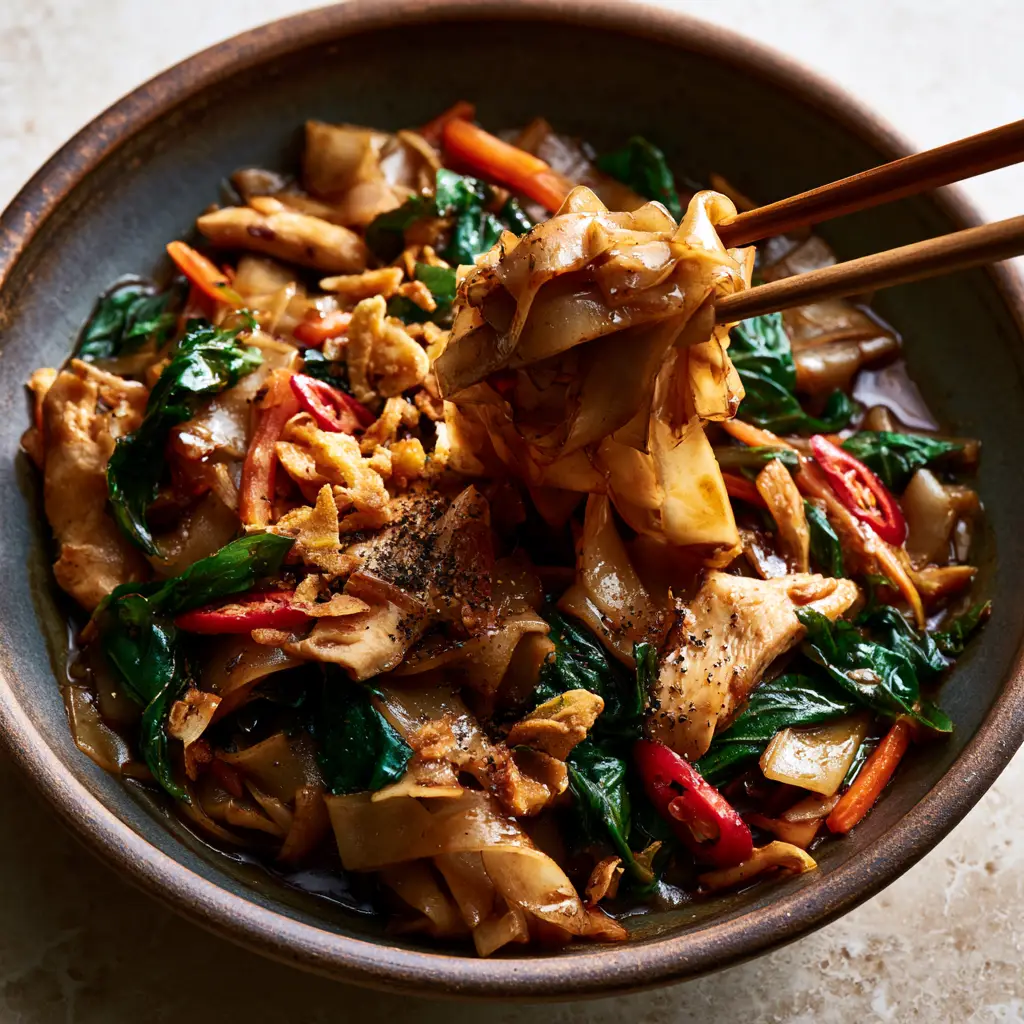
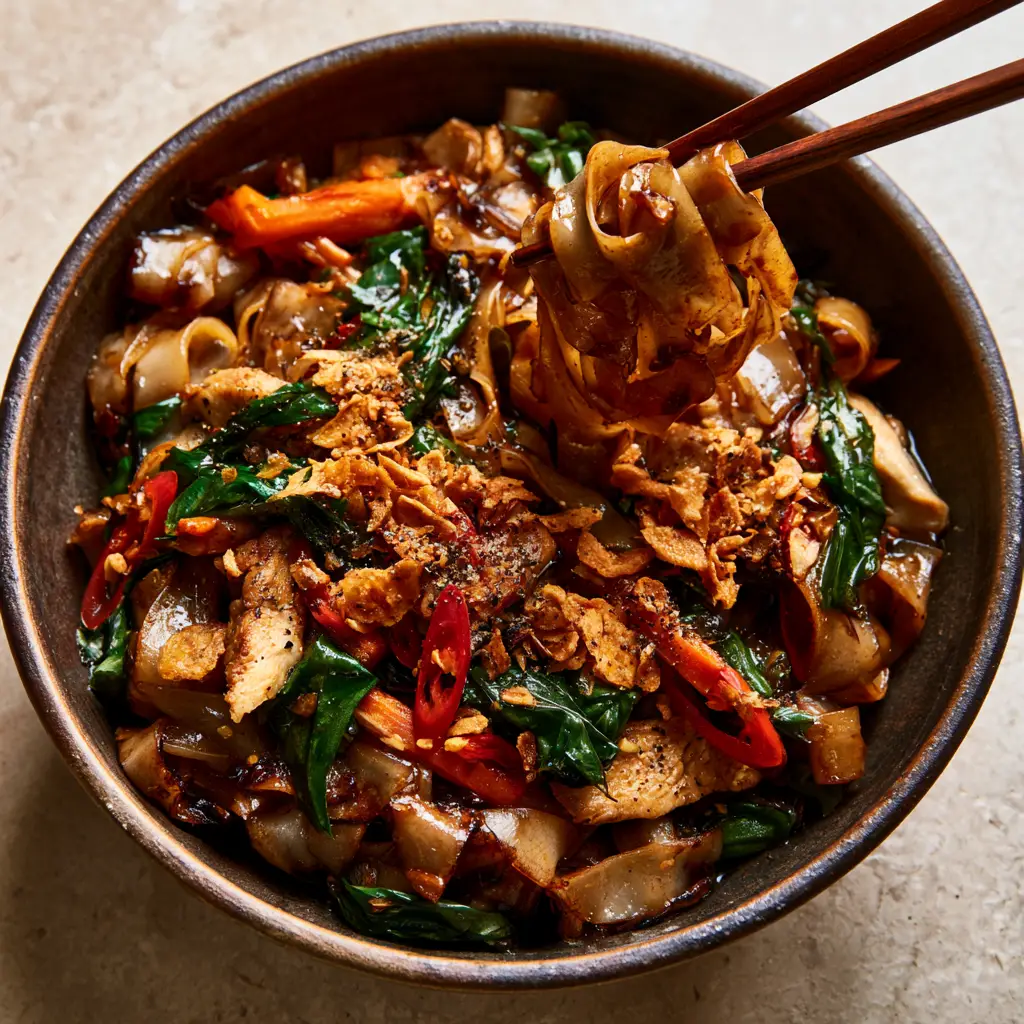
Our version stays true to the rustic, handheld photography aesthetics of authentic Thai street food. Imagine wide rice noodles with visible charred edges, vibrant emerald green Thai basil, and thin-sliced red bird’s eye chilies creating a visual masterpiece in a rustic ceramic bowl. This Pad Kee Mao recipe is designed to bring that high-heat wok intensity into your home kitchen, ensuring every noodle is coated in that signature dark soy finish.
Why This Authentic Thai Drunken Noodle Recipe Works
- The Perfect Wok Hei: We focus on high-heat techniques to achieve those signature charred edges on the wide rice noodles, replicating the “breath of the wok.”
- Symphony of Aromatics: The combination of minced fried garlic, cracked black pepper, and bird’s eye chilies creates a complex heat that lingers beautifully.
- Texture Contrast: Tender seared chicken slices pair perfectly with the soft, chewy noodles and the crisp crunch of julienned carrots.
- Visual Brilliance: The dark soy glaze provides a deep, glistening backdrop for the bright red chilies and fresh basil leaves, making it a feast for the eyes.
The Anatomy of a Perfect Dark Soy Glaze
To achieve the visual result seen in our high-angle food photography, the sauce must be thick enough to glaze but fluid enough to coat. We utilize a specific blend of three different soy components to reach that mahogany hue.
Wide Flat Rice Noodles: 16 oz (450g). These are the foundation. If using fresh noodles, separate them carefully; if dried, soak until pliable but still firm (al dente) to prevent them from turning into mush in the wok.
Chicken Breast or Thighs: 1 lb (450g). Sliced into thin, bite-sized pieces across the grain. This ensures the chicken remains tender and sears quickly under high heat.
Thai Bird’s Eye Chilies: 5-8 chilies (adjust to taste). These provide the characteristic “Drunken Noodle” kick. Slicing them thinly releases their capsaicin directly into the oil.
Fresh Thai Basil Leaves: 1.5 cups (40g). Do not substitute with Italian basil; Thai basil has a distinct anise-like flavor and sturdy texture that withstands the heat of the stir-fry.
The Sauce Base: A combination of 2 tbsp (30ml) dark soy sauce for color, 1 tbsp (15ml) light soy sauce for salt, and 2 tbsp (30ml) oyster sauce for body and umami.
Foundational Aromatics: 4 cloves (20g) garlic, finely minced, and 1 tsp (2g) coarsely cracked black pepper. The black pepper is a “hidden” ingredient that adds a different dimension of heat than the chilies.
Essential Equipment for High-Heat Stir-Frying
To get those charred edges, you need a vessel that can retain and distribute high heat. A carbon steel wok is the gold standard, but a heavy-duty large cast-iron skillet is an excellent alternative for home cooks using electric or induction stoves.
You will also need a sturdy spatula—preferably a metal wok spatula—that allows you to scrape the bottom of the pan. This is crucial for “lifting” the noodles and preventing them from sticking as the sugars in the dark soy glaze caramelize.
The Step-by-Step Mastery of Pad Kee Mao
Phase 1: Preparing the Aromatics and Sauce
In a small bowl, whisk together the dark soy sauce, light soy sauce, oyster sauce, and a teaspoon of palm sugar (or brown sugar). This ensures that when the wok is screaming hot, you aren’t fumbling with bottles. Mince your garlic and slice the bird’s eye chilies. If you prefer a slightly milder heat, remove the seeds from the chilies before slicing.
Phase 2: Searing the Chicken and Creating the Garlic Base
Heat 2 tbsp (30ml) of high-smoke-point oil (like canola or peanut oil) in your wok until it just begins to shimmer. Add the chicken slices in a single layer. Let them sit undisturbed for 60-90 seconds to develop a golden-brown crust. Stir-fry until just cooked through, then push them to the side. Add the minced garlic and sliced chilies to the center, frying for 30 seconds until the garlic is golden and fragrant.
Phase 3: The Noodle Char and Glaze
Add the julienned carrots to the wok for a quick 30-second toss. Now, add the wide rice noodles. Immediately pour the sauce mixture over the noodles. Using high heat, toss the noodles vigorously. The goal is to let the noodles sit against the hot metal for a few seconds at a time to create those charred, caramelized edges seen in the visual blueprint.
Phase 4: The Fragrant Finish
Turn off the heat. This is a crucial step to preserve the vibrant green color of the Thai basil. Fold in the fresh basil leaves and the cracked black pepper. The residual heat will wilt the basil just enough to release its oils without turning it black. Garnish with an extra sprinkle of fried garlic for that professional touch.
Expert Tips for Success in the Wok
- Don’t Overcrowd: If your wok isn’t large enough, cook in two batches. Overcrowding leads to steaming rather than searing, resulting in soggy noodles.
- Noodle Prep: If using dried noodles, soak them in lukewarm water for 30 minutes. They should be flexible but still have a “snap” when bent. They will finish cooking in the sauce.
- High Heat is Key: Don’t be afraid of a little smoke. Pad Kee Mao relies on the caramelization of the soy sauce to achieve its deep flavor profile.
- Vegetable Crunch: While the carrots provide color, you can also add Chinese broccoli or bell peppers for more texture.
Smart Storage and Reheating Advice
Pad Kee Mao is best enjoyed immediately while the noodles are slippery and the basil is aromatic. However, leftovers can be stored in an airtight container in the refrigerator for up to 3 days. To reheat, add a splash of water or broth to a pan and toss the noodles over medium heat until warmed through. Avoid the microwave if possible, as it can make rice noodles rubbery.
This dish doesn’t freeze well due to the delicate nature of the rice noodles, which tend to break apart once thawed and reheated. Always aim for fresh assembly for the best experience.
What to Serve With Thai Drunken Noodles
Since this is a heavy, savory dish, it pairs beautifully with light and refreshing sides. A vibrant vegetable salad offers a creamy contrast to the spice, while a citrus-forward quinoa salad can help cleanse the palate between bites. If you’re looking for more chicken-based inspiration, check out our easy sheet pan chicken for another quick weeknight win, or explore high-protein vegetarian options to round out your weekly meal plan.
Frequently Asked Questions
It is not recommended. Thai basil has a distinct anise or licorice flavor and holds up better under high heat. Italian basil is too sweet and delicate for this dish.
If using dried noodles, soak them in lukewarm water until just pliable but still firm. Over-soaking or using boiling water will make them too soft, causing them to mush in the wok.
It is traditionally one of the spiciest Thai noodle dishes. Our recipe uses 5-8 bird’s eye chilies, but you can adjust the amount to suit your personal heat tolerance.
Not traditionally, as it uses soy and oyster sauce. However, you can make it gluten-free by using Tamari and a certified gluten-free oyster sauce.
There are many theories, but the most popular is that the dish is so spicy that it requires a lot of cold beer to wash it down, or that it’s the perfect late-night meal for someone who has had a few drinks.
Authentic Pad Kee Mao (Thai Drunken Noodles)
Pad Kee Mao: The Ultimate Guide to Authentic Thai Drunken Noodles
Ingredients
Equipment
Method
- Whisk dark soy, light soy, oyster sauce, and sugar in a small bowl until combined.
- Ensure rice noodles are separated and ready for the wok. If dried, they should be soaked until pliable.
- Heat oil in a wok over high heat. Sear chicken slices until a golden-brown crust forms. Push to the side.
- Add garlic and chilies. Stir-fry for 30 seconds until the garlic is fragrant and golden.
- Add noodles, carrots, and sauce. Toss over high heat for 2-3 minutes, allowing noodles to char slightly against the wok surface.
- Turn off heat. Fold in Thai basil leaves and black pepper until basil is just wilted.
Notes
Do not over-soak dried noodles or they will break in the wok.
Share the Spice with the Community!
Did you manage to get those perfect charred edges on your noodles? We want to see your culinary creations! This Pad Kee Mao recipe is a staple for any home cook looking to master Thai flavors. If you enjoyed the deep umami and fiery kick of this dish, please leave a comment below and let us know how it turned out. Don’t forget to save this recipe to your favorite boards on Pinterest and share it with your spicy-food-loving friends!