There is a specific, undeniable magic that happens when a fruit moves past its prime and enters its “ugly” phase. For the plantain, this transformation into a blackened, soft exterior is the prerequisite for the ultimate plantain balls recipe. We are talking about Nigerian Mosa—a street-food staple that balances a deeply caramelized, crinkled crust with a center so soft and steaming it practically melts on the tongue.
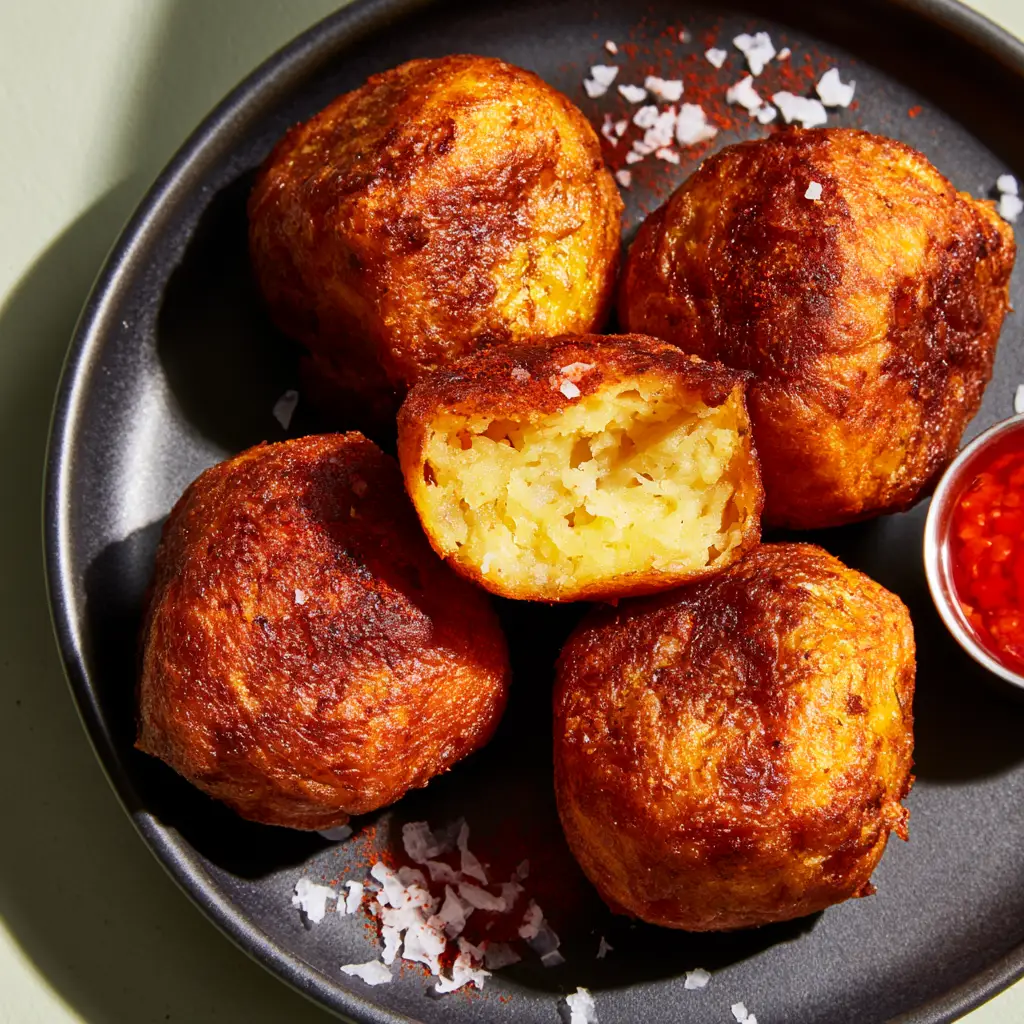
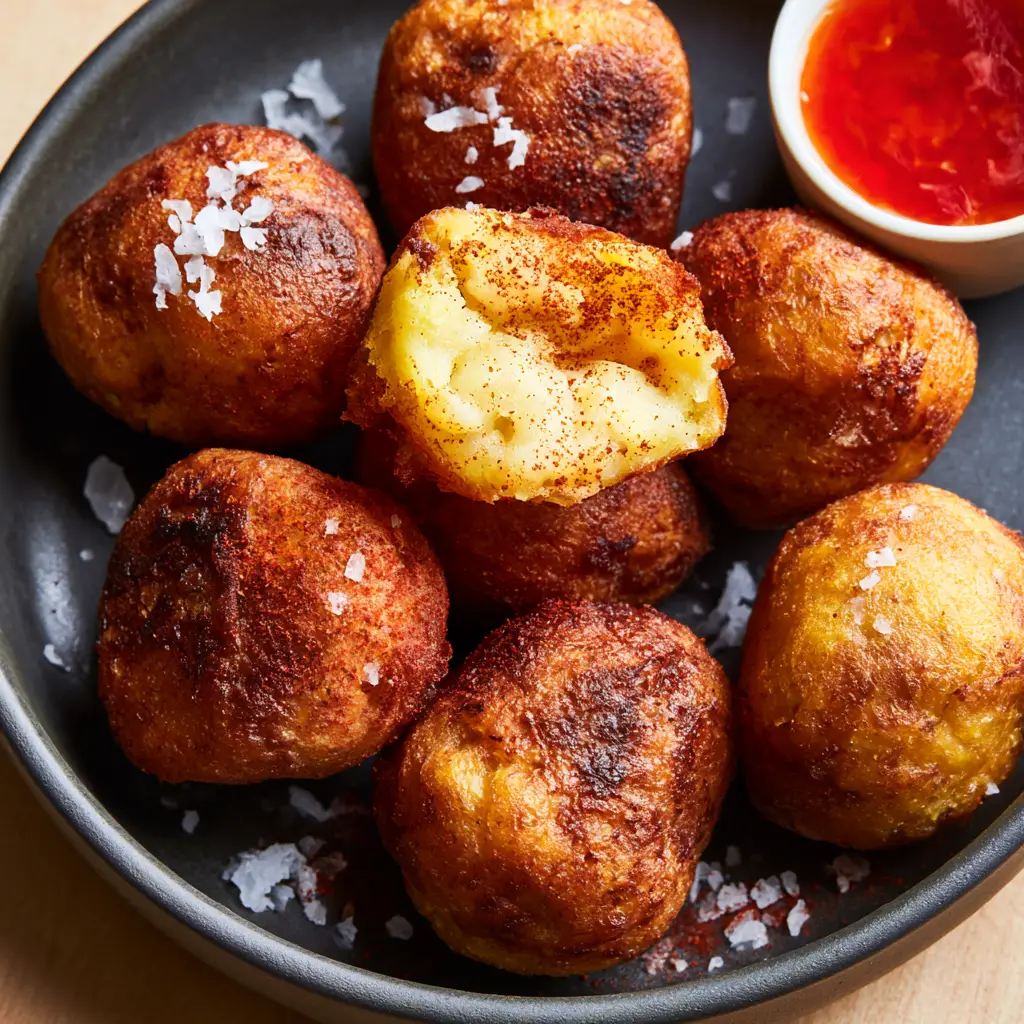
Imagine a matte charcoal ceramic plate holding spheres of golden-brown perfection. As you pull one apart, a puff of steam escapes from a pale yellow, creamy interior. This plantain balls recipe isn’t just a snack; it’s a masterclass in the Maillard reaction and the science of tropical starches. Whether you are a seasoned fan of West African cuisine or a curious home cook, this guide will ensure your Mosa achieves that iconic “hero shot” quality every single time.
The Anatomy of a Perfect Golden-Brown Mosa
- The Crinkled Crunch: We utilize a specific yeast-leavened batter to create that signature textured, slightly crinkled exterior that traps flaky sea salt in its ridges.
- Caramelized Sugar Spots: By using overripe plantains, the natural sugars migrate to the surface during frying, creating those beautiful dark, sweet pockets of flavor.
- The Steaming Heart: A precise ratio of fruit to flour ensures the center remains a soft, mashed plantain custard rather than a dense dough.
- The Flavor Bridge: A dusting of smoked paprika and a side of vibrant red chili sauce provide the smoky, spicy counterpoint to the plantain’s natural sweetness.
Essential Components for Your Plantain Masterpiece
Overripe Plantains (The Blacker, The Better): You cannot achieve the authentic texture of this plantain balls recipe with yellow plantains. You need fruit that is soft to the touch with a skin that is at least 70% black to ensure maximum sugar content and a creamy mash.
All-Purpose Flour (1 cup / 125g): This acts as the structural scaffolding for our spheres. It binds the wet plantain mash, allowing it to hold a spherical shape in the hot oil without disintegrating.
Active Dry Yeast (1 tsp / 3g): Unlike many fritters, traditional Mosa uses yeast. This is the secret to the airy, slightly fermented “funk” and the crinkled exterior seen in professional culinary photography.
Warm Water (1/4 cup / 60ml): Used to bloom the yeast. Ensure it is between 105°F (40°C) and 115°F (46°C) to activate the leavening agent without killing it.
Smoked Paprika & Flaky Sea Salt: These are your finishing “visual” ingredients. The paprika adds a subtle earthy red hue, while the flaky salt provides a crystalline texture that pops against the matte charcoal plate.
Vegetable Oil for Frying: A high-smoke point oil like canola or peanut oil is required to achieve that deep golden-brown color without the oil breaking down and tasting acrid.
Tools for Architectural Culinary Precision
To recreate the precise textures of our hero shot, you will need a heavy-bottomed Dutch oven or deep skillet. These vessels retain heat better than thin pans, preventing the oil temperature from crashing when the batter hits the fat. A digital kitchen scale is highly recommended for the flour to keep the interior “pale yellow and creamy” rather than bread-like.
For the dipping sauce, a small stone mortar and pestle or a high-speed blender will help you achieve that “vibrant red” consistency. Finally, a small cookie scoop (1-tablespoon size) is the secret to getting perfectly uniform spheres that look professional on your matte charcoal dish.
The Culinary Science of the Mosa Mash
Step 1: The Fermentation Foundation
In a small bowl, combine your warm water (60ml) and yeast. Let it sit for 5-10 minutes until it becomes frothy and smells like fresh bread. This step is non-negotiable for the airy texture required in an elite plantain balls recipe.
Step 2: Mastering the Overripe Mash
Peel your 2 large overripe plantains. In a large mixing bowl, mash them until they reach a smooth, custard-like consistency with very few lumps. If you’ve used other overripe fruits in the past, perhaps for banana bread muffins, you’ll recognize this sweet, aromatic stage of fruit breakdown.
Step 3: Creating the Hybrid Batter
Whisk the bloomed yeast and a pinch of salt into the plantain mash. Gradually fold in your 1 cup (125g) of flour. The batter should be thick and slightly elastic. Cover the bowl with a warm damp cloth and let it rest for 20-30 minutes; the yeast will create tiny air pockets that translate to “crunch” once fried.
Frying for the Ultimate Golden-Brown Aesthetic
Achieving the Perfect 350°F (175°C)
Heat 3 inches (7.5cm) of oil in your pot. Use an infrared thermometer to ensure it reaches 350°F. If the oil is too cold, the balls will absorb grease and become heavy. If it’s too hot, the sugars will burn before the pale yellow interior is fully set.
The “Drop and Sizzle” Technique
Using your scoop, carefully drop rounds of batter into the oil. Do not overcrowd the pan. You will see the exterior begin to crinkle almost immediately. Fry for 3-5 minutes, turning occasionally, until they reach a deep, caramelized golden-brown. Look for those dark “sugar spots” as a cue that the plantain’s natural fructose has caramelized perfectly.
Creating the Vibrant Red Chili Dipping Sauce
While your plantain balls rest on a wire rack, blend 2 roasted red bell peppers, 1 Scotch Bonnet (or habanero) for heat, and a splash of apple cider vinegar. Simmer this mixture in a small saucepan with a teaspoon of oil and a pinch of salt until it thickens into a glossy, vibrant red sauce. This provides the essential acidic “lift” to the richness of the fried plantain.
Expert Tips for Visual and Textural Success
- The Ripeness Test: If you can’t easily mash the plantain with a fork, it’s not ripe enough. The skin should be soft, almost like it’s about to fall apart.
- Avoid the Sog: Never drain your fried balls on paper towels; the trapped steam will soften the bottom. Use a wire cooling rack to maintain the 360-degree crunch.
- The Paprika Dust: Apply the smoked paprika through a fine-mesh sieve from about 12 inches above the plate. This creates the “fine dusting” effect seen in our visual blueprint rather than clumps of spice.
- Pairing with Crunch: If you love varied textures, consider serving these alongside parmesan crisps for a salty, umami contrast.
Strategic Storage and Reheating
Mosa is best enjoyed immediately while the center is steaming. However, you can store leftovers in an airtight container for up to 2 days. To regain the crispy exterior, avoid the microwave. Instead, pop them into an air fryer at 350°F (175°C) for 3-4 minutes. This mimics the original frying environment and revives the caramelized sugar spots.
What to Serve With Nigerian Plantain Balls
These sweet and savory spheres are incredibly versatile. They make a fantastic appetizer alongside a refreshing mexican street corn salad or a hearty mediterranean quinoa salad for a fusion-style lunch. If you’re looking for a full West African spread, serve them as a side to spicy jollof rice or even as a unique accompaniment to baked zucchini and feta casserole to bridge the gap between sweet and savory flavors.
Frequently Asked Questions
The traditional recipe uses all-purpose flour. You can substitute with a 1:1 gluten-free flour blend, though the texture may be slightly denser.
Yes, though the texture will be less ‘crinkled.’ Lightly spray the balls with oil and air fry at 375°F (190°C) for 10-12 minutes, shaking the basket halfway through.
While you can substitute with baking powder, yeast is traditional for Nigerian Mosa. It provides a unique airy texture and a slightly fermented flavor profile that baking powder cannot replicate.
The skins should be mostly black or very dark brown. They should feel soft to the touch, almost like a ripe avocado. If they are yellow with black spots, they are better for Kelewele than for Mosa.
This usually happens if the batter is too thin or the oil isn’t hot enough. Ensure you measure your flour by weight and that your oil is exactly 350°F (175°C) before dropping the batter.
The Definitive Plantain Balls Recipe Card
Plantain Balls Recipe: Crispy Nigerian Mosa with Spicy Chili Dip
Ingredients
Equipment
Method
- Dissolve yeast in warm water and let sit for 10 minutes until frothy.
- Peel and mash the overripe plantains in a bowl until smooth and pale yellow.
- Fold in the flour, salt, and bloomed yeast. Cover and let rest for 30 minutes in a warm spot.
- Heat oil to 350°F (175°C) in a deep pot.
- Scoop 1-tbsp portions into the oil. Fry until golden-brown with caramelized spots (3-5 mins).
- Drain on a wire rack. Immediately sprinkle with flaky sea salt and a dusting of smoked paprika.
Notes
Don't skip the yeast; it provides the signature crinkled texture.

Closing Thoughts on this Nigerian Classic
Mastering the plantain balls recipe is about more than just frying dough; it’s about understanding the life cycle of a plantain and respecting the fermentation process. When you place those steaming, golden-brown spheres on a charcoal plate and hit them with that final pinch of flaky salt, you aren’t just making a snack—you’re creating a sensory experience. Don’t forget to share your results with me! Tag your photos on Pinterest and let me know if you achieved those perfect caramelized spots.