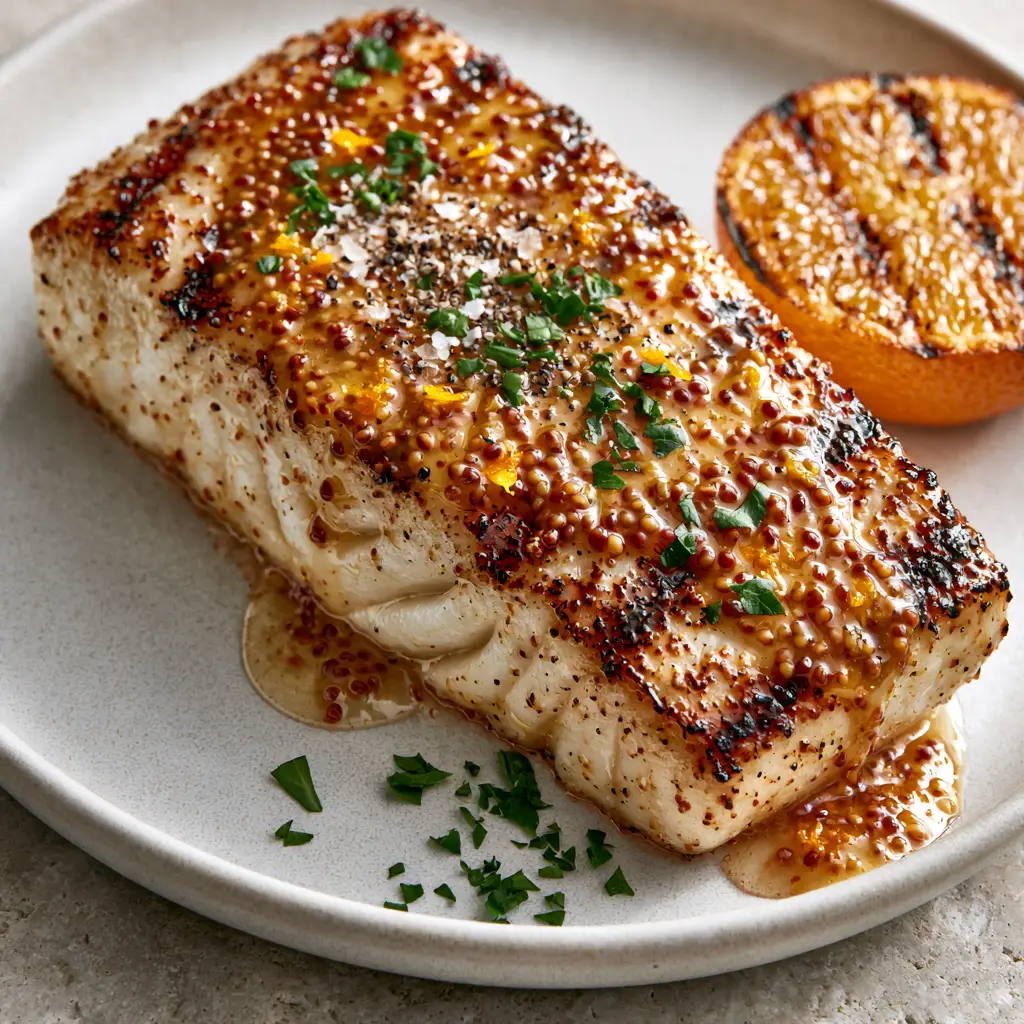
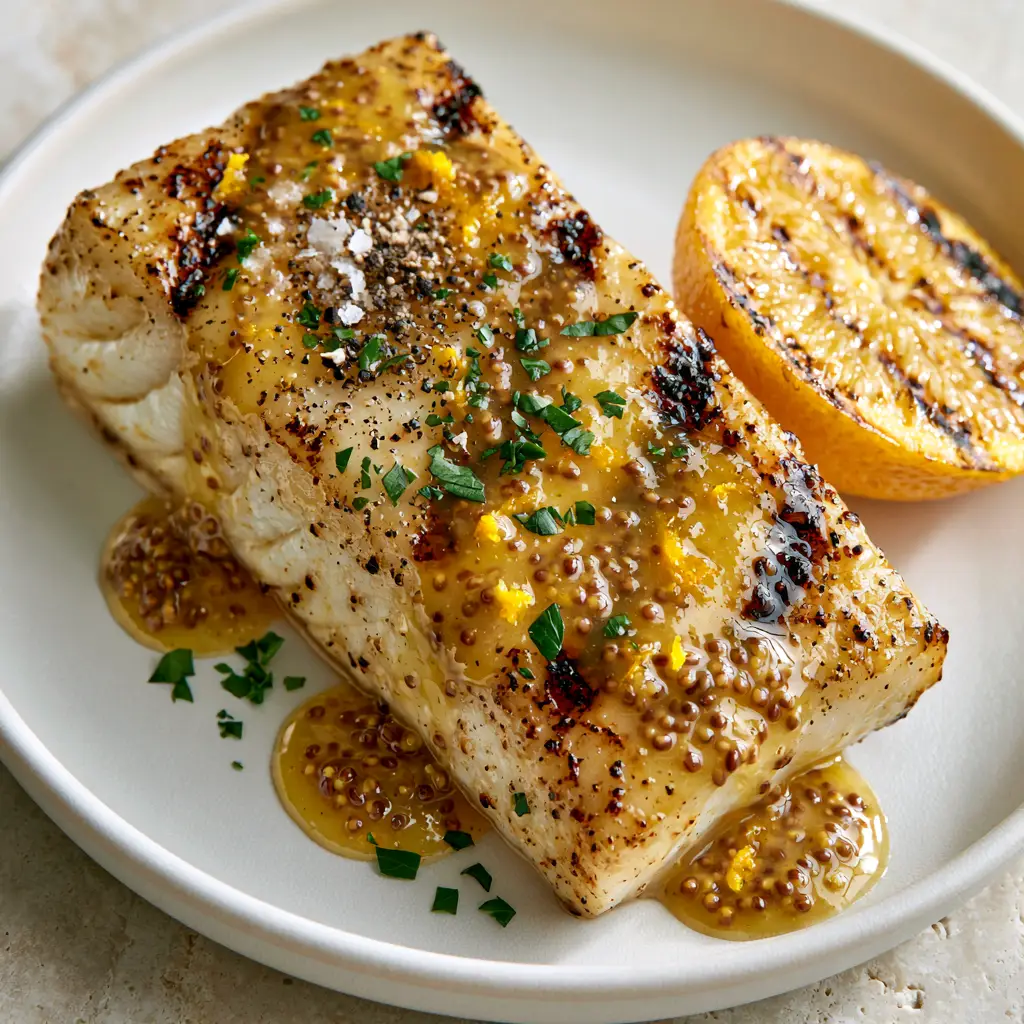
The Orange Dijon Grilled Halibut is the gold standard for summer entertaining, combining the meaty, buttery texture of premium Pacific halibut with a vibrant, citrus-forward glaze. When you look at a perfectly prepared fillet, you should see deep, caramelized grill marks contrasting against the snow-white, opaque flakes of the fish.
This recipe is designed to bridge the gap between high-end bistro dining and the comfort of your own backyard grill. We focus on achieving that signature honey-gold sheen that clings to the fish, punctuated by the rustic pop of whole grain mustard seeds and the aromatic brightness of fresh orange zest.
Whether you are a seasoned griller or a seafood novice, this guide provides the forensic culinary details needed to replicate a professional macro-shot result. We are talking about tender, succulent fish that pulls apart in large, moist shards at the touch of a fork.
Why This Citrus-Glazed Halibut Recipe Wins Every Time
- Structural Perfection: By using thick-cut fillets, we ensure the fish stays juicy inside while developing those iconic, dark char marks on the exterior.
- Multidimensional Texture: The thick, glossy glaze provides a smooth mouthfeel, while the whole grain mustard seeds offer a sophisticated, slightly crunchy contrast.
- Visual Brilliance: The combination of bright orange zest, emerald green parsley, and white flaky sea salt creates a restaurant-quality presentation that is naturally beautiful.
- Balanced Acidity: The charred orange wedge isn’t just a garnish; its caramelized juices add a smoky, concentrated acidity that cuts through the richness of the fish.
Everything You Need for a Citrus-Infused Gourmet Dinner
Thick-Cut Halibut Fillets: You will need 4 fillets, roughly 6 oz (170g) each. Look for fillets that are at least 1 inch (2.5cm) thick to ensure they don’t overcook before the glaze sets.
Whole Grain Mustard: 2 tbsp (30g) provides the visual “pearls” and a rustic, pungent depth that smooths out the sweetness of the citrus. It is essential for that artisanal look described in our visual blueprint.
Creamy Dijon Mustard: 1 tbsp (15g) acts as the emulsifier, ensuring the glaze is thick and glossy rather than thin and watery. It binds the honey and orange juice together perfectly.
Pure Honey: 2 tbsp (30ml) creates the “honey-gold” color and the necessary sugars for caramelization. This is what gives the Orange Dijon Grilled Halibut its signature shine under natural light.
Fresh Orange Juice & Zest: Use 2 tbsp (30ml) of juice and 1 tbsp (6g) of freshly grated zest. The zest contains the essential oils that provide the punchy, aromatic citrus flavor that juice alone lacks.
Invisible Essentials: You will need 2 tbsp (30ml) of high-smoke point oil (like avocado oil) for the grill grates, 1 tsp (6g) of flaky sea salt, and 1/2 tsp (2g) of freshly cracked black pepper. These foundational elements ensure the fish doesn’t stick and the flavors are properly elevated.
Fresh Garnishes: A handful of flat-leaf parsley, finely minced, and two oranges sliced into halves or thick wedges for charring. The parsley adds a necessary herbal top note to the heavy citrus profile.
Essential Tools for Achieving Professional Grill Marks
To replicate the look of a professional macro shot, a heavy-duty cast iron grill pan or a well-maintained outdoor gas/charcoal grill is non-negotiable. The heat retention of cast iron is what creates those distinct, dark caramelized lines without drying out the center of the halibut.
A thin, flexible metal fish spatula is your best friend here. It allows you to get under the delicate proteins without breaking the large, tender flakes that make perfectly grilled halibut so desirable.
Finally, a microplane zester is required for those tiny, bright flecks of orange zest. Avoid using a box grater, as it often picks up the bitter white pith, which will ruin the delicate balance of your Orange Dijon Grilled Halibut glaze.
Mastering the Perfect Sear: Step-by-Step Instructions
Phase 1: Preparing the Honey-Gold Glaze
In a small glass bowl, whisk together the whole grain mustard, creamy Dijon, honey, orange juice, and half of the orange zest. The mixture should be thick enough to coat the back of a spoon; if it feels too thin, add another teaspoon of Dijon to help it emulsify.
Set aside about a third of the glaze in a separate ramekin to use for the final drizzle. This ensures that the glaze on the finished plate looks fresh and glossy, matching the visual prompt’s “honey-gold” description.
Phase 2: Prepping the Halibut for the Heat
Remove your halibut fillets from the refrigerator 15 minutes before cooking. Pat them extremely dry with paper towels; any residual moisture will cause the fish to steam rather than sear, preventing those dark char marks.
Season the fillets generously on both sides with cracked black pepper and a small pinch of sea salt. Lightly brush the fish with avocado oil rather than oiling the grill, which helps create a localized non-stick barrier.
Phase 3: The Art of the Char
Preheat your grill to medium-high heat (about 400°F / 204°C). Once the grates are smoking slightly, place the halibut down at a 45-degree angle to the grill bars.
Press down very lightly with your spatula for the first 10 seconds to ensure even contact. Grill undisturbed for 4-5 minutes until the fish releases easily and you see those distinct, dark caramelized grill marks.
Phase 4: Glazing and Finishing
Flip the fish carefully. Immediately brush the grilled side with the larger portion of the orange dijon mixture. Place the orange halves, cut-side down, onto the grill grates next to the fish.
Cook for another 3-4 minutes. The fish is done when it is opaque throughout and reaches an internal temperature of 130°F (54°C). The orange halves should show deep, blackened grill lines.
Phase 5: The Final Presentation
Transfer the halibut to a minimalist matte white ceramic plate. Drizzle the reserved fresh glaze over the top so it pools slightly around the grains of mustard.
Top with the remaining fresh orange zest, a pinch of flaky sea salt, and the finely minced parsley. Place the charred orange wedge alongside the fish for a stunning, high-contrast finish.
Expert Tips for a Flawless Seafood Dinner
- The “Release” Rule: If the halibut feels stuck to the grill, don’t force it. The fish will naturally release from the metal once a proper crust has formed.
- Zest at the End: Always add a final sprinkle of fresh zest right before serving. The heat of the fish will release the citrus oils, providing an immediate olfactory hit to your guests.
- Cold Butter Hack: For an extra-glossy glaze, whisk 1 tbsp (15g) of cold butter into the glaze while it’s still warm. This creates a luxurious “beurre blanc” effect.
- Halibut Sourcing: Always ask for “fletch” cuts if possible, as they are more uniform in thickness, ensuring all your fillets finish cooking at the exact same time.
Sourcing the Freshest Ingredients
When shopping for your Orange Dijon Grilled Halibut, look for fish that smells like the ocean, not “fishy.” The flesh should be translucent and spring back when touched. If you can’t find halibut, this technique works beautifully with thick-cut sea bass or even huli huli style chicken if you’re looking for a poultry alternative with similar glaze mechanics.
Perfect Pairings: What to Serve with Orange Dijon Grilled Halibut
To complement the citrus and mustard notes, you want sides that are light but flavorful. A bed of garlic butter noodles provides a comforting, savory base that soaks up the extra orange glaze beautifully.
If you prefer something greener, a simple spinach salad with a light vinaigrette balances the sweetness of the honey. For a more robust texture, the spinach apple chickpea salad offers a crunch that mirrors the mustard seeds in the fish glaze.
For those watching their carb intake, serving this halibut alongside baked cottage cheese chips offers a unique, high-protein crunch that feels indulgent without the heavy calories.
Frequently Asked Questions
Maple syrup or agave nectar work well as substitutes, though honey provides the most ‘glossy’ honey-gold finish and the best thickness for the mustard seeds to cling to.
Yes, but ensure it is completely thawed and patted extremely dry. Any excess moisture from the freezing process will prevent the glaze from sticking and the char marks from forming.
Halibut is done when it becomes opaque throughout and the large flakes separate easily with a fork. Aim for an internal temperature of 130°F to 135°F (54°C-57°C) for maximum juiciness.
Start with clean, well-oiled grates and a very high heat. Don’t move the fish for at least 4 minutes after placing it down; this allows the proteins to sear and release naturally.
The Ultimate Orange Dijon Grilled Halibut Recipe
Orange Dijon Grilled Halibut: The Ultimate Zesty Summer Seafood Masterclass
Ingredients
Equipment
Method
- Whisk whole grain mustard, Dijon, honey, orange juice, and half the zest in a bowl. Reserve 1/3 for final drizzling.
- Pat halibut fillets extremely dry. Season with salt, pepper, and brush with avocado oil.
- Place fish on a preheated 400°F (204°C) grill. Sear for 4-5 minutes until dark char marks appear.
- Flip the fish, brush with glaze, and add orange halves to the grill. Cook for 3-4 more minutes until opaque.
- Plate the fish, drizzle with reserved glaze, and top with remaining zest, flaky salt, and minced parsley.
Notes
Use a thin metal spatula to keep the large halibut flakes intact.
Closing & Call to Action
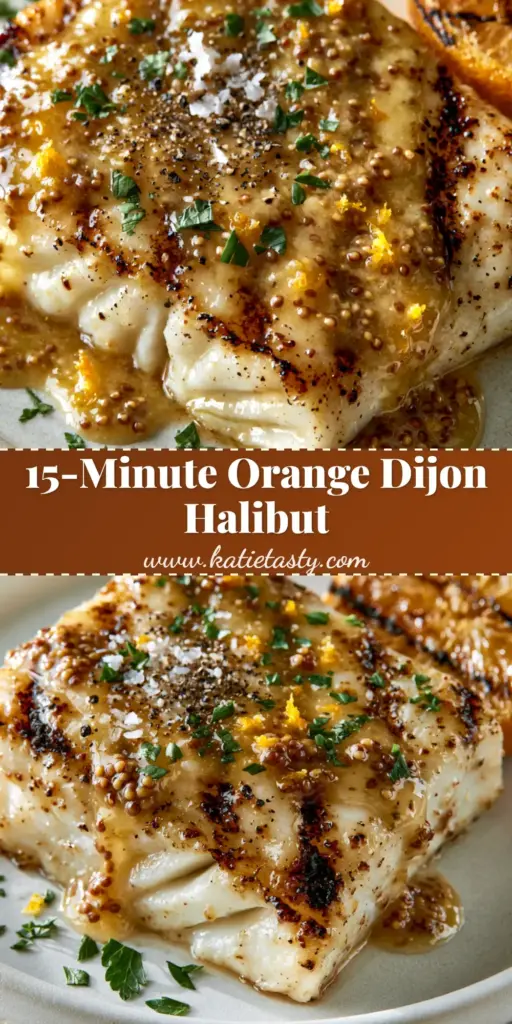
The Orange Dijon Grilled Halibut is more than just a meal; it is a sensory experience of bright citrus, savory mustard, and perfectly cooked seafood. The contrast of the dark char marks against the honey-gold glaze makes it a visual centerpiece for any dinner table.
If you enjoyed this recipe, please leave a comment below and let me know how your grill marks turned out! Don’t forget to share your creations and follow me on Pinterest for more gourmet inspiration.