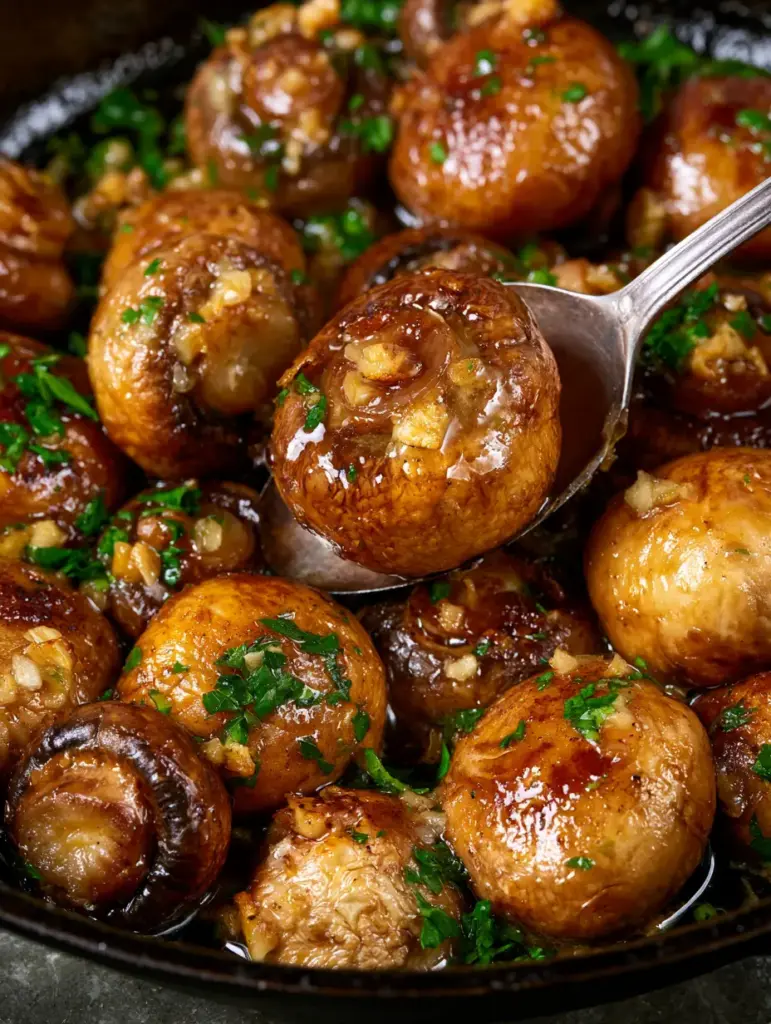
There is a profound culinary magic that happens when humble fungi meet a screaming hot cast iron surface. These sautéed mushrooms are not just a side dish; they are a masterclass in the Maillard reaction, resulting in deeply seared, wrinkled edges and a concentrated umami flavor that rivals a prime steak.
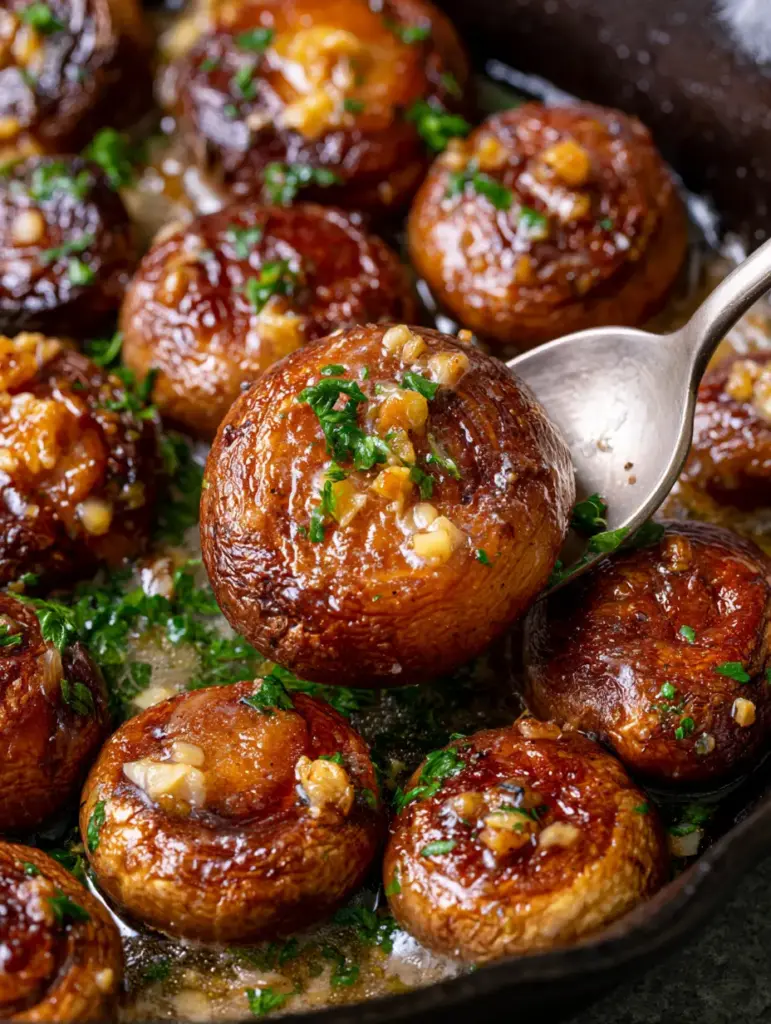
Imagine a silver spoon lifting a single, glistening cremini mushroom, perfectly coated in a luxurious veil of melted garlic butter. The surface is a dark, caramelized mahogany, punctuated by tiny morsels of golden-brown minced garlic and a vibrant confetti of fresh green parsley.
By following this technique, you will banish soggy, grey, or rubbery mushrooms forever. We are aiming for that specific, professional-grade texture where the mushroom is tender on the inside but possesses a crisp, almost meaty exterior, all without a single drop of pooling water in the pan.
Why These Caramelized Cremini Mushrooms Define Umami Excellence
- Deep Caramelization: We utilize high-heat searing to create a crisp, wrinkled exterior that holds onto sauces and butter.
- Zero Residual Moisture: Our technique ensures all fungal liquid evaporates instantly, preventing the dreaded “steamed” mushroom effect.
- Infused Garlic Butter: By adding garlic and butter at the precise finish line, we achieve a golden-brown garlic toastiness without any bitterness.
- Visual Precision: Every mushroom is a glossy, dark-brown gem that looks as incredible on a dark stone background as it tastes.
The Secret Behind Deeply Seared and Wrinkled Fungal Textures
The texture of these sautéed mushrooms is achieved through a structural change in the mushroom’s chitin—the fibrous substance that makes up their cell walls. Unlike vegetables that soften when cooked, mushrooms maintain a certain “tooth” or snap if handled correctly.
To get that wrinkled, concentrated look seen in professional food photography, you must allow the mushroom to lose its internal water through evaporation. If you crowd the pan or use low heat, the water escapes and pools, boiling the mushroom rather than searing it.
We use cremini mushrooms (often sold as baby bellas) because they have a lower water content and a more robust flavor profile than white button mushrooms. This makes them the ideal candidate for a high-heat cast iron treatment that results in a glistening, buttery finish.
Foundational Ingredients for the Ultimate Pan-Seared Results
1 lb (454g) Cremini Mushrooms: Choose firm, whole mushrooms with closed caps for the best texture and visual appeal during the sauté.
2 tbsp (30ml) High-Smoke Point Oil: Avocado oil or grapeseed oil is essential for the initial sear, as butter would burn at the temperatures required for browning.
3 tbsp (42g) Unsalted Butter: This provides the “glistening” coating and rich mouthfeel that defines a high-end steakhouse side dish.
4 cloves (20g) Fresh Garlic: Minced finely to create those “tiny golden morsels” that cling to the wrinkled surface of the mushrooms.
1/4 cup (10g) Fresh Flat-Leaf Parsley: Chopped finely to add a pop of vibrant green color and a fresh, herbaceous contrast to the rich butter.
1 tsp (5g) Sea Salt Flakes: Using flakes like Maldon provides a controlled saltiness and a delicate crunch that enhances the seared edges.
1/2 tsp (2g) Freshly Cracked Black Pepper: Large, irregular cracks of pepper provide heat and visual texture against the dark brown mushrooms.
The Essential Gear: Why a Cast Iron Skillet is Non-Negotiable
To achieve the results described in our visual blueprint, a rustic cast iron skillet is your most important tool. Cast iron has high thermal mass, meaning it stays hot even when cold mushrooms are added to the surface.
A stainless steel pan can work, but it lacks the seasoned, non-stick surface that helps create a “handheld smartphone photo” aesthetic with deep shadows and bright highlights. The dark patina of the cast iron also helps radiate heat into the crevices of the mushrooms, ensuring they sear on all sides.
If you are looking to expand your cast iron repertoire, these mushrooms are the perfect companion to a seared herb pork tenderloin or even as a topping for roadhouse-style salmon.
How to Master the Sauté: A Step-by-Step Visual Guide
Prepping the Mushrooms for Maximum Sear
Start by cleaning your mushrooms with a damp paper towel rather than rinsing them under the tap. Mushrooms act like sponges; if they soak up water, they will never achieve that crisp, wrinkled edge we are looking for.
Slice the cremini mushrooms into thick, uniform halves or quarters. Keeping them relatively large ensures they don’t shrivel into nothingness during the high-heat cooking process, maintaining that “silver spoon” worthy bite.
Executing the High-Heat Initial Sear
Place your cast iron skillet over medium-high heat and add the neutral oil. Wait until you see faint wisps of smoke—this is the sensory cue that the pan is ready to transform the mushrooms via the Maillard reaction.
Add the mushrooms in a single, uncrowded layer. Do not stir them for at least 3 to 4 minutes. You want to hear a loud sizzling sound; if the sizzle is quiet, your heat is too low.
Achieving the Deep Mahogany Color
Flip the mushrooms only once the bottom side has turned a deep golden-brown. You will notice the edges beginning to wrinkle—this is exactly what we want. Continue to sauté for another 3 minutes until all sides are evenly caramelized.
At this stage, there should be no liquid or pooling water at the bottom of the skillet. The mushrooms should look dry but deeply colored, ready to absorb the fats we are about to introduce.
The Garlic Butter Glaze and Herb Finish
Reduce the heat to medium and move the mushrooms to the edges of the skillet. Add the unsalted butter and the minced garlic to the center. Watch for the butter to foam and the garlic to turn a pale golden-brown.
Toss the mushrooms back into the center, coating them thoroughly in the garlic butter. Add the sea salt flakes, cracked black pepper, and the fresh chopped parsley. The mushrooms should now be glistening and vibrant.
Expert Techniques for Preventing Soggy or Rubbery Mushrooms
The most common mistake when making sautéed mushrooms is adding salt too early. Salt draws out moisture through osmosis. If you salt the mushrooms at the start, they will release their water and stew in their own juices.
Always wait until the very end to season with sea salt flakes. This keeps the exterior crisp and the interior succulent. Additionally, ensure your garlic is fresh; pre-minced jarred garlic contains preservatives that prevent it from achieving that beautiful “golden-roasted” look.
If you find your pan is getting too dry before the mushrooms are brown, add a teaspoon more of oil rather than lowering the heat. The heat is what creates the flavor; the oil is merely the heat transfer medium.
What to Serve with These Glistening Garlic Butter Mushrooms
These sautéed mushrooms are incredibly versatile. They add a sophisticated, earthy depth to almost any protein-focused meal. For a complete dinner, consider serving them alongside a lemon and dill baked salmon or as a rich topping for crispy salt and pepper pork.
If you prefer a surf-and-turf style meal, these mushrooms pair beautifully with sheet pan garlic butter salmon. The shared garlic butter profile creates a cohesive plate that feels like a professional restaurant experience.
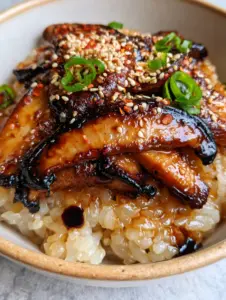
For those looking for a vegetarian option, try folding these deeply seared mushrooms into a bowl of sticky rice for a meal that is packed with texture and savory satisfaction.
Common Questions About Sautéing the Perfect Mushrooms
Yes, but cremini (baby bellas) have less water and more flavor, which results in a better sear and more concentrated umami taste.
Use a large skillet, cook in batches if necessary, and keep the heat high. Do not add salt until the mushrooms have already browned, as salt draws out moisture.
No, you should avoid rinsing them. Mushrooms are porous and absorb water, which prevents them from searing. Instead, wipe them with a damp paper towel to remove any dirt.
Add the garlic during the last 2 minutes of cooking. Because garlic burns easily, adding it at the end ensures it turns golden and toasted without becoming bitter.
Mushrooms become rubbery if they are cooked over low heat or if the pan is overcrowded. This causes them to steam in their own moisture rather than searing quickly at high heat.
The Ultimate Sautéed Mushrooms Recipe Card
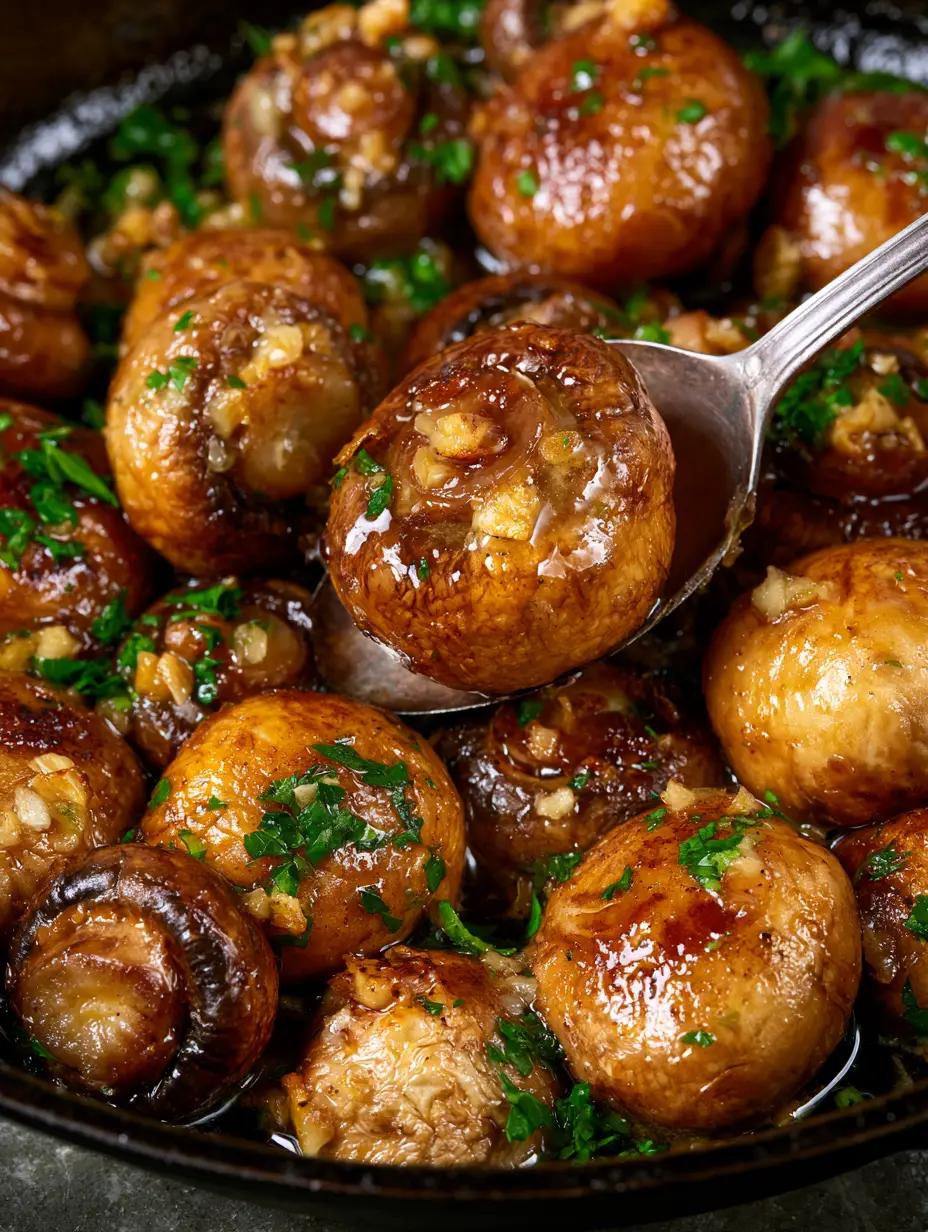
Sautéed Mushrooms with Garlic Butter and Golden Minced Garlic
Ingredients
Equipment
Method
- Wipe the cremini mushrooms with a damp paper towel to remove debris. Slice large mushrooms into halves or quarters to ensure uniform cooking.
- Place a cast iron skillet over medium-high heat. Add the avocado oil and heat until faint wisps of smoke appear.
- Add mushrooms to the pan in a single layer. Let them sit undisturbed for 3-4 minutes until the bottoms are deeply seared and golden-brown.
- Flip the mushrooms and continue cooking for another 3-4 minutes until edges are wrinkled and no liquid remains in the pan.
- Reduce heat to medium. Add butter and minced garlic. Stir for 1-2 minutes until garlic is golden and mushrooms are glistening.
- Remove from heat. Toss with fresh parsley, sea salt flakes, and cracked black pepper. Serve immediately using a silver spoon.
Notes
Use a large enough skillet to avoid crowding, which leads to steaming instead of searing.
Join the Community and Share Your Culinary Creations
We hope this guide helps you achieve the perfect, glistening sautéed mushrooms you’ve been dreaming of. The key is patience, high heat, and a well-seasoned cast iron skillet. Once you master this technique, you’ll find yourself adding these savory gems to every meal.
If you enjoyed this recipe, please leave a comment below and let us know how your mushrooms turned out! Don’t forget to follow katie_tasty on Pinterest for more visual recipe inspirations and culinary tips. Pin this recipe to your “Side Dishes” board so you always have the secret to perfect caramelization at your fingertips!