If you have ever walked the vibrant streets of Accra at dusk, the intoxicating aroma of Kelewele is likely your most vivid sensory memory. This iconic Ghanian street food isn’t just a snack; it is a masterclass in the balance of heat, sweetness, and aromatic spice.
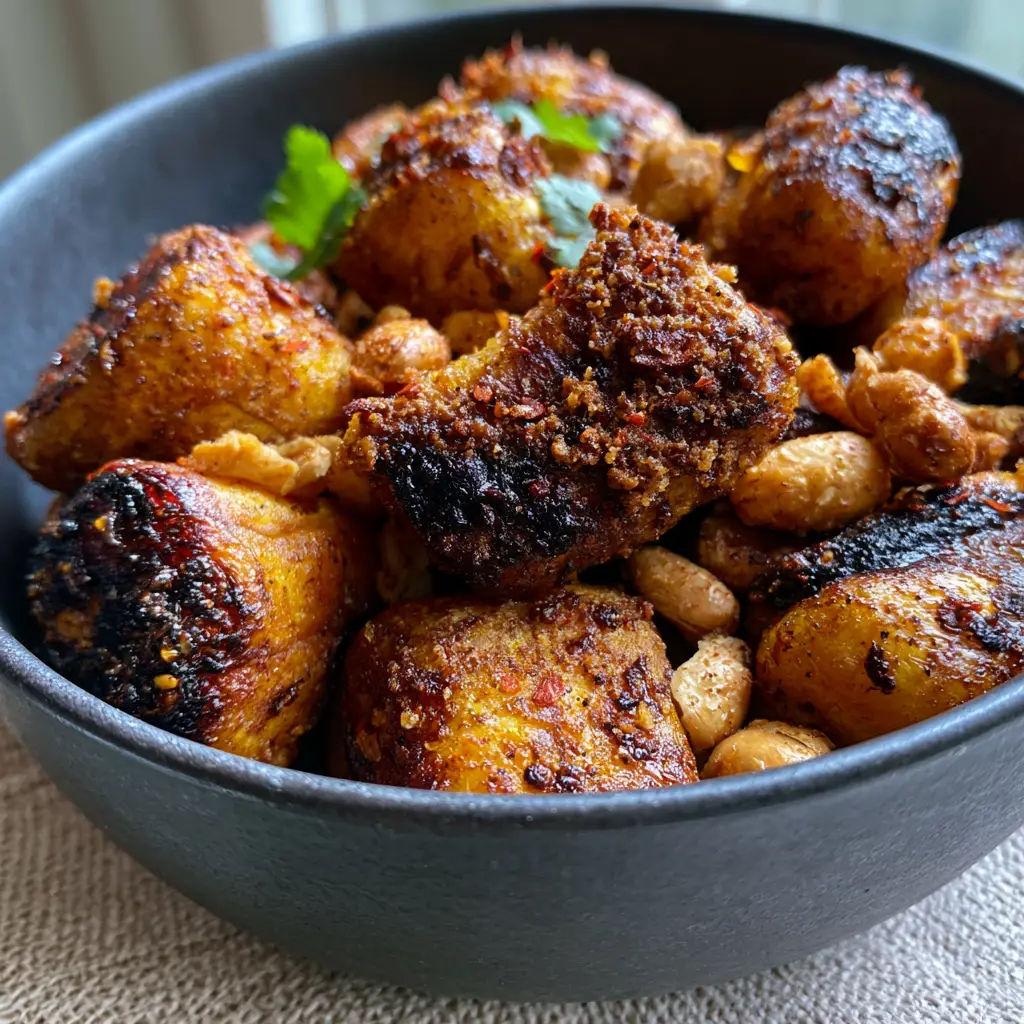
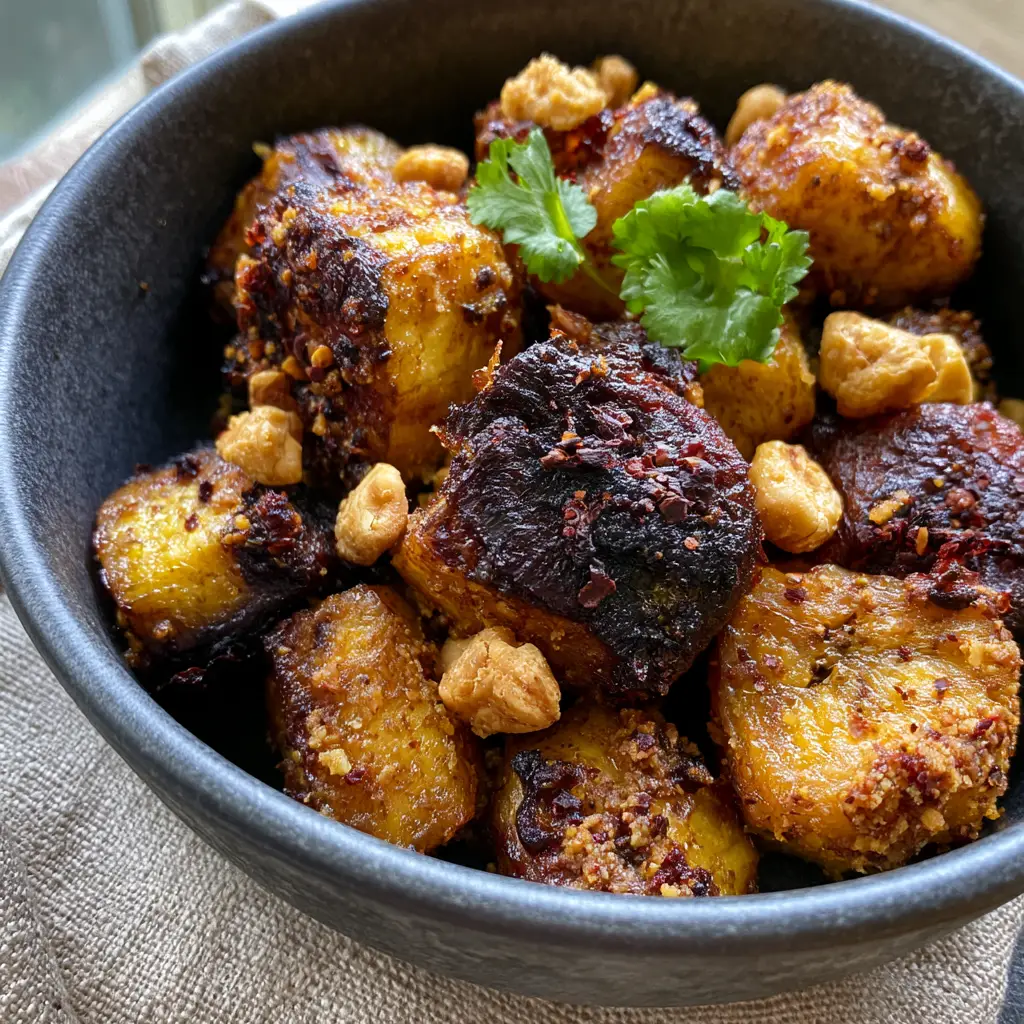
Imagine biting into a deep golden-amber plantain cube that is soft and custardy on the inside, yet boasts dark, sticky caramelized charred edges on the outside. Every morsel is glistening with a light spice oil, textured with a grainy, thick coating of fresh ginger and pungent cloves.
In this recipe, we are recreating that exact roadside magic. We will serve these spicy cubes in a rustic matte charcoal ceramic bowl, topped with crunchy roasted skin-on peanuts and fresh cilantro for a modern, high-contrast finish that tastes as incredible as it looks.
Why This Authentic Spicy Plantain Recipe Works Every Time
- The Maillard Magic: By using perfectly ripe plantains, we achieve those signature charred edges that provide a bitter-sweet counterpoint to the fiery ginger.
- Texture Contrast: The addition of crunchy, golden-brown roasted skin-on peanuts provides a necessary “snap” against the tender caramelized plantain cubes.
- Aromatic Depth: Unlike basic fried plantains, our thick spice paste of ground ginger and crushed cloves creates a grainy, flavorful crust that clings to every cube.
- Visual Vibrancy: The pop of fresh green cilantro sprigs offers a sharp color contrast against the deep amber tones, making this a centerpiece-worthy side dish.
Whether you are looking for new high-protein vegetarian meals to add to your rotation or just want a bold snack, this dish delivers on every level of flavor and nutrition.
The Essential Flavor Building Blocks for Ghanian Kelewele
To achieve the visual and textural results seen in professional food photography, we must select our ingredients with forensic precision. Each component plays a specific role in the structural integrity of the dish.
Yellow Plantains (3-4 Large): You must use plantains that are yellow with significant black spotting. These are high in natural sugars, which is essential for achieving the dark, sticky caramelized charred edges described in our blueprint.
Fresh Ginger Root (3 tbsp / 45g): We use a generous amount of freshly grated ginger to create that grainy, thick coating. It provides the signature “zing” that defines authentic Kelewele.
Ground Cloves (1 tsp / 2g): This “invisible” powerhouse adds a warm, numbing depth. It pairs scientifically with the ginger to create a complex aromatic profile that smells like a Ghanian night market.
Crushed Red Chili Flakes (1-2 tsp / 3-6g): These provide the visible spice texture. They sit on the surface of the plantains, glistening in the spice oil to signal the heat level to the diner.
Neutral Frying Oil (2 cups / 480ml): Use vegetable or canola oil. We need an oil with a high smoke point to sear the plantains quickly without burning the delicate spice paste.
Roasted Skin-On Peanuts (1/2 cup / 75g): These must be roasted until golden-brown. Keeping the skins on adds a rustic, authentic look and a slightly earthy tannin flavor that cuts through the sweetness.
Fresh Cilantro (1/4 cup / 10g): While not traditional in every region, these sprigs provide a sharp color contrast and a fresh, citrusy finish to the heavy, spiced plantains.
Fine Sea Salt (1 tsp / 6g): Essential for drawing out the moisture from the spice paste and balancing the intense natural sugars of the ripening fruit.
Tools Required for Professional Results
To get that macro close-up look with perfectly seared edges, you don’t need a professional kitchen, but you do need the right gear. A heavy-bottomed skillet or a cast-iron pan is preferred for even heat distribution.
You will also need a sharp chef’s knife to create uniform caramelized plantain cubes. Consistency in size ensures that every piece finishes cooking at the same time, preventing some from turning to mush while others stay hard.
Mastering the Spice Paste and Preparation
Crafting the Grainy Ginger Coating
In a small mortar and pestle or a high-speed blender, combine your freshly grated ginger, ground cloves, and a splash of water. You are looking for a thick, paste-like consistency, not a liquid.
Stir in the crushed red chili flakes and sea salt. This paste should look textured and grainy; this is what creates the “thick coating” mentioned in our visual blueprint.
Prepping the Plantains for Caramelization
Peel your plantains and slice them longitudinally. Cut them into 1-inch (2.5cm) cubes. Uniform cubes ensure that the “glistening spice oil” can coat every surface area equally during the frying process.
Toss the plantain cubes in a large bowl with the spice paste. Use your hands to massage the paste into the fruit. Let this sit for at least 15 minutes. This allows the ginger and cloves to penetrate the surface and helps the sugars migrate to the exterior for better charring.
The Frying Process: Achieving Dark, Sticky Edges
Searing for Visual Impact
Heat your neutral oil in a large skillet over medium-high heat. You want the oil to be shimmering but not smoking. Gently drop the plantain cubes into the oil, ensuring you do not crowd the pan.
Crowding the pan will cause the temperature to drop, leading to greasy plantains rather than seared ones. Fry for 3-4 minutes on each side. Watch for the visual cue: the edges should turn a deep, dark brown, almost black, but should feel sticky rather than burnt.
Adding the Finishing Touches
Once the plantains are a deep golden-amber, remove them with a slotted spoon and place them in a bowl lined with paper towels for just a moment. Do not leave them there long; we want them to remain “visibly glistening with a light spice oil.”
While the plantains are still hot, toss in the roasted skin-on peanuts. The residual heat will help the peanuts adhere slightly to the sticky plantain surfaces. Transfer the mixture to a dark, matte charcoal ceramic bowl sitting on a neutral textured linen napkin to mimic our expert photography setup.
Expert Tips for Kelewele Success
- The Ripeness Rule: If your plantains are too green, they will be starchy and won’t caramelize. If they are completely black, they will be too soft to hold a cube shape. Aim for the “cheetah spot” look.
- Temperature Control: If the oil is too hot, the ginger paste will burn before the plantain sugar caramelizes. If you see the ginger turning black instantly, turn the heat down.
- The Peanut Factor: Using skin-on peanuts isn’t just for aesthetics. The skins contain antioxidants and provide a much better crunch than blanched peanuts.
- Garnish Timing: Only add the fresh cilantro sprigs at the very last second. The heat from the plantains will wilt them quickly, so for that “sharp color contrast,” timing is everything.
Creative Pairings for Your Spicy Plantains
Kelewele is traditionally a standalone snack, but it works beautifully as part of a larger spread. If you are hosting a summer barbecue, try serving it alongside a Mexican street corn salad for a fusion of world street flavors.
For those who love plantains in all forms, you might also enjoy a classic plantain balls recipe. If you are looking for more plant-based accompaniments, consider these summer vegetable side dishes to round out your meal.
Frequently Asked Questions
While you can bake it at 400°F (200°C), you will not achieve the same ‘visibly glistening spice oil’ or the deeply charred, sticky edges that come from high-heat shallow frying.
Mashing the ginger into a thick, grainy paste and letting the plantains marinate for 15 minutes allows the salt to draw out a little moisture, creating a natural glue for the spices.
It has a significant kick from both the fresh ginger and the red chili flakes. However, you can control the heat by adjusting the amount of crushed chili flakes used in the grainy spice paste.
Use ripe yellow plantains with plenty of black spots. They have the highest sugar content, which is necessary to achieve the dark, sticky caramelized edges characteristic of authentic Kelewele.
Skin-on peanuts provide a rustic look and an extra layer of crunch and earthy flavor that perfectly complements the soft, sweet, and spicy plantain cubes.
Authentic Ghanian Kelewele Recipe
Kelewele: The Ultimate Spicy Ghanian Fried Plantains with Ginger and Cloves
Ingredients
Equipment
Method
- Combine grated ginger, ground cloves, chili flakes, and salt in a bowl or mortar. Grind until a thick, grainy paste forms.
- Peel plantains and cut into 1-inch uniform cubes. Toss thoroughly with the spice paste and let marinate for 15 minutes.
- Heat oil in a skillet over medium-high heat. Fry plantain cubes in batches until deep golden-amber with dark, sticky charred edges (about 4 minutes per side).
- Drain briefly on paper towels, then toss with roasted skin-on peanuts and garnish with fresh cilantro sprigs. Serve in a matte bowl while glistening.
Notes
Ensure the peanuts are skin-on for authentic texture and color contrast.
Join the Tasty Community!
This Kelewele recipe is a journey through West African flavor profiles that you can achieve in under 30 minutes. The combination of sweet caramelization and pungent ginger is something every home cook should experience at least once.
Did you achieve those perfect charred edges? We want to see your results! Leave a comment below and let us know how your spice levels turned out. Don’t forget to share your photos and follow us on Pinterest for more visually stunning recipe inspiration.